VOGONS


Bought these (retro) hardware today

Topic actions

Reply 58920 of 58936, by Shader_BiH

User metadata
Rank Newbie
Rank
Newbie
acl wrote on 2026-05-05, 08:06:
Hello […]
Show full quote

Hello

Recently i've been more selective with additions to my collection. I'd like to free up some space as well.

So i got a Sony Trinitron CRT (yeah not getting me closer to free space).

The attachment TrinitronCRT.jpg is no longer available

It had convergence problems and i learned a lot by adjusting the beams.

On computer stuff, the last main additions were an STG2000 (Nvidia NV1) with SEGA Saturn controllers and a sealed Matrox m3D (PoweVR PCX2)

The attachment NV1-STG2000.jpg is no longer available
The attachment M3D.jpg is no longer available

I spent a lot of time testing the NV1 and finding a good system for it (something like a pentium 100. A faster CPU make the card slower than software rendering)
I will probably open the m3D box (😱) because i really want to try it.

I must say I had a jaw drop when I saw this. That sealed Matrox is a real Unicorn. I hope I get more selective too, as soon as possible 😁
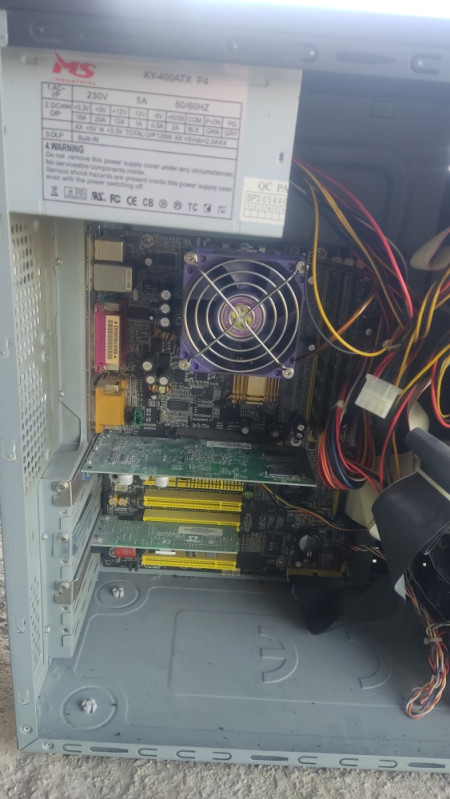
img-1777355781-c12e82813df3.jpg
Today I bought a PC case for like 10 $, and I'm not even sure it's working but, it seems to have an interesting motherboard, Chaintech ct-7vjl. I hope it turns on when it arrives 😁 The other parts... I couldn't identify...
Reply 58921 of 58936, by devius

User metadata
Rank Oldbie
Rank
Oldbie
acl wrote on 2026-05-05, 15:06:

@devius how was the card in your 1998 setup ?

In terms of looks, exactly like the one pictured on that box. In terms of how well it worked, I was pleased with it at the time. It was almost half the cost of a Voodoo, and played a lot of games very well. For me, the big stand out was Unreal. Also played a lot of Quake II with it, and a few others, but by the time Quake III came out it was getting a bit long in the tooth. My favorite feature was the fact it didn't need a pass-through cable to work and could do 24-bit color rendering.

Reply 58922 of 58936, by MattRocks

User metadata
Rank Oldbie
Rank
Oldbie
devius wrote on 2026-05-05, 20:49:
acl wrote on 2026-05-05, 15:06:

@devius how was the card in your 1998 setup ?

In terms of looks, exactly like the one pictured on that box. In terms of how well it worked, I was pleased with it at the time. It was almost half the cost of a Voodoo, and played a lot of games very well. For me, the big stand out was Unreal. Also played a lot of Quake II with it, and a few others, but by the time Quake III came out it was getting a bit long in the tooth. My favorite feature was the fact it didn't need a pass-through cable to work and could do 24-bit color rendering.

I didn't have one. My understanding is PowerVR performance was heavily dependent on the 2D graphics VRAM, hence Matrox were popular pairings and two similar systems could generate very different experiences.

Desktop timeline [ MOS 7501 → 68030 → x86(P5/MMX) → x86(K6-2) → x86(K7*) → PPC(G3*) → x86-64(K8) → x86-64(Xeon) → x86-64(i5) → x86-64(i7) ] * lost

Reply 58923 of 58936, by Ozzuneoj

User metadata
Rank l33t
Rank
l33t
Shader_BiH wrote on 2026-05-05, 19:33:
https://d4n0y8dshd77z.cloudfront.net/listings/76162710/lg/img-1777355781-c12e82813df3.jpg Today I bought a PC case for like 10 $ […]
Show full quote

img-1777355781-c12e82813df3.jpg
Today I bought a PC case for like 10 $, and I'm not even sure it's working but, it seems to have an interesting motherboard, Chaintech ct-7vjl. I hope it turns on when it arrives 😁 The other parts... I couldn't identify...

The video card looks like an ASUS V9520Magic, which is an FX 5200 128MB DDR (64bit).
Should be basically identical to this one:
https://www.ebay.com/itm/285666227216

😀

The attachment v9520magic1.jpg is no longer available
The attachment v9520magic2.jpg is no longer available

Now for some blitting from the back buffer.

Reply 58924 of 58936, by Standard Def Steve

User metadata
Rank Oldbie
Rank
Oldbie

I bought this rather unusual optical drive for $4 at a garage sale last weekend. The DVD-Download logo on the tray is what initially piqued my interest; I'd never heard of that standard!

The attachment IMG_1388.jpg is no longer available
The attachment IMG_1389.jpg is no longer available

But equally interesting is the fact that this "DVD Writer Unit" is actually a Blu-ray drive! It's so weird that Blu-Ray isn't mentioned anywhere on the faceplate or label. At first, I thought that Windows was misreading the drive's capabilities and incorrectly calling it a BD-ROM. But I found a Blu-Ray disc aaaand (dotdotdot)

The attachment Screenshot 2026-05-05 203951.png is no longer available

It really is a Blu-Ray drive! It gets even weirder though. If you Google the model BDC-202MR, you'll find a different looking drive; one that eschews the DVD-Download logo and instead prominently features Blu-Ray branding. So I dunno, could it be a pre-production unit? One thing's for certain: my two toonies bought me a whole lotta neat!

RetroAddict wrote on 2026-05-05, 04:25:

I've also just listed my P4 Extreme Edition for sale and am questioning what I've done. I'll need some 3dfx for therapy when it goes. Does anyone else feel bad for letting pieces of their stash go? My partner is of course thrilled and thinks it's the start of me clearing out my hoard. She'll never read this so I'll say it here - she'll be going before the rest of my retro does 😀

I gave away an epic megaton of old computer gear six years ago, just before my daughter was born. Funnily enough, one of the systems was an XPS with a 3.2 EE. Seeing that stuff go was a little difficult at first, but the initial pang of "omg what did I just do?!?" was short-lived because a few months later I had another hobby in my hands!

And I swear, she's the coolest kiddo ever. I mean, her taste in music is like, positively crackin' man! ☺️

I still have a smaller room in the basement dedicated to retro computers/consoles. It can be a fun family activity on a stormy night. it's just not, you know, the entire basement anymore.

"A little sign-in here, a touch of WiFi there..."

Reply 58925 of 58936, by devius

User metadata
Rank Oldbie
Rank
Oldbie
MattRocks wrote on 2026-05-05, 21:00:

My understanding is PowerVR performance was heavily dependent on the 2D graphics VRAM, hence Matrox were popular pairings and two similar systems could generate very different experiences.

That wasn't the case for PowerVR PCX2 at least. The only reason Matrox was popular as the 2D card for these 3D only accelerators was due to its own great 2D visual quality, although that was more important for the Voodoo, since PowerVR didn't need a pass-through cable.

The performance was heavily impacted by the CPU, so the faster it was the better the 3D performance, up to a point of course. I had a Pentium II 266MHz, later overclocked to 300MHz and it did alright. Many people experienced it with Pentiums MMX and slower K6s, which would have left a lot of performance on the table.

Reply 58926 of 58936, by acl

User metadata
Rank Oldbie
Rank
Oldbie
Shader_BiH wrote on 2026-05-05, 19:33:

I hope I get more selective too, as soon as possible 😁

What I really meant was to stop hoarding. I realized that I'd inadvertently slipped into that territory, which isn't very glorious 🙄. Stop picking up yet another copy of a piece that's just going to gather dust, take up space, and deprive another collector. But rather get rid of the excess pieces and use that budget sparingly for things I really want to add to my collection or test. Not becoming a snob or anything like that 🧐.

I still really enjoy testing all kinds of parts. I spent roughly the same amount of time testing the NV1 and playing with a low-end SIS 6326 PCI and its awful OpenGL drivers.

devius wrote on Yesterday, 09:27:
MattRocks wrote on 2026-05-05, 21:00:

My understanding is PowerVR performance was heavily dependent on the 2D graphics VRAM, hence Matrox were popular pairings and two similar systems could generate very different experiences.

That wasn't the case for PowerVR PCX2 at least. The only reason Matrox was popular as the 2D card for these 3D only accelerators was due to its own great 2D visual quality, although that was more important for the Voodoo, since PowerVR didn't need a pass-through cable.

The passthrough is said to degrade the 2d signal quality so having a very clean signal before going through was some kind of a mitigation

devius wrote on 2026-05-05, 20:49:
acl wrote on 2026-05-05, 15:06:

@devius how was the card in your 1998 setup ?

In terms of looks, exactly like the one pictured on that box. In terms of how well it worked, I was pleased with it at the time. It was almost half the cost of a Voodoo, and played a lot of games very well. For me, the big stand out was Unreal. Also played a lot of Quake II with it, and a few others, but by the time Quake III came out it was getting a bit long in the tooth. My favorite feature was the fact it didn't need a pass-through cable to work and could do 24-bit color rendering.

devius wrote on Yesterday, 09:27:

The performance was heavily impacted by the CPU, so the faster it was the better the 3D performance, up to a point of course. I had a Pentium II 266MHz, later overclocked to 300MHz and it did alright. Many people experienced it with Pentiums MMX and slower K6s, which would have left a lot of performance on the table.

Thanks for sharing !
Quake II officially supports the PCX2 and looks great from the videos i watched. On the other hand, Half-Life runs, but looks awful.

"Hello, my friend. Stay awhile and listen..."
My collection (not up to date)

Reply 58927 of 58936, by Shader_BiH

User metadata
Rank Newbie
Rank
Newbie
Ozzuneoj wrote on Yesterday, 03:27:
The video card looks like an ASUS V9520Magic, which is an FX 5200 128MB DDR (64bit). Should be basically identical to this one: […]
Show full quote
Shader_BiH wrote on 2026-05-05, 19:33:
https://d4n0y8dshd77z.cloudfront.net/listings/76162710/lg/img-1777355781-c12e82813df3.jpg Today I bought a PC case for like 10 $ […]
Show full quote

img-1777355781-c12e82813df3.jpg
Today I bought a PC case for like 10 $, and I'm not even sure it's working but, it seems to have an interesting motherboard, Chaintech ct-7vjl. I hope it turns on when it arrives 😁 The other parts... I couldn't identify...

The video card looks like an ASUS V9520Magic, which is an FX 5200 128MB DDR (64bit).
Should be basically identical to this one:
https://www.ebay.com/itm/285666227216

😀

The attachment v9520magic1.jpg is no longer available
The attachment v9520magic2.jpg is no longer available

Good eye there. I suppose it's ok to have another FX 5200... It's got S-video, and they still do good in DX7-8 titles. I also get a HDD and two beige optics with the case. For PSU, I think this will be my 30th MS 400 W unit 😁 They really were everywhere....

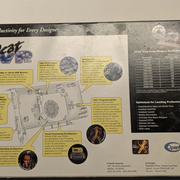
In the meantime, I treated my self with a card from 3Dlabs. I've been neglecting them since I started expanding my collection, having only one old ELSA workstation card, GLoria XL, and a Permedia 2 based ELSA Synergy. This time, I got a Wildcat. It's an entry model, but it's still architecturaly representative of the lineup.

s-l1600-8.png s-l1600-7.png s-l1600-6.png s-l1600.png
It's an open box card. The card itself looks like it's never been used while the box itself seems to be in OK condition overall.
It will be interesting to see what this card can do in gaming. I just might put it against Parhelia and Xabre 400 to see which one does shaders the worst :') I love these cards...

Reply 58928 of 58936, by BitWrangler

User metadata
Rank l33t++
Rank
l33t++
Standard Def Steve wrote on Yesterday, 05:06:
I bought this rather unusual optical drive for $4 at a garage sale last weekend. The DVD-Download logo on the tray is what initi […]
Show full quote

I bought this rather unusual optical drive for $4 at a garage sale last weekend. The DVD-Download logo on the tray is what initially piqued my interest; I'd never heard of that standard!

The attachment IMG_1388.jpg is no longer available
The attachment IMG_1389.jpg is no longer available

But equally interesting is the fact that this "DVD Writer Unit" is actually a Blu-ray drive! It's so weird that Blu-Ray isn't mentioned anywhere on the faceplate or label. At first, I thought that Windows was misreading the drive's capabilities and incorrectly calling it a BD-ROM. But I found a Blu-Ray disc aaaand (dotdotdot)

The attachment Screenshot 2026-05-05 203951.png is no longer available

It really is a Blu-Ray drive! It gets even weirder though. If you Google the model BDC-202MR, you'll find a different looking drive; one that eschews the DVD-Download logo and instead prominently features Blu-Ray branding. So I dunno, could it be a pre-production unit? One thing's for certain: my two toonies bought me a whole lotta neat!

That is a weird beastie, thanks for the post, I have been looking for a BD drive or two and these might have flown under the radar. I will have to keep my eyes peeled. I wonder if it was a thing like 28.8 modems flashing to 33k or 33ks to 56k. ... i.e. came out just before standard finalised and was flashed to full BD by end user.

Unicorn herding operations are proceeding, but all the totes of hens teeth and barrels of rocking horse poop give them plenty of hiding spots.

Reply 58929 of 58936, by MattRocks

User metadata
Rank Oldbie
Rank
Oldbie
devius wrote on Yesterday, 09:27:
MattRocks wrote on 2026-05-05, 21:00:

My understanding is PowerVR performance was heavily dependent on the 2D graphics VRAM, hence Matrox were popular pairings and two similar systems could generate very different experiences.

That wasn't the case for PowerVR PCX2 at least. The only reason Matrox was popular as the 2D card for these 3D only accelerators was due to its own great 2D visual quality, although that was more important for the Voodoo, since PowerVR didn't need a pass-through cable.

The performance was heavily impacted by the CPU, so the faster it was the better the 3D performance, up to a point of course. I had a Pentium II 266MHz, later overclocked to 300MHz and it did alright. Many people experienced it with Pentiums MMX and slower K6s, which would have left a lot of performance on the table.

My view is different and constrained to theory as I've never physically owned or used a PowerVR.

Each PowerVR rendered frame is digitally written to the 2D card's VRAM, and if the VRAM is slow the PowerVR waits. In contrast, 3Dfx Voodoo is constrained by needing to sync to the 2D card's analog output signal - constrained by the 2D card's RAMDAC.

I'll concede the VRAM is likely to be faster than the RAMDAC, but either subcomponent could be a bottleneck and users had all manner of random 2D cards featuring various VRAM and RAMDAC timings. During the PowerVR vs Voodoo era, the workstation Matrox Millenium II featured fast RAMDAC and fast VRAM making it easy to recommend but most of us were tuning with financial constraints.

From memory, my 2D cards were S3 Trio with 2Mb EDO RAM and a RAMDAC clocking refresh rates higher than 85Hz. That is memorable only because it was the act of pushing the RAMDAC every day that caused my CRT to flicker and die while inflicting eyestrain upon me!

In hindsight, I might have just now accidentally formulated the strongest business case for choosing PowerVR over Voodoo.. 😁

Desktop timeline [ MOS 7501 → 68030 → x86(P5/MMX) → x86(K6-2) → x86(K7*) → PPC(G3*) → x86-64(K8) → x86-64(Xeon) → x86-64(i5) → x86-64(i7) ] * lost

Reply 58930 of 58936, by acl

User metadata
Rank Oldbie
Rank
Oldbie
MattRocks wrote on Yesterday, 13:20:
My view is different and constrained to theory as I've never physically owned or used a PowerVR. […]
Show full quote
devius wrote on Yesterday, 09:27:
MattRocks wrote on 2026-05-05, 21:00:

My understanding is PowerVR performance was heavily dependent on the 2D graphics VRAM, hence Matrox were popular pairings and two similar systems could generate very different experiences.

That wasn't the case for PowerVR PCX2 at least. The only reason Matrox was popular as the 2D card for these 3D only accelerators was due to its own great 2D visual quality, although that was more important for the Voodoo, since PowerVR didn't need a pass-through cable.

The performance was heavily impacted by the CPU, so the faster it was the better the 3D performance, up to a point of course. I had a Pentium II 266MHz, later overclocked to 300MHz and it did alright. Many people experienced it with Pentiums MMX and slower K6s, which would have left a lot of performance on the table.

My view is different and constrained to theory as I've never physically owned or used a PowerVR.

Each PowerVR rendered frame is digitally written to the 2D card's VRAM, and if the VRAM is slow the PowerVR waits. In contrast, 3Dfx Voodoo is constrained by needing to sync to the 2D card's analog output signal - constrained by the 2D card's RAMDAC.

I'll concede the VRAM is likely to be faster than the RAMDAC, but either subcomponent could be a bottleneck and users had all manner of random 2D cards featuring various VRAM and RAMDAC timings. During the PowerVR vs Voodoo era, the workstation Matrox Millenium II featured fast RAMDAC and fast VRAM making it easy to recommend but most of us were tuning with financial constraints.

From memory, my 2D cards were S3 Trio with 2Mb EDO RAM and a RAMDAC clocking refresh rates higher than 85Hz. That is memorable only because it was the act of pushing the RAMDAC every day that caused my CRT to flicker and die while inflicting eyestrain upon me!

In hindsight, I might have just now accidentally formulated the strongest business case for choosing PowerVR over Voodoo.. 😁

I can be wrong but i think that the voodoo have its own ramdac. The pasthrought cable is not strictly required. You can manually do the switch between the 2d and voodoo output by unpluging your monitor from the 2d card and plug it to the voodoo when it is handling the 3d rendering. Or even use two monitors. One for the voodoo and one for the 2d card.
It's just more practical to have the voodoo doing the switch for you

"Hello, my friend. Stay awhile and listen..."
My collection (not up to date)

Reply 58931 of 58936, by Ozzuneoj

User metadata
Rank l33t
Rank
l33t
acl wrote on Yesterday, 17:08:
MattRocks wrote on Yesterday, 13:20:
My view is different and constrained to theory as I've never physically owned or used a PowerVR. […]
Show full quote
devius wrote on Yesterday, 09:27:

That wasn't the case for PowerVR PCX2 at least. The only reason Matrox was popular as the 2D card for these 3D only accelerators was due to its own great 2D visual quality, although that was more important for the Voodoo, since PowerVR didn't need a pass-through cable.

The performance was heavily impacted by the CPU, so the faster it was the better the 3D performance, up to a point of course. I had a Pentium II 266MHz, later overclocked to 300MHz and it did alright. Many people experienced it with Pentiums MMX and slower K6s, which would have left a lot of performance on the table.

My view is different and constrained to theory as I've never physically owned or used a PowerVR.

Each PowerVR rendered frame is digitally written to the 2D card's VRAM, and if the VRAM is slow the PowerVR waits. In contrast, 3Dfx Voodoo is constrained by needing to sync to the 2D card's analog output signal - constrained by the 2D card's RAMDAC.

I'll concede the VRAM is likely to be faster than the RAMDAC, but either subcomponent could be a bottleneck and users had all manner of random 2D cards featuring various VRAM and RAMDAC timings. During the PowerVR vs Voodoo era, the workstation Matrox Millenium II featured fast RAMDAC and fast VRAM making it easy to recommend but most of us were tuning with financial constraints.

From memory, my 2D cards were S3 Trio with 2Mb EDO RAM and a RAMDAC clocking refresh rates higher than 85Hz. That is memorable only because it was the act of pushing the RAMDAC every day that caused my CRT to flicker and die while inflicting eyestrain upon me!

In hindsight, I might have just now accidentally formulated the strongest business case for choosing PowerVR over Voodoo.. 😁

I can be wrong but i think that the voodoo have its own ramdac. The pasthrought cable is not strictly required. You can manually do the switch between the 2d and voodoo output by unpluging your monitor from the 2d card and plug it to the voodoo when it is handling the 3d rendering. Or even use two monitors. One for the voodoo and one for the 2d card.
It's just more practical to have the voodoo doing the switch for you

Yes, they have their own DAC and you can just use a Voodoo card's output for 3D and another card's output to a separate display input for 2D. This is also how some Voodoo2-based arcade machines work with just a Voodoo card connected to the display with no pass through port even included on the card.

Now for some blitting from the back buffer.

Reply 58932 of 58936, by MattRocks

User metadata
Rank Oldbie
Rank
Oldbie
acl wrote on Yesterday, 17:08:
MattRocks wrote on Yesterday, 13:20:
My view is different and constrained to theory as I've never physically owned or used a PowerVR. […]
Show full quote
devius wrote on Yesterday, 09:27:

That wasn't the case for PowerVR PCX2 at least. The only reason Matrox was popular as the 2D card for these 3D only accelerators was due to its own great 2D visual quality, although that was more important for the Voodoo, since PowerVR didn't need a pass-through cable.

The performance was heavily impacted by the CPU, so the faster it was the better the 3D performance, up to a point of course. I had a Pentium II 266MHz, later overclocked to 300MHz and it did alright. Many people experienced it with Pentiums MMX and slower K6s, which would have left a lot of performance on the table.

My view is different and constrained to theory as I've never physically owned or used a PowerVR.

Each PowerVR rendered frame is digitally written to the 2D card's VRAM, and if the VRAM is slow the PowerVR waits. In contrast, 3Dfx Voodoo is constrained by needing to sync to the 2D card's analog output signal - constrained by the 2D card's RAMDAC.

I'll concede the VRAM is likely to be faster than the RAMDAC, but either subcomponent could be a bottleneck and users had all manner of random 2D cards featuring various VRAM and RAMDAC timings. During the PowerVR vs Voodoo era, the workstation Matrox Millenium II featured fast RAMDAC and fast VRAM making it easy to recommend but most of us were tuning with financial constraints.

From memory, my 2D cards were S3 Trio with 2Mb EDO RAM and a RAMDAC clocking refresh rates higher than 85Hz. That is memorable only because it was the act of pushing the RAMDAC every day that caused my CRT to flicker and die while inflicting eyestrain upon me!

In hindsight, I might have just now accidentally formulated the strongest business case for choosing PowerVR over Voodoo.. 😁

I can be wrong but i think that the voodoo have its own ramdac. The pasthrought cable is not strictly required. You can manually do the switch between the 2d and voodoo output by unpluging your monitor from the 2d card and plug it to the voodoo when it is handling the 3d rendering. Or even use two monitors. One for the voodoo and one for the 2d card.
It's just more practical to have the voodoo doing the switch for you

The magazine advice at the time was to increase the 2D refresh rate in order to tune the 3Dfx refresh rate. Maybe there was a common misconception but it was certainly believed that the VGA signal could influence a Voodoo's maximum fps.

Plugging 2D and 3D card into the same LCD: I'm guessing a 2D card won't turn off, but can an LCD prioritise the 3D card input and switch automatically between the two inputs?

Desktop timeline [ MOS 7501 → 68030 → x86(P5/MMX) → x86(K6-2) → x86(K7*) → PPC(G3*) → x86-64(K8) → x86-64(Xeon) → x86-64(i5) → x86-64(i7) ] * lost

Reply 58933 of 58936, by devius

User metadata
Rank Oldbie
Rank
Oldbie
MattRocks wrote on Yesterday, 13:20:

Each PowerVR rendered frame is digitally written to the 2D card's VRAM, and if the VRAM is slow the PowerVR waits.

Correct, but the frame still has to travel through the PCI bus, which would be the limiting factor, not the card's VRAM bandwith, since even for a measly S3 Trio64 it's going to be several times higher than 133MB/s. At 133MB/s that's still enough for close to 60fps at 1024x768 at 24-bit color and I doubt any game would come close to running that smoothly at that resolution on a PowerVR PCX2, even on a fast Pentium 4. Maybe there's a little bit of a performance impact from the 2D card's bandwidth, but it's probably very small.

Reply 58934 of 58936, by steberg

User metadata
Rank Newbie
Rank
Newbie

Found a Compaq Elite 4/50e in perfekt condition. 50$. Witout a harddrive but I had one spare. Now it works fine. But it’s the first notebook I ever seen the has an active matrix monochrome screen. So clear and nice. Came with 12 mb of ram as well.

Reply 58935 of 58936, by MattRocks

User metadata
Rank Oldbie
Rank
Oldbie

Very cool. Is that a trackball next to the screen?

I love how HCI kept changing. If that is a trackball, it strikes me as being one of the better ideas - it would be a more comfortable distance from the user than a modern trackpad. My big Apple MacBook trackpad sometimes goes unresponsive when a fibre of wool jumper is touching it.

Desktop timeline [ MOS 7501 → 68030 → x86(P5/MMX) → x86(K6-2) → x86(K7*) → PPC(G3*) → x86-64(K8) → x86-64(Xeon) → x86-64(i5) → x86-64(i7) ] * lost

Reply 58936 of 58936, by Nicolas 2000

User metadata
Rank Member
Rank
Member
acl wrote on Yesterday, 17:08:

I can be wrong but i think that the voodoo have its own ramdac. The pasthrought cable is not strictly required. You can manually do the switch between the 2d and voodoo output by unpluging your monitor from the 2d card and plug it to the voodoo when it is handling the 3d rendering. Or even use two monitors. One for the voodoo and one for the 2d card.
It's just more practical to have the voodoo doing the switch for you

In my PC, I don't use a passthrough cable. Both the regular graphics card and the Voodoo² (SLI) each go to one IN port of an automatic VGA switch box. The OUT port of this switch box goes to the monitor. This does nothing for the image quality coming out of the Voodoos (arguably potentially makes it worse, as there is a switchbox in the signal path now) but as the switchbox is better quality than what is on the voodoo card for the passthrough cable, the regular graphics card output becomes cleaner this way.