VOGONS


Bought these (retro) hardware today

Topic actions

Reply 59680 of 59713, by oldGPU

User metadata
Rank Newbie
Rank
Newbie
steberg wrote on 2026-09-11, 15:43:

Just got bought a Compaq LTE Elite 75/CX, Here it's next to my 50E. The screen of the monochrome 50E is so much nicer than the color screen of the 75CX

Absolutely stunning, and surprised the plastic color has held up so well.

Reply 59681 of 59713, by MattRocks

User metadata
Rank Oldbie
Rank
Oldbie

Made impulse purchases.

I bought an apparently new AGP FireGL X3 when the listing said nearly all gone, and the next day +20 were added to the available stock! They've sold hundreds of them and I wonder where they are restocking from? Anyway, an original supply chain included HP who sold these for UNIX CAD workstations. However, I've not done CAD so not sure where I'm going with this..

I then bought the last release of PS2 three button Logitech mouse, because UNIX (along with its wider family of operating system) was specifically designed to make use of three buttons. The same shape of mouse was supplied with HP UNIX workstations. However, I am a fan of trackballs so not sure where I'm going with that..

Separately, I picked up a free pre-ACPI post-ATX PS2 Lite-On keyboard, which is kind of a late rendition of the IBM Model 3 but weirder because Print Screen/Scroll Lock/Break are replaced with Power/Wake/Sleep. HP did not stock these, and a previous owner removed the switches under the keys that would trigger power off! The travel on the keys is quite long, and I am a fan of low profile minimally moving keys so not sure where I'm going with this either..

But, as my gut acquired the three on a whim it must be right..

Desktop timeline [ MOS 7501 → 68030 → x86(P5/MMX) → x86(K6-2) → x86(K7*) → PPC(G3*) → x86-64(K8) → x86-64(Xeon) → x86-64(i7) ] * lost

Reply 59682 of 59713, by Disruptor

User metadata
Rank Oldbie
Rank
Oldbie

A Chicony PC-286GE (Rabbit 286) portable system with
including a manual and a service manual
- a NEAT 286 motherboard: https://theretroweb.com/motherboards/s/ecs-286-neat
including a manual
- 4 MB of DIP memory in 2 banks
- an 211 MB ST1239A HDD
- a Super EGA graphics card with connection to the Plasma display
- a Chicony CH-101B Super-IO-controller https://theretroweb.com/expansioncards/s/chicony-ch-101b
including a manual
- an Adaptec SDS-3 system with software on the HDD
which is the SCSI Development and Test System
(that particular version does support narrow scsi up to sync with 5 mb/s. it consists of 2 full length 8 bit ISA cards.)

That machine is a SCSI Analyzer and was used to develop cdrecord for Linux.

I will look at this machine in detail in a few weeks.

Current condition:
Plasma PC works, Varta had been removed already.
SCSI components not tested yet.
HDD came with software and likely with some test data.
HDD contents have been cloned by me.

Next steps: Putting suitable HDD into that computer, reinstalling the software and test it.

Reply 59683 of 59713, by PD2JK

User metadata
Rank Oldbie
Rank
Oldbie

I had an extra passenger today, his name was 5153.

The attachment 20260915_135628868.JPG is no longer available

The man I got it from had a nice story going with it. Back in the day he said to his boss he needed a color display for his 5150 to do his job. When the entire machine was replaced, he ultimately only needed the colors to play some Tetris. Apparently the software didn't support different colors.

has all kinds of stuff

Reply 59684 of 59713, by supercordo

User metadata
Rank Member
Rank
Member

Got this Abit AN7 board for cheap, I would say. Was sold as for parts not working. Was missing the bios chip and all the jumpers. Booted right up after swaping in a new bios chip.

Reply 59685 of 59713, by SlowA

User metadata
Rank Newbie
Rank
Newbie

I always wanted AN7, it was a black sheep.

Reply 59686 of 59713, by PD2JK

User metadata
Rank Oldbie
Rank
Oldbie

I sometimes wondered what that shiny sticker was for, near the socket. Now I think it could function as a mirror, to check if the HSF clip is mounted correctly?

has all kinds of stuff

Reply 59687 of 59713, by Trashbytes

User metadata
Rank Oldbie
Rank
Oldbie
PD2JK wrote on Yesterday, 06:36:

I sometimes wondered what that shiny sticker was for, near the socket. Now I think it could function as a mirror, to check if the HSF clip is mounted correctly?

That's a damn good guess, and its likely exactly what it was used for.

Or it was to protect the board from the HSF clip if it .. slipped.

Likely both.

Reply 59688 of 59713, by konc

User metadata
Rank l33t
Rank
l33t
PD2JK wrote on Yesterday, 06:36:

I sometimes wondered what that shiny sticker was for, near the socket. Now I think it could function as a mirror, to check if the HSF clip is mounted correctly?

I think it's there to protect the board from scratches from the clip or screwdrivers when mounting/unmounting the heatsink

Reply 59689 of 59713, by NeilKnows

User metadata
Rank Newbie
Rank
Newbie

Complete IBM PS/2 Model 35 SX with Colour Monitor and Model M Keyboard...

unfortuantely the power supply in the PC is dead (apparantely a common problem) so will need some work.

Reply 59690 of 59713, by CharlieFoxtrot

User metadata
Rank Oldbie
Rank
Oldbie
NeilKnows wrote on Yesterday, 08:28:

Complete IBM PS/2 Model 35 SX with Colour Monitor and Model M Keyboard...

unfortuantely the power supply in the PC is dead (apparantely a common problem) so will need some work.

If it is a Magnetek PSU like it often is, they tend go so that they are notoriously difficult or practically impossible to repair. They were built woefully underspecced and often they failed already after few years of use. I also have 35SX and it has had its PSU replaced in late 90s with a Taiwanese unit, which was a nice thing. If it is a fried Magnetek PSU, the best option might be to just replace everything with something like PicoATX unit instead of trying to hunt a working replacement PSU. Even if it is not irrepairabe now, it will be as the main fault of the unit is underspecced design. It is not simplu a capacitor or some regulator problem.

You also should be prepared to recap the floppy drive, it has most likely also failed. If the electrolyte hasn't corroded other components, it isn't a difficult job. There are posts about the drive repairs here in vogons, I also wrote something about it on this thread that was about my unit few years ago:
My IBM PS/2 model 35SX build [updated 2023-6-22]

About the floppy, you will need one as if the Dallas battery has died, which most likely has, you can't boot this thing without a setup floppy disk. Floppy interface isn't standard one, it has a 34 pin cable, but it also delivers power. So plugging a standard drive there just may get the drive and floppy controller killed. And do not plug another PS/2 floppy drive on that cable if it isn't FRU compatible with the system, you may again fry the floppy controller. There are cable adapters available so you can plug in a standard drive, but it may be janky to match the drive with the front plate and eject button hole. But at least you will be able to boot the system.

Otherwise 35SX and 40SX are probably the easiest PS/2s out there as they do have IDE controllers as well as ISA, so they are easy to expand with standard hardware unlike ESDI/MCA systems. In general these are IMO rather underwhelming systems. Original hard disks are extremely slow and loud and these computers have a lackluster performance compared to many comparable systems. For exampple, the graphics chip is just your run of the mill slow VGA on 16-bit bus, so no SVGA resolutions there. Otherwise they have many of the same reliability issues as other PS/2 models. These are painfully annoying systems, but 35/40SX are probably the easiest models thanks to least proprietary shenanigans.

And one more IBM thing still, regular 72-pin SIMMs don't work with these systems at least without modifications, you can find information about these too. If you want to expand RAM, don't focus on that until you get the system running otherwise, these kind of things are the least of worries at the point where you are.

Good luck!

Last edited by CharlieFoxtrot on 2026-09-16, 12:23. Edited 1 time in total.

Reply 59691 of 59713, by revolstar

User metadata
Rank Member
Rank
Member

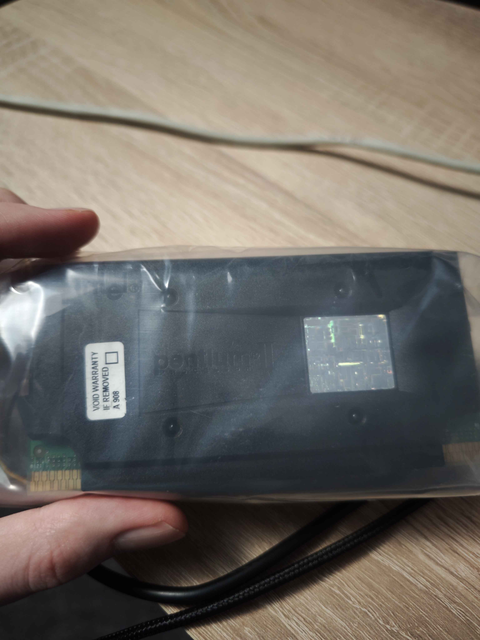
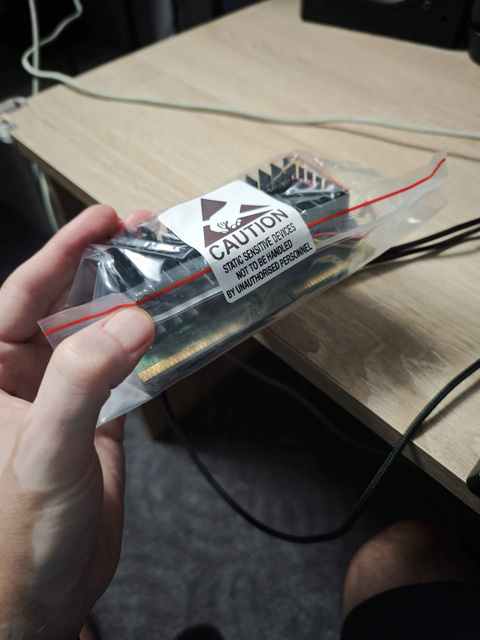
I've picked this up as a part of my anniversary Dream 97-98 PC Build project that I'm currently working on. There's a seller here who has a dozen of these NOS OEM Pentium II 400 Mhz. They're around $18 a piece. Never had a Slot 1 machine, so I'm pretty excited for this 😁

image.png
image.png

Win98 rig: Athlon XP 2500+/512MB RAM/Gigabyte GA-7VT600/SB Audigy/GF FX5700/Voodoo2 12MB
WinXP rig: HP RP5800 - Pentium G850/2GB RAM/GF GT530 1GB
Amiga: A600/2MB RAM
PS3: Slim, CFW
PS2: Fat, FMCB
Dreamcast, GDEMU

Reply 59692 of 59713, by Shader_BiH

User metadata
Rank Member
Rank
Member

A quick acquisition on local OLX market. Got it for $15 untested, but it's almost new condition and just tested it... works great 😀

Reply 59693 of 59713, by MattRocks

User metadata
Rank Oldbie
Rank
Oldbie
revolstar wrote on Yesterday, 12:23:
I've picked this up as a part of my anniversary Dream 97-98 PC Build project that I'm currently working on. There's a seller her […]
Show full quote

I've picked this up as a part of my anniversary Dream 97-98 PC Build project that I'm currently working on. There's a seller here who has a dozen of these NOS OEM Pentium II 400 Mhz. They're around $18 a piece. Never had a Slot 1 machine, so I'm pretty excited for this 😁

image.png
image.png

I'm also working on a 97-98 build; although mine is more a software dream to get everything working together, and mine is Socket 7 MMX.

I actually had a Pentium II 233MHz CPU but by the time I bought a Slot 1 motherboard things had moved onto Slocket, so the CPU was never put to work. However, your post/pictures of a Pentium II CPU reminded me of my (unused) Pentium II and released cascading recollections of how I used (or failed to use) my Pentium MMX!

I actually tried very hard to make *NIX run well on that MMX. Due to 56K dial-up constraints I purchased the full retail SuSE Linux Desktop boxed set with Cross Office (it installed but didn't launch). I downloaded several BSDs (insufficient driver support). I also tried BEOS from a magazine CD (it worked but had insufficient applications). The closest that I came to realising my dream on the MMX may have been MacOS 7.6 on an M68K emulator (I had the BIOS and 3.25" disks from an older machine). Despite my many efforts, my daily PC configuration was only Windows BSOD with Cygwin and Litestep - the dream now is to get it working the way it should have worked!

And, looking at the actual hardware stack, it appears even today the path to *NIX is non-trivial. It took years for drivers to emerge so my failures were not entirely my fault (and some drivers appear to still be missing) meaning complete success may require software development. That hybridisation is part of the character of my MMX because at its core it was always a hybrid: USB ports controlled by a firmware that doesn't know what USB devices are, AT keyboard and serial mouse in PS2 era, rebuilt using an ATX PSU with an AT button button, and now completed by a funky early-ATX keyboard that replaces the always useful PrintScreen button with Power Off!

What could go wrong? 😉

Desktop timeline [ MOS 7501 → 68030 → x86(P5/MMX) → x86(K6-2) → x86(K7*) → PPC(G3*) → x86-64(K8) → x86-64(Xeon) → x86-64(i7) ] * lost

Reply 59694 of 59713, by The Solutor

User metadata
Rank Newbie
Rank
Newbie
MattRocks wrote on Yesterday, 19:22:

I actually tried very hard to make *NIX run well on that MMX. Due to 56K dial-up constraints I purchased the full retail SuSE Linux Desktop boxed set with Cross Office (it installed but didn't launch). I downloaded several BSDs (insufficient driver support). I also tried BEOS from a magazine CD (it worked but had insufficient applications). The closest that I came to realising my dream on the MMX may have been MacOS 7.6 on an M68K emulator (I had the BIOS and 3.25" disks from an older machine). Despite my many efforts, my daily PC configuration was only Windows BSOD with Cygwin and Litestep - the dream now is to get it working the way it should have worked!

Not that I ever cared about crApple SW, but for fun/curiosity, I used PearPC back on the days and it worked perfectly, it was obviously slow, but it worked.

It took years for drivers to emerge so my failures were not entirely my fault

Frankly I never understood those urban legends about the HW support in Linux, usually all you had to do was to use HW not released the day before, in the worst case you had to install proprietary ATI or Nvidia drivers and you were ready to go.

I still remember when I spent a day to setup a mutifunction HP printer, using their shitty installer, on 4/5 Windows PCs in a company I served, then they asked me, can you setup it on your Linux server as well?

I was tired and scared by the question, but when I turned the (Mandrake) Linux server's monitor it had a popup, saying "A HP XXXX printer was detected on the network, do you want to configure it?" I said yes and after 5 seconds "do you want to print the test page?" I said YES again, and I got the print.

Literally Two clicks and 5 seconds over hours spent on each Windows machine....

Reply 59695 of 59713, by CharlieFoxtrot

User metadata
Rank Oldbie
Rank
Oldbie
The Solutor wrote on Yesterday, 20:15:
Frankly I never understood those urban legends about the HW support in Linux, usually all you had to do was to use HW not releas […]
Show full quote

Frankly I never understood those urban legends about the HW support in Linux, usually all you had to do was to use HW not released the day before, in the worst case you had to install proprietary ATI or Nvidia drivers and you were ready to go.

I still remember when I spent a day to setup a mutifunction HP printer, using their shitty installer, on 4/5 Windows PCs in a company I served, then they asked me, can you setup it on your Linux server as well?

I was tired and scared by the question, but when I turned the (Mandrake) Linux server's monitor it had a popup, saying "A HP XXXX printer was detected on the network, do you want to configure it?" I said yes and after 5 seconds "do you want to print the test page?" I said YES again, and I got the print.

Literally Two clicks and 5 seconds over hours spent on each Windows machine....

Because it isn't an urban legend or you just haven't installed Linux (or equivalent Unix/Unix like) systems for that long. Even 20 years ago large fraction of manufacturers didn't even release Linux drivers for their hardware and their drivers weren't open source. One constant problem was with network drivers, especially wireless drivers where there were countless of different chips from different manufacturers and new releases coming out constantly. If you had a certain chip on your Wifi adapter on your desktop or laptop, it possibly took years thath someone bothered to write a driver for it (unless you were up to the task yourself) and often it didn't happen ever, unless manufacturer released official driver at some point.

Installing Linux desktop in the 90s was extremely laborous and it was pretty much certain that you had hardware that just didn't function at all. It was a rule that there pretty much was zero support from manufacturers, all available drivers were for DOS or Windows. Many hardware also was not only dependent on just the windows driver package, but it was also dependent on other windows libraries, components and processes which again meant that just sort of cross compiling the driver (assuming you had the source, which you most likely didn't have) didn't work. This meant that there was more than a big chance that your modems, sound cards and printers wouldn't work.

All that is in addition to the fact that installing involved great deal of manual configuration with zero backtracking. This meant that for example the Slackware installer didn't check any dependencies and you made a mistake during the install, you had to start all over again. And you certainly made those mistakes at some point, I don't believe anyone who claims something else.

If you claim that the installation of Linux in the 90s ore even early 2000s was just a matter of installing graphics drivers just tells us that you haven't ever actually done it. Besides, the first ATi and nVidia drivers were releasid in 2000 and 2001 respectively (Ati only had support for FireGL cards at first) so you didn't have even those in a time when Linux desktop releases started to shine. And to me it seems that even afterwards you have been extremely lucky as we are generally speaking late 2000s when the driver situation started to get to the state that for the most part, perhaps not completely, you could expect things to work with not that big effort and distros with advanced package managers/installers that handled the dependencies started to be a norm. This is also a period where more and more manufacturers started to release linux drivers immediately with windows drivers, so it wasn't up to the OS community alone to write their own. But like MattRocks said, something like BSD for example was and in many ways is still quite a hassle as most manufacturers don't bother to release drivers for it and it lags quite a lot behind both Windows and Linux as far as driver support is concerned even today.

Reply 59696 of 59713, by The Solutor

User metadata
Rank Newbie
Rank
Newbie
CharlieFoxtrot wrote on Today, 05:50:

Installing Linux desktop in the 90s was extremely laborous

It depends, on which part of the 90s you're talking about, I'm talking about 97/98 onwards, and I'm not talking about Slackware I'm talking about RedHat 4/5/6 and contemporary Mandrake, Suse, Cladera. They were fairly simple to setup, if you had some mental flexibility and a bit of skill.

Initially the complicate mart may be to setup the monitor modes, especially if you had an uncommon / old one w/o edid, and with strange refresh, but that was solved pretty quickly, by 2003 or so there were live distros that all you had to do was to boot them, and they worked out of the box on most common HW, and required a little effort to fix something that maybe was still missing.

The Solutor wrote on Yesterday, 20:15:
Frankly I never understood those urban legends about the HW support in Linux, usually all you had to do was to use HW not releas […]
Show full quote

Frankly I never understood those urban legends about the HW support in Linux, usually all you had to do was to use HW not released the day before, in the worst case you had to install proprietary ATI or Nvidia drivers and you were ready to go.

Besides, the first ATi and nVidia drivers were releasid in 2000 and 2001 respectively (Ati only had support for FireGL cards at first)

At the time there was any 3D, games were at the level of minefield, videos were usually stamp sized, even the fonts were not antialiased. All you had to do was to show something on screen. If a specific driver was available it was obviously better, but if it wasn't all you had to do was to use generic ones, VESA, VGA, or framebuffer.

Pretty simple.

The only thing that used to be really problematic, in the early days, where those cheap winmodems, but everyone knew that, everyone knew that if they needed to use Linux a decent serial modem was required.

You're just inflating the issue as people with Windows sculpted in their mind did at the time.

One constant problem was with network drivers

Absolutely not, aside that 90% of PCs used the ubiquitous RTL8029 then 80129 (supported pretty well), if there was an area where linux shined was on networking support in general.

Even when I got my first cellular phone with an integrated modem (THE first Phone with that ability) the Legendary Ericsson SH888, it worked out of the box via serial cable, but it showed some troubles with IRDA. Well I exchanged a couple of emails with the IRDA stak maintainer, and he sent me a patch in less than half our!! that fixed the problem forever, I can even tell you the exact date of that, it was 25/7/98 a date I remember for personal reasons, but also the date I remember because that allowed me to access the internet w/o having to use a wire and a subscription. Something that I still do today, something that most of people started to do 10/15 years later, especially in the US.

If you had a certain chip on your Wifi adapter on your desktop or laptop

There was ndiswrapper for problematic chips, not as quick as clicking on setup.exe, but still pretty effective.

That was Linux at the time, friendly, somewhat anarchic, easy to use, easy to mod.

Today linux is just YET another OS, driven by corporations and / or by supponent coders that often become unfriendly sociopath who keep changing things just because, plenty of crap like systemd, wayland and alike...

Reply 59697 of 59713, by The Solutor

User metadata
Rank Newbie
Rank
Newbie
CharlieFoxtrot wrote on Today, 05:50:

Installing Linux desktop in the 90s was extremely laborous

It depends, on which part of the 90s you're talking about, I'm talking about 97/98 onwards, and I'm not talking about Slackware I'm talking about RedHat 4/5/6 and contemporary Mandrake, Suse, Cladera. They were fairly simple to setup, if you had some mental flexibility and a bit of skill.

Initially the complicate mart may be to setup the monitor modes, especially if you had an uncommon / old one w/o edid, and with strange refresh, but that was solved pretty quickly, by 2003 or so there were live distros that all you had to do was to boot them, and they worked out of the box on most common HW, and required a little effort to fix something that maybe was still missing.

Besides, the first ATi and nVidia drivers were releasid in 2000 and 2001 respectively (Ati only had support for FireGL cards at first)

At the time there wasn't any 3D, games were at the level of minefield, videos were usually stamp sized, even the fonts were not antialiased. All you had to do was to show something on screen. If a specific driver was available it was obviously better, but if it wasn't ,all you had to do was to use generic ones, VESA, VGA, or framebuffer.

Pretty simple.

The only thing that used to be really problematic, in the early days, where those cheap winmodems, but everyone knew that, everyone knew that if they needed to use Linux, a decent serial modem was required.

You're just inflating the issue as people with Windows sculpted in their mind did at the time.

One constant problem was with network drivers

Absolutely not, aside that NICs were supported in huge number since the beginning, 90% of PCs used the ubiquitous RTL8029 then 80129 (supported pretty well), if there was an area where linux shined was on networking support in general.

Even when I got my first cellular phone with an integrated modem (THE first Phone with that ability) the Legendary Ericsson SH888, it worked out of the box via serial cable, but it showed some troubles with IRDA. Well I exchanged a couple of emails with the IRDA stack maintainer, and he sent me a patch in less than half our!! that fixed the problem forever, I can even tell you the exact date of that, it was 25/7/98 a date I remember for personal reasons, but also the date I remember because that allowed me to access the internet w/o having to use a wire and a subscription. Something that I still do today, something that most of people started to do 10/15 years later, especially in the US.

If you had a certain chip on your Wifi adapter on your desktop or laptop

There was ndiswrapper for problematic chips, not as quick as clicking on setup.exe, but still pretty effective.

That was Linux at the time, friendly, somewhat anarchic, easy to use, easy to mod.

Today linux is just "YET another OS", driven by corporations and / or by supponent coders that often become unfriendly sociopath who keep changing things just because, plenty of crap like systemd, wayland and alike...

Reply 59698 of 59713, by Trashbytes

User metadata
Rank Oldbie
Rank
Oldbie
The Solutor wrote on Today, 09:55:
It depends, on which part of the 90s you're talking about, I'm talking about 97/98 onwards, and I'm not talking about Slackware […]
Show full quote
CharlieFoxtrot wrote on Today, 05:50:

Installing Linux desktop in the 90s was extremely laborous

It depends, on which part of the 90s you're talking about, I'm talking about 97/98 onwards, and I'm not talking about Slackware I'm talking about RedHat 4/5/6 and contemporary Mandrake, Suse, Cladera. They were fairly simple to setup, if you had some mental flexibility and a bit of skill.

Initially the complicate mart may be to setup the monitor modes, especially if you had an uncommon / old one w/o edid, and with strange refresh, but that was solved pretty quickly, by 2003 or so there were live distros that all you had to do was to boot them, and they worked out of the box on most common HW, and required a little effort to fix something that maybe was still missing.

Besides, the first ATi and nVidia drivers were releasid in 2000 and 2001 respectively (Ati only had support for FireGL cards at first)

At the time there wasn't any 3D, games were at the level of minefield, videos were usually stamp sized, even the fonts were not antialiased. All you had to do was to show something on screen. If a specific driver was available it was obviously better, but if it wasn't ,all you had to do was to use generic ones, VESA, VGA, or framebuffer.

Pretty simple.

The only thing that used to be really problematic, in the early days, where those cheap winmodems, but everyone knew that, everyone knew that if they needed to use Linux, a decent serial modem was required.

You're just inflating the issue as people with Windows sculpted in their mind did at the time.

One constant problem was with network drivers

Absolutely not, aside that NICs were supported in huge number since the beginning, 90% of PCs used the ubiquitous RTL8029 then 80129 (supported pretty well), if there was an area where linux shined was on networking support in general.

Even when I got my first cellular phone with an integrated modem (THE first Phone with that ability) the Legendary Ericsson SH888, it worked out of the box via serial cable, but it showed some troubles with IRDA. Well I exchanged a couple of emails with the IRDA stack maintainer, and he sent me a patch in less than half our!! that fixed the problem forever, I can even tell you the exact date of that, it was 25/7/98 a date I remember for personal reasons, but also the date I remember because that allowed me to access the internet w/o having to use a wire and a subscription. Something that I still do today, something that most of people started to do 10/15 years later, especially in the US.

If you had a certain chip on your Wifi adapter on your desktop or laptop

There was ndiswrapper for problematic chips, not as quick as clicking on setup.exe, but still pretty effective.

That was Linux at the time, friendly, somewhat anarchic, easy to use, easy to mod.

Today linux is just "YET another OS", driven by corporations and / or by supponent coders that often become unfriendly sociopath who keep changing things just because, plenty of crap like systemd, wayland and alike...

97/98 was Voodoo 1 and 2 Era along with TnT2 in 99, ATI was slow to get there and didn't have serious competition to nVidia till 2001 with the Radeon 7500, Rage 128 was pathetic but it was 99 .. so your memory may be a little off with your dates. Unreal was 98, Quake was 96 for DOS with GL Quake in Jan 97, Quake 2 was late 97.

So yeah Linux not having drivers during that time was a problem and your oversimplification is rather disingenuous of the scene during that time.

Reply 59699 of 59713, by The Solutor

User metadata
Rank Newbie
Rank
Newbie
Trashbytes wrote on Today, 10:12:

97/98 was Voodoo 1 and 2 Era along with TnT2 in 99, ATI was slow to get there and didn't have serious competition to nVidia till 2001 with the Radeon 7500, Rage 128 was pathetic but it was 99 .. so your memory may be a little off with your dates. Unreal was 98, Quake was 96 for DOS with GL Quake in Jan 97, Quake 2 was late 97.

So yeah Linux not having drivers during that time was a problem and your oversimplification is rather disingenuous of the scene during that time.

Linux at the time didn't have any 3D stack at all, even if you had proper drivers installed, wasn't like you started to play 3d games like you did in the same days in windows (which still was plagued by competing 3d implementations, early immature D3D and alike).

Things started to change in the early 2000s, the DRI was somewhat working and 3D enable drivers started to be common, by 2006 or so even Compiz and Beryl were a thing.

At the time everything evolved fast, and mixing what happened in 98 with the situation of 2003, helps just to make the discussion confused.