VOGONS


First post, by liloeconnie

User metadata
Rank Newbie
Rank
Newbie

Hello everyone,

I'm trying to run a hard drive on a 486 with VLB controller with 2 IDE channels (model. PTI 255W v.1.2 see photo). But for now I need to use only channel 0 (first channel) where I can connect a hard disk on the primary and possibly a CD-ROM on the secondary.

The 486 also installed an AUDIO card with IDE channel, which I tried to remove to avoid conflicts, but the result did not change.

Furthermore, I also tried using another ISA controller but the result did not change (WINBOND W83787F ISA 16bit)

On the VLB controller the jumpers appear to be set correctly (ide enabled, floppy enabled, parlalled and serials..etc..).
But in the BIOS the disk is not recognized either with the autocheck or by setting the CHS parameters (I tried connecting 3 disks, 270, 350 and 850 MB).

I also changed the IDE cable

The 2 floppies connected to the same VLB controller work, but I noticed that DOS 6.22 startup is slow, pauses, stops and then starts again, but then manages to boot

I also noticed a strange behavior, in the BIOS sometimes the hard disk is recognized with autocheck, showing the right CHS parameters, but in any case during the POST it either shows an error (81) or passes the POST but then is not recognized by the FDISK launched by floppy.

Honestly, I don't think all 3 hard drives are broken, especially the 850 MB one, it should work, but I can't get FDISK to see it and then partition and format it.

Here there are 2 video links of the startup behavior (i don't know if you can see them from this forum but i'll try) :

https://photos.app.goo.gl/1YYYij2q1hRdTfN89

https://photos.app.goo.gl/sagHRKDujSnDASvR8

Any ideas are appreciated and I've been thinking about these questions:

I can check or change some settings in the BIOS, would it be useful?

What checks should I do to verify that the VLB controller does not have problems on the IDE channels?

Device conflicts?

Are there any DOS programs I can run from floppy that can help me figure out the problem?

Thank you.
Max from Rome (Italy)
Google help me to translate from italian...sorry!
Reply 1 of 23, by Disruptor

User metadata
Rank Oldbie
Rank
Oldbie

To start debugging, do not connect the CDROM.
Please check that all hard drives you test are jumpered either on MASTER or SINGLE DRIVE setting.

What happens when you slightly increase the speed settings on your VLB controller?
Now you use slowest settings.
JP1, 4=1/2 5=1/2 --> 600 ns
JP1, 3=1/2 --> 50 MHz

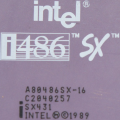
(I have seen you're using an AMD 486 DX with 40 MHz)

Please play with those 3 jumpers and report if there is any change.

In the BIOS the ISA clock setting should be something like CLK/5

Reply 2 of 23, by liloeconnie

User metadata
Rank Newbie
Rank
Newbie

for now CDROM is not connected, only HDD. After i need to resolve also cdrom on SECONDARY, but in the BIOS i don't know which choice to use, None, User...there isn't AUTO. However is secondary for now. First HDD...

The HDD are all setted to Master

For speed, 600ns and 50 mhz should be the maximum speed, or not? Quantum Trailblaser AT850, it should work at 600ns I think..

Yes AMD 486...could it cause problems?

ok i'll do some testing with jumpers and verify in the BIOS CLK/5

PS: Sorry, i'm having trouble interpreting the jumpers on the JP1. See attachment

Should those 3 rows of pins be considered with that numbering?

thx

Reply 3 of 23, by Disruptor

User metadata
Rank Oldbie
Rank
Oldbie

left 5 jumpers: JP1
right 3 jumpers: JP2

No, 600 ns is the slowest value.
50 MHz adds waitstates, so it is slower too.

Reply 4 of 23, by liloeconnie

User metadata
Rank Newbie
Rank
Newbie

Yes ok, but in JP1, what mean: JP1, 4=1/2

-jp1 is the socket
-4 is the horizontal position. from the left?
-pin 1/2 which are? I have to consider those in the vertical rows, pin 1 at the bottom, 2 in the middle and 3 at the top of my photo?
(therefore at now in JP1 and JP2 are all 2/3 closed?)

Reply 5 of 23, by CoffeeOne

User metadata
Rank Oldbie
Rank
Oldbie
liloeconnie wrote on 2024-01-09, 10:34:
Hello everyone, […]
Show full quote

Hello everyone,

I'm trying to run a hard drive on a 486 with VLB controller with 2 IDE channels (model. PTI 255W v.1.2 see photo). But for now I need to use only channel 0 (first channel) where I can connect a hard disk on the primary and possibly a CD-ROM on the secondary.

The 486 also installed an AUDIO card with IDE channel, which I tried to remove to avoid conflicts, but the result did not change.

Furthermore, I also tried using another ISA controller but the result did not change (WINBOND W83787F ISA 16bit)

On the VLB controller the jumpers appear to be set correctly (ide enabled, floppy enabled, parlalled and serials..etc..).
But in the BIOS the disk is not recognized either with the autocheck or by setting the CHS parameters (I tried connecting 3 disks, 270, 350 and 850 MB).

I also changed the IDE cable

The 2 floppies connected to the same VLB controller work, but I noticed that DOS 6.22 startup is slow, pauses, stops and then starts again, but then manages to boot

I also noticed a strange behavior, in the BIOS sometimes the hard disk is recognized with autocheck, showing the right CHS parameters, but in any case during the POST it either shows an error (81) or passes the POST but then is not recognized by the FDISK launched by floppy.

Honestly, I don't think all 3 hard drives are broken, especially the 850 MB one, it should work, but I can't get FDISK to see it and then partition and format it.

Here there are 2 video links of the startup behavior (i don't know if you can see them from this forum but i'll try) :

https://photos.app.goo.gl/1YYYij2q1hRdTfN89

https://photos.app.goo.gl/sagHRKDujSnDASvR8

Any ideas are appreciated and I've been thinking about these questions:

I can check or change some settings in the BIOS, would it be useful?

What checks should I do to verify that the VLB controller does not have problems on the IDE channels?

Device conflicts?

Are there any DOS programs I can run from floppy that can help me figure out the problem?

Thank you.
Max from Rome (Italy)
Google help me to translate from italian...sorry!

Something is suspicous with your mainboard.
How much RAM do you have?
I was able to see the screen of the BIOS:
base memory: 640K
extended memory: 7424K
That sounds about right, when you have 8MB (equals to 8192K) installed, and some memory (128K) between 640K and 1MB is reserved. So far so good.
But why the Bios counts up 8448K???
That is too much for 8MB 🤣.

EDIT: Can you boot from floppy disk without any harddisks attached?
I am asking because I am not 100% sure, that your problem is related with access to the harddisk.

MORE EDIT: I agree with you, you need to check ALL Bios settings.
Maybe as a first step, use "Load Setup Defaults" and then try again.

Reply 6 of 23, by mkarcher

User metadata
Rank l33t
Rank
l33t
CoffeeOne wrote on 2024-01-09, 17:27:
I was able to see the screen of the BIOS: base memory: 640K extended memory: 7424K That sounds about right, when you have 8MB (e […]
Show full quote

I was able to see the screen of the BIOS:
base memory: 640K
extended memory: 7424K
That sounds about right, when you have 8MB (equals to 8192K) installed, and some memory (128K) between 640K and 1MB is reserved. So far so good.
But why the Bios counts up 8448K???
That is too much for 8MB 🤣.

That's actually not too much. The chipset obviously performs relocation, and the POST displays the end address of tested memory, not the total amount of tested memory.

If the chipset wouldn't perform memory relocation, you would have 640K of conventional memory at 0..640K, 384K of reserved memory at 640K..1024K and 7168K of extended memory at 1024K..8192K. The "XXX KB OK" counter will count from 0 to 640K, jump to 1024K (skipping the reserved memory) and end at 8192K, even though only 7808KB has been tested. In this case, the chipset moves 256KB of the memory in the range 640K to 1024K to the top of the memory, so only 128KB stays reserved (for use as shadow RAM). Due to this movement, the top address is no longer 8192K, but 8192K + 256K = 8448KB.

Reply 7 of 23, by douglar

User metadata
Rank l33t
Rank
l33t

Are you able to boot off a floppy and run checkit or memtest or some other diagnostic tool ?

Reply 8 of 23, by liloeconnie

User metadata
Rank Newbie
Rank
Newbie

Hello everyone and many thanks for all, give me sometime and i will do all the recommended tests.

Sorry for Disregator but i continue to not understand enumeration of the jumper scheme, JP1, JP2..etc.

Actually, the JP1 (1 to 5) and JP2 (1 to 3) jumpers, are 1/2 or 2/3 closed?

thx

Reply 9 of 23, by Disruptor

User metadata
Rank Oldbie
Rank
Oldbie

There is one jumper block that contains JP1 AND JP2.
Left 5 jumpers are 1-5 from JP1, Right 3 jumpers are 1-3 from JP2.
All 8 jumpers are currently in top position which I have called 1-2.

Reply 10 of 23, by liloeconnie

User metadata
Rank Newbie
Rank
Newbie

Ok...

Reply 11 of 23, by liloeconnie

User metadata
Rank Newbie
Rank
Newbie

Hallo everyone and thank you very much for your help...

last night I was in the trenches for 3 hours... but maybe it was worth it.

These are the tests carried out and the results obtained:

-JP1 3,4,5 --> 2/3 (no change)
-internal battery soldered, it was not present before (no change)
- hard disk cable changed (no change)
-floppy cable(no change??)
-4 floppy drives changed (some results...now the hard disk passes POST too)
-dos 6.22 boot floppies have also been changed, some don't boot

So far I have managed to partition, format and transfer the system to the 850 MB disk (and also on the 258 MB) (see photos 1 and 2)

...but I still have strange behavior:

-if I restart with ctrl+alt+del, POST does not recognize the hard disk (error isn't visualized...but appear immediately afterwards)(see photo 3)
-if I turn off the PC and turn it back on, the hard disk is recognized and starts (see photos 4 and 5)

any idea about this?

soon the next 2 steps will be:

1-install the CDROM as PRIMARY SLAVE, but I don't know how to set it because in the BIOS I only have USER or NONE or 1-43 preset hard disks and I don't have an AUTO. I'll do some tests
-USER but which parameters?
-NONE but then the unit would appear not to be connected, right?
-1 to 43 presets...???? ...I'm confused about it.

2-install windows 95 (or 98 if I have more RAM)

have a good day everyone!!

Reply 12 of 23, by Disruptor

User metadata
Rank Oldbie
Rank
Oldbie

For the CDROM:
Just use "NONE"

Try Windows 95 B

Reply 13 of 23, by liloeconnie

User metadata
Rank Newbie
Rank
Newbie

ok...i'll try

Reply 14 of 23, by CoffeeOne

User metadata
Rank Oldbie
Rank
Oldbie
liloeconnie wrote on 2024-01-11, 10:21:

ok...i'll try

Yes, try installing Windows 95. I am very sure it will fail, because you have severe hardware problems.
But in case you succeed, you can use Windows 95 to look into the hardware.
Only remark is that you have only 8MB, 16MB RAM would be much better for Windows 95.

Reply 15 of 23, by mkarcher

User metadata
Rank l33t
Rank
l33t
liloeconnie wrote on 2024-01-11, 08:13:

-4 floppy drives changed (some results...now the hard disk passes POST too)

If your hardware operates properly, it is expected to work perfectly with "4 floppy drives: DISABLED". Due to legacy reasons, the IDE hard disk controller interface and the floppy controller interface is entangled in strange ways in the PC architecture, and 4 floppy drive support has been discontinued by IBM before the IDE interface and HD floppies were introduced. If your system fails to work properly with 4 floppy drives disabled, something is very wrong with it. If your system works properly with 4 floppy drives disabled, but fails with 4 floppy drives enabled, everything might be fine. Your VL floppy / hard disk controller card does not support 4 floppy drive operation. Don't enable this option unless you know that you have hardware installed that implements a 4-floppy interface in the way the BIOS expects it to be implemented.

Reply 16 of 23, by liloeconnie

User metadata
Rank Newbie
Rank
Newbie
CoffeeOne wrote on 2024-01-11, 19:05:
liloeconnie wrote on 2024-01-11, 10:21:

ok...i'll try

... because you have severe hardware problems.

Yes, i also think so there are some severe problems.

last night I turned the PC back on to do further tests with the cdrom and the first video screen where there are the characteristics of the video card, a Trident 8900 with 1 mb ram, was in monochrome!! then the next screen with the bios logo was in color!!

Again the BIOS settings were lost, and the screen gave the error "checksum error". Ok it could be that I soldered the battery wrong... I think I can fix it.

So I entered the BIOS and tried to self-check the disk again, the first time it didn't recognize it, then it did!!!

He does as he pleases!! Maybe it's the AI's fault? hahahaha

However, I managed to boot the system, like last night.

Every now and then the screen appears in monochrome, sometimes in color...video card defective? I also tried changing video card, with a 16 bit ISA model, but it doesn't display anything, black screen, but this card I'm sure works.

A technical friend of mine advised me to take the BIOS with a programmer (I can do it), and send it to him, but I don't know the reason, that is, what this operation could be used for. But I trust him. (you can see mobo in attachment)

The cdrom, connected as SLAVE obviously, didn't work. I tried 2...
I booted from both floppy dos 6.22 which loads a cdrom driver, and from floppy windows 98 with cdrom support.
Neither of the 2 configured the connected cdrom. I'll try to connect some more, in case these are broken.

So for now I'm worse off than before...

I also tried changing the CPU to a 486-dx2 (thinking that might be the problem), the bios sees it at 80mhz(??), but without the jumper diagram I can't set and verify the hardware configuration correctly. And anyway the situation is the same. No changes.

I asked my friend to look for the card model and maybe he found something for me, so I will have to study the configuration first and then continue testing.

So it will take quite a bit of time to do all these things.

As soon as I have news I'll let you know..

PS: don't go crazy over this thing, if it's too difficult to solve I can't waste too much time on it, and I don't have such advanced skills, I can sell the whole PC as it is as "not working" and bye bye...

Thanks for now, for everything.
Max

Last edited by liloeconnie on 2024-01-12, 09:10. Edited 1 time in total.

Reply 17 of 23, by Disruptor

User metadata
Rank Oldbie
Rank
Oldbie

Please try to set your motherboard to 33 MHz FSB.
Go for 40 MHz when you achieve progress.

Reply 18 of 23, by liloeconnie

User metadata
Rank Newbie
Rank
Newbie
mkarcher wrote on 2024-01-12, 07:45:
liloeconnie wrote on 2024-01-11, 08:13:

-4 floppy drives changed (some results...now the hard disk passes POST too)

If your hardware operates properly, it is expected to work perfectly with "4 floppy drives: DISABLED". Due to legacy reasons, the IDE hard disk controller interface and the floppy controller interface is entangled in strange ways in the PC architecture, and 4 floppy drive support has been discontinued by IBM before the IDE interface and HD floppies were introduced. If your system fails to work properly with 4 floppy drives disabled, something is very wrong with it. If your system works properly with 4 floppy drives disabled, but fails with 4 floppy drives enabled, everything might be fine. Your VL floppy / hard disk controller card does not support 4 floppy drive operation. Don't enable this option unless you know that you have hardware installed that implements a 4-floppy interface in the way the BIOS expects it to be implemented.

I have to check out this 4 floppy drive thing...it's new to me. In the BIOS i think, right?

Reply 19 of 23, by liloeconnie

User metadata
Rank Newbie
Rank
Newbie
Disruptor wrote on 2024-01-12, 09:08:

Please try to set your motherboard to 33 MHz FSB.
Go for 40 MHz when you achieve progress.

ok i will try