First post, by elcrys

- Rank
- Newbie
I have had this card (Number Nine SR9) in my collection for some time, and I have never been able to make it work with a DVI connection. I would like to get to the bottom of this mystery.
The card works with a DVI-VGA adaptor, but not with DVI directly. When connected like this, the motherboard sends 1 long, 3 short beeps (no video card or bad video RAM), then proceeds to boot with a black screen. I have thrown every DVI-capable monitor I own at it, but no joy. I have tested FSC P19-2 (1280x1024), P20-2 (1600x1200), AOC Q3279VWFD8 (2560x1440), and Gigabyte M32Q with a DVI-HDMI adaptor (2560x1440) - none of them worked. I am well aware that these early DVI implementations can be problematic, but I was able to find a few confirmations that others used this exact card over DVI (on monitors as new as a BenQ E2220 using a DVI-HDMI adaptor). I refuse to believe that all my monitors are incompatible with it; therefore, I would like to check a few other things.
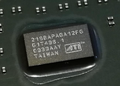
One of the limitations could be the Sil154 transmitter itself. The datasheet says its maximum resolution is 1280 x 1024 at 60 Hz. The question is what happens if the initial negotiation with the monitor fails - will the card send some default resolution, or announce a failure? Technically speaking, the FSC P19-2 has the same resolution, but the native refresh rate of this monitor is 75 Hz - that could pose a problem. I was also trying to force a lower resolution (1280x720) via a cheap EDID emulator, but that didn't help either. Btw., this Sil154 transmitter was also used in some Nvidia cards, also quite problematic: No output from DVI ports on any ELSA Erazor III 32MB TNT2 Pro
A second problem could be the BIOS of the card. One of the reasons DVI works for some and doesn't for others could be a different version of vBIOS. Perhaps S3 fixed it later on. My card has version 2.1D.29c from 06/29/00 (attached). Apparently this version is not so well known: according to this site (https://dosdays.co.uk/topics/Manufacturers/nu … bernine/sr9.php), there are known versions 4.12.10 and 4.1F.13b with unknown dating. This could signify that my BIOS version is indeed older. Another potential problem related to this could be BIOS rot. I was able to extract the BIOS from my card (using NSSI), but unfortunately I have nothing to compare it to, as there are virtually no BIOS dumps for this card on the internet. I also checked the archived Number Nine website, and it seems they never provided BIOS update tools or images. The BIOS chip on the card should be an SST 39VF512; these were used on some 3dfx and Nvidia cards. I don't know if it's prone to rot or not. Still, it could be worthwhile to collect dumps for this card here for a comparison. One other interesting thing, the official Number Nine driver pack for the card completely mis-identifies the BIOS version:
A third problem could be physical damage. Since the transmitter chip is located on the "neck" of the card, it is very easy to bend the PCB there, which could potentially damage the chip or its soldering. This would be very hard to prove without de-soldering it completely.
I would welcome any input, especially if you have the same card and can provide a BIOS dump for it, even the same version as mine (2.1D.29c), as I would love to compare them. Also I would like to know if anyone is aware of a way how to flash these cards. As I mentioned the BIOS chip is a common one and 3dfx and Nvidia provided SW flashing tools for the cards with it, but I suppose it won't be possible to use those.
EDIT:
I forgot there is a checksum byte within the BIOS. According to it my BIOS dump has a valid checksum, so that would rule out a BIOS rot.