VOGONS


Bought these (retro) hardware today

Topic actions

Reply 59240 of 59249, by Shader_BiH

User metadata
Rank Newbie
Rank
Newbie
Dan386DX wrote on 2026-06-11, 04:08:
zuldan wrote on 2026-06-10, 19:56:
Shader_BiH wrote on 2026-06-10, 19:35:
Meanwhile I ordered a pair of those ATX to AT PSU connector converters... I've read somewhere that they are perfectly fine to us […]
Show full quote

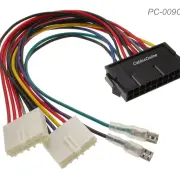
Meanwhile I ordered a pair of those ATX to AT PSU connector converters... I've read somewhere that they are perfectly fine to use as long as you have strong 3.3 and 5v rails... I guess I'll find out 😁

s-l1600-13.webp

Those converters are great. I use them in all my 386 and 486’s. Connect those 2 leads directly to the 4 pin power switch of your AT case. Also much safer than having mains (120v/240v) going to the power switch.

I agree, I swear by them; I like to keep the hardware as period correct as possible but it's hard to trust a 35 year old PSU if it's not been recapped/refurbished lately.

The only problem with these, is that those four metal terminals behind the power switch can vary in size, I've had to modify the connectors on the adaptor to make them fit before.

Yes those can be tricky... but then again, that's a much easier DIY correction than hack-jobbing entire ATX to AT connection 🤣 I'm just happy people make these and you can get them brand new. Concerning old PSUs... every time I use them it feels like gambling on a slot machine, but regardless, PSUs from 95-2000 proved to be much higher quality than those from 2001-2005, at least in my experience. I had so many MS and Codegen PSUs blow up... and those like "brands" from early 2000s era, they must have got those bad capacitors as well. (and I'm not even considering inherent bad design here...) Recently I got a pentium mmx rig with very old Seasonic PSU and it works great... checked inside, no bad caps, at least visually.

Reply 59241 of 59249, by Fazeshift

User metadata
Rank Newbie
Rank
Newbie
Shader_BiH wrote on 2026-06-12, 06:20:

Yes those can be tricky... but then again, that's a much easier DIY correction than hack-jobbing entire ATX to AT connection 🤣 I'm just happy people make these and you can get them brand new. Concerning old PSUs... every time I use them it feels like gambling on a slot machine, but regardless, PSUs from 95-2000 proved to be much higher quality than those from 2001-2005, at least in my experience. I had so many MS and Codegen PSUs blow up... and those like "brands" from early 2000s era, they must have got those bad capacitors as well. (and I'm not even considering inherent bad design here...) Recently I got a pentium mmx rig with very old Seasonic PSU and it works great... checked inside, no bad caps, at least visually.

Anecdotally, I agree. The worst power supply cost-cutting and false specs seems to have happened after the 90's.

I opened some of the power supplies I have, and the some of the mid-00's are pretty bad in build quality and garbage caps that have obvious bulging and electrolyte leakage, even the ones that were supposedly a "premium" brand. Then I looked at a used Astec 200W from 1997 with Japanese Nichicon caps (good, visually), good overall build quality, and tests in-spec with minimal ripple.

Seasonic was top-tier, at least back then.

It has also been interesting reading this PS discussion:
Any sense buying modern PSU for old hardware?

I don't have anything meaningful to contribute there, but it does illustrate the challenge of replacement power supplies for the most 5V-hungry hardware from the pre-12V ATX era. Apparently the DC-DC converters can overheat with light 12V load but heavy 5V load. I'm looking at new PSU's in the 650-750W range, with 5V ratings of 18-20A. That 200W Astec has 18A rating on the 5V, and that isn't shared with the 3.3V rail. I'm considering doing a full re-cap of that (I have a few of them) for a retro build (probably PII 400MHz) instead of buying a modern PSU.

Reply 59242 of 59249, by BloodyCactus

User metadata
Rank Oldbie
Rank
Oldbie

Picked up this, A 3COM 3c982 rev b, basically a dual nic 3c905c /3c920 on a single card using an intel PCI-to-PCI bridge.

Ye9ANHr.jpeg

--/\-[ Stu : Bloody Cactus :: [ https://bloodycactus.com :: http://kråketær.com ]-/\--

Reply 59243 of 59249, by pan069

User metadata
Rank Oldbie
Rank
Oldbie

I have a couple of ET6000s already but grabbed this Hercules version a while back. I have some ram upgrade chips. Should I get sockets or blast them directly onto the pcb?

The attachment PXL_20260613_023447826.jpg is no longer available

Reply 59244 of 59249, by Shader_BiH

User metadata
Rank Newbie
Rank
Newbie
pan069 wrote on 2026-06-13, 05:37:

I have a couple of ET6000s already but grabbed this Hercules version a while back. I have some ram upgrade chips. Should I get sockets or blast them directly onto the pcb?

The attachment PXL_20260613_023447826.jpg is no longer available

I love these Tseng cards... I would go for the sockets if you have some, it will look much better in my opinion.

Reply 59245 of 59249, by Ozzuneoj

User metadata
Rank l33t
Rank
l33t
pan069 wrote on 2026-06-13, 05:37:

I have a couple of ET6000s already but grabbed this Hercules version a while back. I have some ram upgrade chips. Should I get sockets or blast them directly onto the pcb?

The attachment PXL_20260613_023447826.jpg is no longer available

This is probably just due to my lack of experience, but I find soldering surface mount sockets reliably much more difficult than just soldering chips. If you have no intention of removing them in the future, I'd just solder the chips and be done with it.

Now for some blitting from the back buffer.

Reply 59246 of 59249, by rasz_pl

User metadata
Rank l33t
Rank
l33t
Ozzuneoj wrote on 2026-06-13, 16:46:

This is probably just due to my lack of experience, but I find soldering surface mount sockets reliably much more difficult than just soldering chips. If you have no intention of removing them in the future, I'd just solder the chips and be done with it.

+ this

https://github.com/raszpl/sigrok-disk FM/MFM/RLL decoder
https://github.com/raszpl/FIC-486-GAC-2-Cache-Module (AT&T Globalyst)
https://github.com/raszpl/386RC-16 ram board
https://github.com/raszpl/Zenith_ZBIOS Zenith Z-386 MFM-300 ZBIOS disassembly

Reply 59247 of 59249, by pan069

User metadata
Rank Oldbie
Rank
Oldbie
Ozzuneoj wrote on 2026-06-13, 16:46:

This is probably just due to my lack of experience, but I find soldering surface mount sockets reliably much more difficult than just soldering chips. If you have no intention of removing them in the future, I'd just solder the chips and be done with it.

Interesting. What makes it in your opinion more difficult? I am not a super experienced solder-dude but I image that solder these types sockets, you approach from the top whereas soldering directly you approach from the side.

If I was to go for sockets, should I cut out the bottom plate or leave it? I have seen people cutting it out as it makes it easier to solder the sockets as the nearby plastic tends to melt.

I have a couple of these PLCC68P sockets:

The attachment s-l960.webp is no longer available

Technically I have two ET6000s that can use a memory upgrade (hence the four chips). I could try both techniques... 🤔

Reply 59248 of 59249, by Ozzuneoj

User metadata
Rank l33t
Rank
l33t
pan069 wrote on 2026-06-13, 21:33:
Interesting. What makes it in your opinion more difficult? I am not a super experienced solder-dude but I image that solder thes […]
Show full quote
Ozzuneoj wrote on 2026-06-13, 16:46:

This is probably just due to my lack of experience, but I find soldering surface mount sockets reliably much more difficult than just soldering chips. If you have no intention of removing them in the future, I'd just solder the chips and be done with it.

Interesting. What makes it in your opinion more difficult? I am not a super experienced solder-dude but I image that solder these types sockets, you approach from the top whereas soldering directly you approach from the side.

If I was to go for sockets, should I cut out the bottom plate or leave it? I have seen people cutting it out as it makes it easier to solder the sockets as the nearby plastic tends to melt.

I have a couple of these PLCC68P sockets:

The attachment s-l960.webp is no longer available

Technically I have two ET6000s that can use a memory upgrade (hence the four chips). I could try both techniques... 🤔

PLCC and SOJ chips are fairly simple to solder with a heat gun and solder paste (or some flux if you have to desolder). I haven't done a lot of them, but the ones I have done have been kind of spur-of-the-moment "I'm going to dive into this and see what happens" projects and they end up working without much fuss, and with no damage.

When dealing with sockets that accept PLCC or SOJ chips, I have found that they cannot handle the same amount of heat that I have used when working with the chips themselves. The plastic tends to get shiny if you hit them with a little too much heat, and will deform fairly easily if you keep going. Also, if you want to use a soldering iron you will need an extremely steady hand to avoid melting the plastic or soldering multiple pins together.

I'm sure if I had more experience I would develop a technique that works well for sockets, but using my current tools and skills they are things that I generally avoid desoldering\soldering unless absolutely necessary.

If you don't have a heat gun and don't have a ton of experience with a soldering iron, I wouldn't even attempt this. Just get a heat gun and some solder paste and practice on some other devices first. It's kind of amazing the first time you watch a part pull itself into place while the solder paste heats up. When I first started soldering tiny SMD caps under a microscope this way it made me laugh... it looks like little nano robots are doing the job for you. Sure beats stabbing the poor board with a hot iron that is 3 times the width of the component being soldered.

Just make sure to try to separate the solder paste on each pad before hitting it with heat and check very thoroughly for shorts between pins afterward.

Last edited by Ozzuneoj on 2026-06-14, 04:11. Edited 1 time in total.

Now for some blitting from the back buffer.

Reply 59249 of 59249, by rasz_pl

User metadata
Rank l33t
Rank
l33t
pan069 wrote on 2026-06-13, 21:33:

should I cut out the bottom plate or leave it? I have seen people cutting it out as it makes it easier to solder the sockets as the nearby plastic tends to melt.

Why do you ask whats wrong with sockets when you already know in the next sentence? 😀 Cutting internal frame makes socket non rigid and prone to bending out and losing contact. Its a lot of additional hassle in exchange for non deterministic outcome.

https://github.com/raszpl/sigrok-disk FM/MFM/RLL decoder
https://github.com/raszpl/FIC-486-GAC-2-Cache-Module (AT&T Globalyst)
https://github.com/raszpl/386RC-16 ram board
https://github.com/raszpl/Zenith_ZBIOS Zenith Z-386 MFM-300 ZBIOS disassembly