Well surely many if they don't use them collect them, those Celeron without L2 cache, they have that something less, which certainly penalizes them against their peers, PII and Mendocino, the strangest thing 🤔 is that, from the mistake of removing the cache, we went on to integrate only 128 KB, which however work at full frequency, and this balanced the cache at half frequency of 512 KB of the PII, however all this was a bit of the competition's fault, if AMD hadn't been successful, they probably wouldn't have abandoned the S.7 and the P.MMX would have been developed with faster versions, it's also true that the Slot1, was a solution maybe designed to last several years, but then at some point, those cheap chips became useless since the cache was integrated, and then the socket reappeared, this time with 370 PINs.
Exactly I don't know how much slower they are, you could check with a Celeron 300 MHz, from BIOS you should deactivate the L2 cache, and do the benches (from Phil's for example), then if you want to do a further comparison test, you could make a comparison with overclock at 450 MHz, in this case I imagine that the difference should grow, between the one without L2 cache and the one with 128 KB integrated.
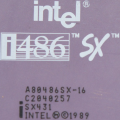
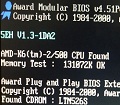
I'm currently working on some 486, I'm reconfiguring a couple, but in addition to the S.7, the Slot1 are among my favorites 😻, the BX especially.
AMD 286-16 287-10 4MB
AMD 386SX-33 4MB
AMD 386DX-40 Intel 387 8MB
Cyrix 486DLC-40 IIT387-40 8MB
486DX2-66 +many others
P60 48MB
iDX4-100 32MB
AMD 5X86-133 16MB VLB CL5429 2MB
AMD K62+ 550 SOYO 5EMA+ +many others
AST Pentium Pro 200 MHz L2 256KB