Reply 1380 of 1395, by JohnBourno
Will test the Windows installation too, but wasn't able to do it, yet.
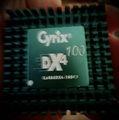
I will report back! The cooling is the integrated heatsink with a fan slapped on it.
Will test the Windows installation too, but wasn't able to do it, yet.
I will report back! The cooling is the integrated heatsink with a fan slapped on it.
MikeSG wrote on 2025-08-20, 18:12:please contact via private message
MikeSG - I tried to PM you, but I have not met my newbie post quota even though I've been a member since 2022!
Can you try PMing me? Thanks!
dundee256 wrote on 2025-08-19, 00:30:Hi... I'm a long time forum reader but this is my first post. I've read through this thread a few times, but it's not clear how I can order one or two of these interposers? Who is selling them- feipoa?
Thank you!
I will be making extra interposers at some point, but time keeps getting the better of me. As noted earlier, I'm not selling the interposer units, but rather, am giving them away in exchange for direct charitable donations to a registered charity (preferably one of my choosing). Can talk after I have extras in hand. Making one-off's is way too time consuming.
Re: Custom interposer module for TI486SXL2-66 PGA168 to PGA132 - HELP!
feipoa wrote on 2025-05-29, 10:35:For anyone else wanting a pre-assembled unit, please wait until I have a batch of these assembled (probably November). One memb […]
For anyone else wanting a pre-assembled unit, please wait until I have a batch of these assembled (probably November). One member made such a large donation [to a charity I selected], I felt more compelled to assemble a one-off. The problem with this is the doubling of time required. For the one-off, this is what my tracked time looked like this:
1.5 hrs: prep, e.g. pulling parts and cutting & sanding down pin strips
7.5 hrs: soldering socket, pins, and filtering caps
2 hrs: all other soldering + flux cleanup
1 hr: setup a testbed, run scope measurements, take photos, and disassemble the testbed.Total: 12 hours.
I hope to get this down to 4-6 hours each unit in a batch, but its hard to say. Soldering the pins and socket takes the most time. The amount of exposed conductor on the PCB is quite small and makes heating more difficult. I needed to use a finer tip, which is OK until you reach a GND or VCC pin. Bent tips for the corners are best.
Unfortunately, the guy selling the narrow PGA168 sockets is now asking about $6 each (shipped). They used to be about $1.50.

Plan your life wisely, you'll be dead before you know it.
dundee256 wrote on 2025-12-08, 00:20:MikeSG - I tried to PM you, but I have not met my newbie post quota even though I've been a member since 2022!
Can you try PMing me? Thanks!
I PM'd you, but the message is sitting in my outbox unsent.
My email is michael<<dot>>sg<<at>>gmail<<dot>>com. Replace <<dot>> and <<at>>.
feipoa wrote on 2025-12-08, 04:00:I will be making extra interposers at some point, but time keeps getting the better of me.
Can you share gerbers? I want to make one for my 386 build.
Gerbers are shared in this thread already. Happy hunting :)
Plan your life wisely, you'll be dead before you know it.
Can I use 486SXL2-66 cpu on a socket3 motherboard? With 486SX settings?
System:1
Cyrix 5x86-120GP & X5-160ADZ
Lucky Star LS-486E
System:2
Intel DX4-WB & AMDDX4-120
PcChips M912 V1.7
System:3
AMD K6-2-475 & Cyrix 6x86MX PR-233
Asus P5A-B
System:4
UMC U5S-40
486UL-P101
System:5
P3 Coppermine 800EB
Gigabyte GA-6BX7
fsinan wrote on 2026-01-14, 18:01:Can I use 486SXL2-66 cpu on a socket3 motherboard? With 486SX settings?
No, not usually. Of the dozens of socket 3 motherboard's I've tested, none of them worked with the SXL2-66 using the i486SX settings. There is only one motherboard I know of which works with the PGA-168 variant of the SXL2-66, and it's the EXP4349. This board has specific jumper support for the SXL2, however performance is lousy and my board is flakey.
Plan your life wisely, you'll be dead before you know it.
feipoa wrote on 2026-01-15, 11:41:fsinan wrote on 2026-01-14, 18:01:Can I use 486SXL2-66 cpu on a socket3 motherboard? With 486SX settings?
No, not usually. Of the dozens of socket 3 motherboard's I've tested, none of them worked with the SXL2-66 using the i486SX settings. There is only one motherboard I know of which works with the PGA-168 variant of the SXL2-66, and it's the EXP4349. This board has specific jumper support for the SXL2, however performance is lousy and my board is flakey.
It would be interesting to do a deep dive into why they dont work on many mobos and what that jumper does specifically
If we could figure that out maybe a 486sx could be used on the interposer?
Sphere478 wrote on 2026-01-19, 22:57:It would be interesting to do a deep dive into why they dont work on many mobos and what that jumper does specifically
If we could figure that out maybe a 486sx could be used on the interposer?
It's all out in the open already. The wiring differences between i486sx and SXL2 are identified in Appendix D of the Texas Instruments SXL databook.
Plan your life wisely, you'll be dead before you know it.
Sphere478 wrote on 2026-01-19, 22:57:It would be interesting to do a deep dive into why they dont work on many mobos and what that jumper does specifically
If we could figure that out maybe a 486sx could be used on the interposer?
My interposer design has solder-jumpers on all the different lines to run TI486SXL, i486sx, i486dx, am486dx. Still on pause at the moment.
Numerous lines are different. For the i486sx:
NA# - disconnect to CPU,
BUSY#/SUSP#/SUSPA#/SMADS#/PEREQ#/ERROR# - disconnect to CPU,
DP0-3# - pull high
CLK# - needs a clock divider to half 386 clock frequency
NMI# is different between Intel and AMD. There's also R17 and B13 (CLKMUL).
feipoa wrote on 2026-01-19, 23:19:Sphere478 wrote on 2026-01-19, 22:57:It would be interesting to do a deep dive into why they dont work on many mobos and what that jumper does specifically
If we could figure that out maybe a 486sx could be used on the interposer?
It's all out in the open already. The wiring differences between i486sx and SXL2 are identified in Appendix D of the Texas Instruments SXL databook.
Right on 😀 thx!
Googling around I can’t seem to locate it. Where did it go. (I’m sure you know, might I impose?)
Wouldn’t mind taking a gander at that section
MikeSG wrote on 2026-01-20, 13:36:My interposer design has solder-jumpers on all the different lines to run TI486SXL, i486sx, i486dx, am486dx. Still on pause at t […]
Sphere478 wrote on 2026-01-19, 22:57:It would be interesting to do a deep dive into why they dont work on many mobos and what that jumper does specifically
If we could figure that out maybe a 486sx could be used on the interposer?
My interposer design has solder-jumpers on all the different lines to run TI486SXL, i486sx, i486dx, am486dx. Still on pause at the moment.
Numerous lines are different. For the i486sx:
NA# - disconnect to CPU,
BUSY#/SUSP#/SUSPA#/SMADS#/PEREQ#/ERROR# - disconnect to CPU,
DP0-3# - pull high
CLK# - needs a clock divider to half 386 clock frequencyNMI# is different between Intel and AMD. There's also R17 and B13 (CLKMUL).
If you want, my interposer is public domain, you can mod it to have those mods if you like. It’s a proven design at this point, would be a good platform to add features to. 😀 I’ve been pretty busy with other stuff these days. But this stuff still fascinates me 😀
Thanks but I've already made my design with all those features.. only saving up for more prototypes. Focusing on < 1 hour soldering time.
It's one of those time is money and money is time situations.
MikeSG's design can probably be assembled with solder-in pins if someone doesn't want to pay a premium for the press fit connector. I'll probably assemble one of MikeSG's units to compare the two once the design is finalised.
Are you able to remove and re-use the press-fit connector once its been inserted? Or does removing it destroy it in some way?
Plan your life wisely, you'll be dead before you know it.
feipoa wrote on 2026-01-25, 00:59:Are you able to remove and re-use the press-fit connector once its been inserted? Or does removing it destroy it in some way?
It can be reused if the holes are too big (which they are currently). The pins are super soft tin in the shape of a clothes peg which close in slightly. Attempting to reopen the pins causes them to break. Broken pins can be soldered underneath but the central row cannot be accessed. Closed pins alone is not really a good connection, it should crush slightly. Any solder in the hole (easy mistake while soldering the 132 pin socket), even after complete visual removable will block the pin from going in unless you use force on that one pin and it'll be a crush fit and good connection. Individual pins can be removed/replaced. New press-fit socket is $46 USD.
I recommend another way, but when the fitment is good it's a big time saver.