VOGONS


First post, by thisisamigaspeaking

User metadata
Rank Newbie
Rank
Newbie

It's not fast. Apparently it is faster than the IBM PGC it is a clone of though. This is running on a 10 MHz 286.

https://youtu.be/lgrRibMoZTk

Reply 1 of 6, by Predator99

User metadata
Rank l33t
Rank
l33t

Very nice, thanks you!

I also own this card
PGA - Matrox PG-640A

But I think I didnt find that demo on the driver disks. Where is it from?

Reply 2 of 6, by thisisamigaspeaking

User metadata
Rank Newbie
Rank
Newbie
Predator99 wrote on Yesterday, 11:37:
Very nice, thanks you! […]
Show full quote

Very nice, thanks you!

I also own this card
PGA - Matrox PG-640A

But I think I didnt find that demo on the driver disks. Where is it from?

What driver disks do you have? Are we allowed to link to driver software? The demo's in pg640_drivers.zip which is actually just demos and utilities. I haven't tried everything in there yet, that is "demo.bat".

There are a lot of drivers etc. for the next generation of these boards (PG-641, 1281) but they are not compatible. Those are more just regular TIGA boards + 3D. I'd love to find documentation for how to program them.

The 640 and 1280 are IBM PGC clones and we do have full documentation for them.

Reply 3 of 6, by thisisamigaspeaking

User metadata
Rank Newbie
Rank
Newbie

Actually we do have more programming information than I thought. Possibly for this whole era of Matrox cards. I'll update after I have a chance to look it over.

Reply 4 of 6, by Ozzuneoj

User metadata
Rank l33t
Rank
l33t
thisisamigaspeaking wrote on Yesterday, 10:25:

It's not fast. Apparently it is faster than the IBM PGC it is a clone of though. This is running on a 10 MHz 286.

https://youtu.be/lgrRibMoZTk

Wow, that is awesome! Thanks for taking the time to record and upload a video of that.

I just browsed the manual, and it's very cool to see so much about the card's basic 3D acceleration in there. I know not many people would be able to appreciate it in real-time on real hardware, but it would be interesting if someone put together a very simple 3D game that is actually accelerated by such an old card. I wonder how it works with an original 8088 at 4.77Mhz...

Now for some blitting from the back buffer.

Reply 5 of 6, by Predator99

User metadata
Rank l33t
Rank
l33t

I dont have any driver disk. Think I downloaded everything from vcfed.

It was a little disappointing there is not much software for the PGC available. Maybe we should create a collection of everything...at least there is a program to display pictures.

The attachment B.jpg is no longer available
The attachment C.jpg is no longer available

Reply 6 of 6, by thisisamigaspeaking

User metadata
Rank Newbie
Rank
Newbie
Ozzuneoj wrote on Yesterday, 20:42:
thisisamigaspeaking wrote on Yesterday, 10:25:

It's not fast. Apparently it is faster than the IBM PGC it is a clone of though. This is running on a 10 MHz 286.

https://youtu.be/lgrRibMoZTk

Wow, that is awesome! Thanks for taking the time to record and upload a video of that.

I just browsed the manual, and it's very cool to see so much about the card's basic 3D acceleration in there. I know not many people would be able to appreciate it in real-time on real hardware, but it would be interesting if someone put together a very simple 3D game that is actually accelerated by such an old card. I wonder how it works with an original 8088 at 4.77Mhz...

That is my exact plan and I welcome any advice and help.

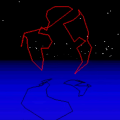
I started my project https://github.com/trguhq/testglobe/ with this general idea in mind, before I had much of an idea of the performance of the very oldest 3D hardware. testglobe might run in a very rudimentary form on a PGC but it would be very basic, maybe something like the Amiga demo with the spinning globe in my avatar. As of now, the oldest hardware I've run testglobe on is a Sun Ultra 60 (where it runs at pretty much full speed compared to my modern Mac). Other people have run it on older SGIs. That project itself was actually to see the viability of using some older 3D hardware without texture mapping to run quake with just shaded triangles, but that's a topic for another day/thread. It evolved into an "what's the oldest 3D hardware that can spin some form of a globe?"

The attachment testglobe.png is no longer available

One thing I want to try is to just use old hardware to do the polygon fills or line drawing, and use an FPU (if available) to do the 3D transforms. So here even a 2D card might be able to usefully accelerate testglobe... or a game. For that I'm thinking a 386 with a coprocessor and a TIGA board. That'd also be through Windows or Mac OS drivers for simplicity, so it could potentially run on a lot of hardware.

For a game I'm thinking a battle mech game which at its most basic would be like Battlezone, but ideally would use filled polygons instead of just lines. I think a PGC is too slow for that. PG-640A might be too slow. A PG-641 though, may be able to make a nice game. That an XT with a PGC could run a 3D game is pretty optimistic, but we'll see. I intend to find out what the hardware can do.

A PG-640A is compatible with a PGC, but I'm not yet certain how compatible a PG-641 is. I'm looking into that now. I love the idea of a single "PGC" version using IBM's interface for apples to apples comparison between cards but it may be more like a PGC version, a Matrox version, and an accelerated-2D version that uses the FPU for 3D.