VOGONS


Pentium MMX 233 Reporting as 290MHz

Topic actions

First post, by bytesaber

User metadata
Rank Member
Rank
Member

I am attempting to run my system without overclocking. The purpose is to attempt creating a Phil 136 in 1 Pentium MMX Project. (That guy has no idea how much I appreciate his content.)

Gigabyte GA-5AX Rev 3.0
Pentium MMX 233

I would like to configure the Pentium MMX 233 to just run at stock with the motherboard also at stock. I understand this to be 66Mhz FSB and CPU at 233MHz.

This is gear that I have not personally run before.

I have attached images to see if I am making any mistakes. Thank you for any help.
Reply 1 of 25, by Disruptor

User metadata
Rank Oldbie
Rank
Oldbie

Sounds like a FSB 0f 83 MHz - which is a common setting on Super Socket 7 boards.
3,5 x 66 = 233 MHz
3,5 x 83 = 290 MHz

https://theretroweb.com/motherboards/s/gigaby … -ga-5ax-rev-3.0

Please try to reseat JP7.

Last edited by Disruptor on 2026-03-04, 09:11. Edited 3 times in total.

Reply 2 of 25, by H3nrik V!

User metadata
Rank l33t
Rank
l33t

The manual https://theretroweb.com/motherboard/manual/ga … d1809228447.pdf has pictures on page 5/6 showing settings for 233 MMX. Looks pretty much as you have set them. But 290 MHz indicates it runs 83 FSB and 3.5x multiplier. Maybe JP7 doesn't connect right? I have seen jumpers like that with dodgy connection ... JP7 looks like it's the only difference between 83 and 66 MHz FSB.

If it's dual it's kind of cool ... 😎

--- GA586DX --- P2B-DS --- BP6 ---

Please use the "quote" option if asking questions to what I write - it will really up the chances of me noticing 😀

Reply 3 of 25, by bytesaber

User metadata
Rank Member
Rank
Member

No joy. I tried different jumpers to close JP7 2-3. They definitely seat well. No change. I also booted with the jumper removed. Still showed 290Mhz. Could that reinforce what's being suggested? Motherboard issue?

Reply 4 of 25, by rasz_pl

User metadata
Rank l33t
Rank
l33t

Since its working otherwise then pin 7 of U11 ICS9148 is soldered well, without it there would be no PCI clock for the Chipset. Whats left are those two tiny resistors between U11 and JP8 JP7. I suspect one of them links pin7 to JP7. With cracked resistor JP7 wont be able to ground pin7. You can just measure resistance between U11 pin 7 and middle pin of jp7, should be ~10Kohm.

https://github.com/raszpl/sigrok-disk FM/MFM/RLL decoder
https://github.com/raszpl/FIC-486-GAC-2-Cache-Module (AT&T Globalyst)
https://github.com/raszpl/386RC-16 ram board
https://github.com/raszpl/440BX Reference Design adapted to Kicad

Reply 5 of 25, by Garrett W

User metadata
Rank Oldbie
Rank
Oldbie

Are you 100% you have the revision of the motherboard right?

Reply 6 of 25, by cyclone3d

User metadata
Rank l33t++
Rank
l33t++

Back then, there were a few boards that had the documentation for some of the jumpers backwards.

And yes, revision of the motherboard matters. They changed stupid stuff like this in different revisions.

Yamaha modified setupds and drivers
Yamaha XG repository
YMF7x4 Guide
Aopen AW744L II SB-LINK

Reply 7 of 25, by Lostdotfish

User metadata
Rank Member
Rank
Member

ignore me

Last edited by Lostdotfish on 2026-03-04, 16:02. Edited 1 time in total.

Reply 8 of 25, by Nexxen

User metadata
Rank l33t
Rank
l33t

If you have an oscilloscope you can remove the cpu and test all the combinations to check your board's revision.

PC#1 Pentium 233 MMX - 98SE
PC#2 PIII-1Ghz - 98SE/W2K

- "One hates the specialty unobtainium parts, the other laughs in greed listing them under a ridiculous price" - kotel studios
- Bare metal ist krieg.

Reply 9 of 25, by bytesaber

User metadata
Rank Member
Rank
Member
rasz_pl wrote on 2026-03-04, 10:20:

You can just measure resistance between U11 pin 7 and middle pin of jp7, should be ~10Kohm.

Are you able to see which resistor you want me to check in this image?

I can micro solder, multimeter, o-scope, etc.

Rev 3.0 is printed on the board. So I am assuming that is correct. I did notice different jumper settings in the Rev 5.2 manual. I am looking at what I'm pretty sure is a Rev 3.0 PDF.

I have another Pentium MMX 233 CPU. Is that worth swapping to see if anything changes?

Reply 10 of 25, by bytesaber

User metadata
Rank Member
Rank
Member

Are you recommending to check for 10Kohm across these points marked in red?

Reply 11 of 25, by cyclone3d

User metadata
Rank l33t++
Rank
l33t++

I bet the fsb jumper instructions are wrong. No harm in trying the different combinations. Look up the datasheet for the ICS clockgen. There are usually multiple settings for each fsb selection, even if not all of them are wired up.

Most boards also do not document all the different settings available.

Some are different Fab settings and some are different dividers for PCI speed.

Yamaha modified setupds and drivers
Yamaha XG repository
YMF7x4 Guide
Aopen AW744L II SB-LINK

Reply 12 of 25, by Shponglefan

User metadata
Rank l33t
Rank
l33t

I'd echo just trying the different jumper combinations and seeing what FSB speeds are the result.

I've done this before with 486 boards and there are sometimes additional speed possibilities not covered in the manual.

Pentium 4 Multi-OS Build
486 DX4-100 with 6 sound cards
486 DX-33 with 5 sound cards

Reply 13 of 25, by bytesaber

User metadata
Rank Member
Rank
Member

I swapped to the other CPU without changing jumpers or dip switches. This one shows 233MHz at POST.

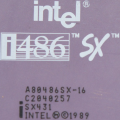
Ok confession. The image above of the bottom of the CPU, is the CPU that is in it now at 233MHz.

This image I am attaching in this reply, is the CPU that was in the system showing 290MHz. I lazily used the picture because... well it's the same model number. But, perhaps there is a difference afterall?

I did measure the resistance between U11's pin 7 and JP7. It's 10k. Without a jumper attached, it's JP7-3

Anyhow, I don't know if this means something is wrong with the first CPU. I sure would like to know if anyone has some theories or past experience.

Thank you

Reply 15 of 25, by bytesaber

User metadata
Rank Member
Rank
Member

It was dust/dirt. So I looked closer at this under the scope. Many pins are bent, but also bent at their tips. It was probably some connectivity issues.

Reply 16 of 25, by rasz_pl

User metadata
Rank l33t
Rank
l33t
bytesaber wrote on 2026-03-05, 02:57:

I did measure the resistance between U11's pin 7 and JP7. It's 10k.

good

bytesaber wrote on 2026-03-05, 02:57:

Without a jumper attached, it's JP7-3

wait what? what does JP7-3 mean ? 😀 pins 1 and 3 of jumper JP7 should be connected to ground and 3V

I have no idea how a CPU can influence clock produced by ICS clockgen. Failing global timer ticking slower could make bios display higher frequency.

https://github.com/raszpl/sigrok-disk FM/MFM/RLL decoder
https://github.com/raszpl/FIC-486-GAC-2-Cache-Module (AT&T Globalyst)
https://github.com/raszpl/386RC-16 ram board
https://github.com/raszpl/440BX Reference Design adapted to Kicad

Reply 17 of 25, by bytesaber

User metadata
Rank Member
Rank
Member
rasz_pl wrote on 2026-03-05, 05:34:

wait what? what does JP7-3 mean ? 😀 pins 1 and 3 of jumper JP7 should be connected to ground and 3V

JP7-3 was my dumb way of saying, JP7 pin 3. I do see pin 1 and 3 are connected to ground. I was measuring 10k from U11 Pin 7 to Pin 3 at JP7 while the jumper was pulled off / all 3 pins open. So the same as if I measured to ground.

Does this clear up, and match what you are describing as well?

Reply 18 of 25, by rasz_pl

User metadata
Rank l33t
Rank
l33t
bytesaber wrote on 2026-03-05, 06:25:

JP7-3 was my dumb way of saying, JP7 pin 3.

that makes me question how that thing even runs in the first place?:)

bytesaber wrote on 2026-03-05, 06:25:

I do see pin 1 and 3 are connected to ground.

😮 , one of those pins MUST be connected to 3 or 5V, and for 83MHz FSB U11 Pin 7 needs to see pullup. Cant make a pullup with a ground on the other side of 10K resistor 😀

bytesaber wrote on 2026-03-05, 06:25:

I was measuring 10k from U11 Pin 7 to Pin 3 at JP7 while the jumper was pulled off / all 3 pins open. So the same as if I measured to ground.

thats wrong. look at GIGABYTE GA-5AA rev3.2.PDF diagram Re: 430VX or 580VPX schematics
your board has same clockgen circuit, just different part designations. Afaik your JP7 is JP1 on this diagram, and 10K R86 from the diagram might be one of those blue resistors between U11 and jumpers.
I have a suspicion there is a crack on the board and the process of changing CPUs flexed it a little temporarily fixing, or jp7 jumper sucks

https://github.com/raszpl/sigrok-disk FM/MFM/RLL decoder
https://github.com/raszpl/FIC-486-GAC-2-Cache-Module (AT&T Globalyst)
https://github.com/raszpl/386RC-16 ram board
https://github.com/raszpl/440BX Reference Design adapted to Kicad

Reply 19 of 25, by H3nrik V!

User metadata
Rank l33t
Rank
l33t
rasz_pl wrote on 2026-03-05, 07:28:

I have a suspicion there is a crack on the board and the process of changing CPUs flexed it a little temporarily fixing, or jp7 jumper sucks

Much more likely than the cpu being able to change FSB, yes. Probably a cracked solder joint.

If it's dual it's kind of cool ... 😎

--- GA586DX --- P2B-DS --- BP6 ---

Please use the "quote" option if asking questions to what I write - it will really up the chances of me noticing 😀