VOGONS


First post, by Shponglefan

User metadata
Rank l33t
Rank
l33t

I have a DFI ITOX G4E620-N motherboard that I'm looking to replace some of the electrolytic capacitors. My plan is to replace them with polymer capacitors. I haven't done a polymer replacement before, so I'm looking for some advice on what capacitors would be suitable.

I've marked the capacitors on the below photo:

The attachment DFI ITOX G4E620-N caps marked.jpg is no longer available

Green - 3300uF 6.3V KZG (10mm diameter, 5mm lead spacing)
Yellow - 1500uF 16V KZG (10mm diameter, 5mm lead spacing)
Pink - 220uF 25V KY (8mm diameter, 3.5mm lead spacing)

Looking up the original specs of these capacitors, impedance values* (see note below) are as follows:

3300uF 6.3V - 12 mΩ
1500uF 16V - 13mΩ
220uF 25V - 130mΩ (0.13Ω)

My understanding of polymer capacitor replacement values is to try to match ESR. For VRM in, voltage matching is important. For VRM out, it's possible to go lower voltage depending on the circuit.

The other thing I'm trying to match is lead spacing and diameter to ensure properly fitting caps. I am finding some limitations with this on lower voltage polymer caps, as caps in the 2.5V or 4V range have more limited options for 5mm lead spacing.

My initial thinking for replacements are:

3300uF 6.3V -> Wurth Elektronik 1500uF 6.3.V - https://www.digikey.ca/en/products/detail/w%C … 5175012/5147475
1500uF 16V -> Wurth Elektronik 820uF 16V - https://www.digikey.ca/en/products/detail/w%C … 5375010/5147486

I'm not sure about the 220uF 25V capacitor. Spec sheet has a much higher ESR, so maybe just replace it with a regular electrolytic cap? Or I might even just leave it for now, since it's not showing physical signs of failure.

I'm also not sure about the lone 3300uF capacitor next to the CPU power connector. It was the only 3300uF capacitor not showing signs of leakage. It tested at ~4400uF so it's out-of-spec though and will need replacing.

Rest of the electrolytic caps on the board aren't showing any signs of leakage. Full motherboard photo below:

The attachment DFI ITOX G4E620-N motherboard full.jpg is no longer available

*edited to add:

I realized I was reading the specs sheets wrong. They listed max impedance, but not actual ESR values. My understanding is impedence and ESR values are related, but not necessarily 1-to-1.

I measured the one non-leaky 3300uF KZG capacitor at 40mΩ. In comparison, I tested some FR-series Panasonic caps and they measured between 50mΩ to 60mΩ.

Last edited by Shponglefan on 2026-04-12, 15:43. Edited 1 time in total.

Pentium 4 Multi-OS Build
486 DX4-100 with 6 sound cards
486 DX-33 with 5 sound cards

Reply 1 of 21, by Mike_

User metadata
Rank Newbie
Rank
Newbie

Just wondering, why do you want to replace them with polymer capacitors? Aluminium electrolytic ones work fine as long as they have been correctly selected. After all, the capacitor plague ended long ago.

Reply 2 of 21, by Shponglefan

User metadata
Rank l33t
Rank
l33t
Mike_ wrote on Today, 14:17:

Just wondering, why do you want to replace them with polymer capacitors? Aluminium electrolytic ones work fine as long as they have been correctly selected. After all, the capacitor plague ended long ago.

To achieve low ESR values. My understanding is that for VRM circuits on P4 boards, low ESR values are more critical.

Modern electrolytic capacitors don't have the same low ESR values.

I looked up modern 3300uF 6.3V electrolytics like the Panasonic FR and FM series, but their ESR values are about 50% higher (18mΩ versus the 12mΩ of the originals). Now it's possible that these higher ESR values might be okay. But polymer caps can go lower than modern electrolytics.

I realized the above specs are max impedance values, not the actual ESR values.

Last edited by Shponglefan on 2026-04-12, 15:44. Edited 1 time in total.

Pentium 4 Multi-OS Build
486 DX4-100 with 6 sound cards
486 DX-33 with 5 sound cards

Reply 3 of 21, by fosterwj03

User metadata
Rank Oldbie
Rank
Oldbie

I just looked up capacitors on Mouser, and they had polymer radial capacitors in the size, shape and almost the right ESR for the 3300 uF and 1500 uF you need. None of the 220 uF had as high of an ESR to match your board, but I only did a quick look.

Reply 4 of 21, by Mike_

User metadata
Rank Newbie
Rank
Newbie
Shponglefan wrote on Today, 14:23:

To achieve low ESR values. My understanding is that for VRM circuits on P4 boards, low ESR values are more critical.

Modern electrolytic capacitors don't have the same low ESR values.

I looked up modern 3300uF 6.3V electrolytics like the Panasonic FR and FM series, but their ESR values are about 50% higher (18mΩ versus the 12mΩ of the originals). Now it's possible that these higher ESR values might be okay. But polymer caps can go lower than modern electrolytics.

You could use caps with higher voltage rating than 6.3V if they physically fit on board. Caps with higher voltage rating tend to have lower ESR.

EDIT: For example, Rubycon 3300µF 10V caps are 10mm in diameter and have 15mΩ ESR.

https://www.digikey.fi/fi/products/detail/rub … FC10X25/6049998

Last edited by Mike_ on 2026-04-12, 15:32. Edited 1 time in total.

Reply 5 of 21, by Shponglefan

User metadata
Rank l33t
Rank
l33t

Trying to spec that 220uF replacement is challenging.

Modern electrolytic equivalents seem to mostly have higher ESR impedance values and in most cases, lower max ripple current. In contrast, polymer caps tend to have much lower ESR impedance values and higher max ripple current values.

I'm also wondering about replacing it with a lower voltage cap, either 16V or 20V. In theory the CPU power input should be only 12V max, so 16V or 20V still gives some headroom. Though I suppose 25V is safer in that respect.

Last edited by Shponglefan on 2026-04-12, 16:19. Edited 1 time in total.

Pentium 4 Multi-OS Build
486 DX4-100 with 6 sound cards
486 DX-33 with 5 sound cards

Reply 6 of 21, by Mike_

User metadata
Rank Newbie
Rank
Newbie
Shponglefan wrote on Today, 15:17:

Trying to spec that 220uF replacement is challenging.

Modern electrolytic equivalents seem to mostly have higher ESR values and in most cases, lower max ripple current. In contrast, polymer caps tend to have much lower ESR values and higher max ripple current values.

I'm also wondering about replacing it with a lower voltage cap, either 16V or 20V. In theory the CPU power input should be only 12V max, so 16V or 20V still gives some headroom. Though I suppose 25V is safer in that respect.

For example this part from Rubycon has 56mΩ ESR and same diameter as the original. There are plenty of other options as well.

https://www.digikey.fi/fi/products/detail/rub … C8X11-5/3563385

Reply 7 of 21, by Shponglefan

User metadata
Rank l33t
Rank
l33t

I realized I wasn't reading the capacitor spec sheets properly.

They listed max impedance, but not actual ESR values. From what I understand there is a relationship, but it's not directly 1-to-1.

I measured the ESR of the one non-leaky KZG capacitor at 40mΩ (0.04Ω). Though its capacitance is out-of-spec (~4400 uF), I don't know how out-of-spec its ESR value is.

In comparison, I tested some equivalent Panasonic FR-series caps and they typically reported 50 to 60mΩ (0.05 to 0.06Ω ).

Pentium 4 Multi-OS Build
486 DX4-100 with 6 sound cards
486 DX-33 with 5 sound cards

Reply 8 of 21, by shevalier

User metadata
Rank Oldbie
Rank
Oldbie
Shponglefan wrote on Today, 13:49:

I have a DFI ITOX G4E620-N motherboard that I'm looking to replace some of the electrolytic capacitors. My plan is to replace them with polymer capacitors.

That’s not in keeping with the times.
https://theretroweb.com/motherboards/s/intel-vs440fx-venus
Pentium pro matherboard at 97 year with Sanyo OSCON.

As for new motherboards, I believe it is essential to use energy storage based on exotic materials, such as quantum abontanium.

Aopen MX3S, PIII-S Tualatin 1133, Radeon 9800Pro@XT BIOS, Audigy 4 SB0610
JetWay K8T8AS, Athlon DH-E6 3000+, Radeon HD2600Pro AGP, Audigy 2 Value SB0400
Gigabyte Ga-k8n51gmf, Turion64 ML-30@2.2GHz , Radeon X800GTO PL16, Diamond monster sound MX300

Reply 9 of 21, by TheMobRules

User metadata
Rank Oldbie
Rank
Oldbie
Shponglefan wrote on Today, 16:02:

I realized I wasn't reading the capacitor spec sheets properly.

They listed max impedance, but not actual ESR values. From what I understand there is a relationship, but it's not directly 1-to-1.

At a frequency of 100 KHz (which is the one listed on low ESR capacitor datasheets), impedance will be roughly the same as ESR unless you're dealing with very low capacitance values. General purpose caps on the other hand, do not even list impedance values and stuff like ripple is listed at 120 Hz instead of 100 KHz.

So for those low ESR caps with capacitance in the thousands of uF you can take the impedance value @ 100 KHz as the ESR.

Reply 10 of 21, by shevalier

User metadata
Rank Oldbie
Rank
Oldbie

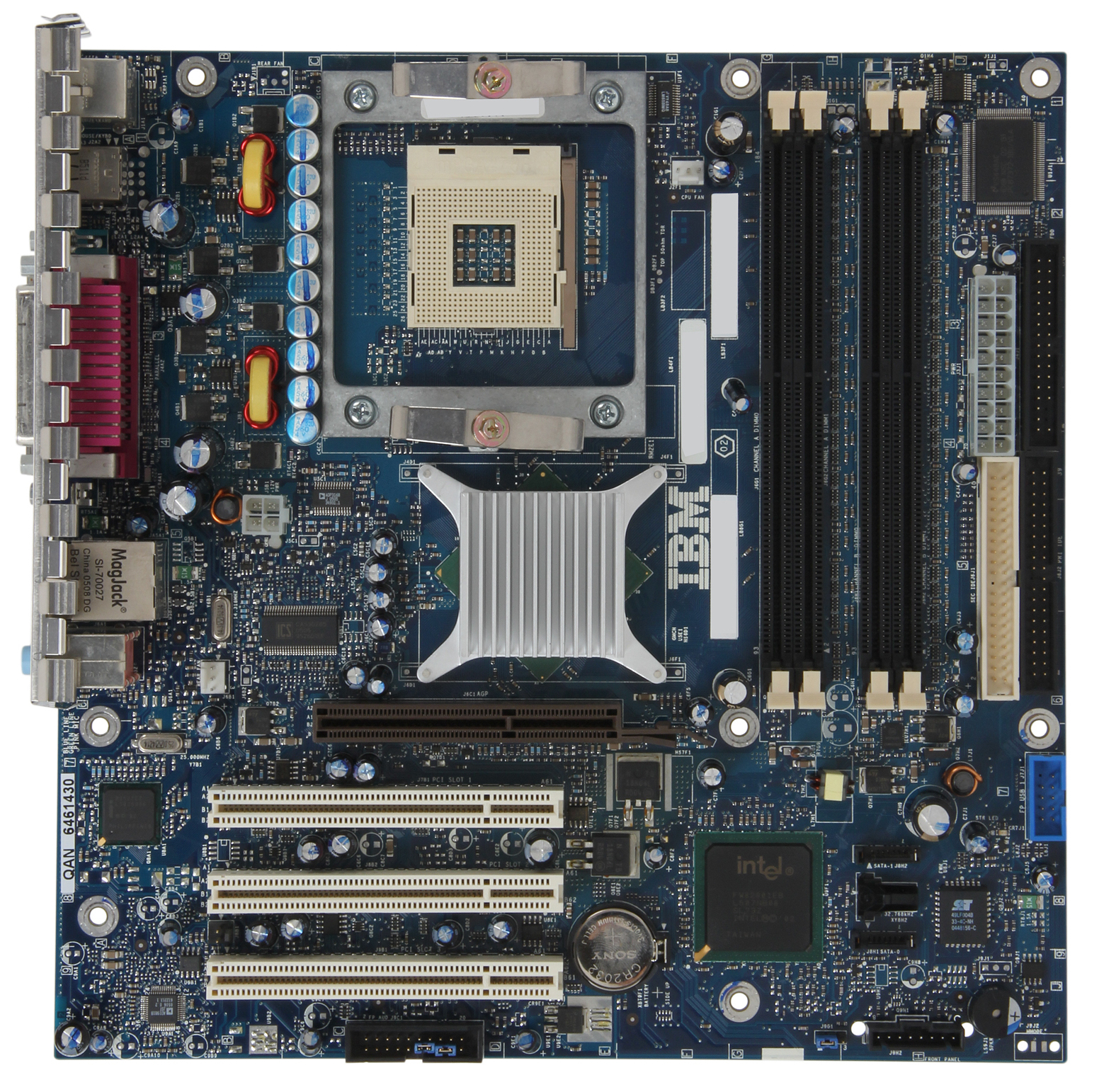
d865gkd-ibm-609e356d4d6f9457709067.jpg
dsc-0902-832-67fea062cff0a983022434.jpg

Aopen MX3S, PIII-S Tualatin 1133, Radeon 9800Pro@XT BIOS, Audigy 4 SB0610
JetWay K8T8AS, Athlon DH-E6 3000+, Radeon HD2600Pro AGP, Audigy 2 Value SB0400
Gigabyte Ga-k8n51gmf, Turion64 ML-30@2.2GHz , Radeon X800GTO PL16, Diamond monster sound MX300

Reply 11 of 21, by Shponglefan

User metadata
Rank l33t
Rank
l33t
TheMobRules wrote on Today, 17:02:

At a frequency of 100 KHz (which is the one listed on low ESR capacitor datasheets), impedance will be roughly the same as ESR unless you're dealing with very low capacitance values. General purpose caps on the other hand, do not even list impedance values and stuff like ripple is listed at 120 Hz instead of 100 KHz.

So for those low ESR caps with capacitance in the thousands of uF you can take the impedance value @ 100 KHz as the ESR.

Ah, that's good to know.

I'm curious about the ESR readings I'm getting on my ESR meter then. Though I suppose it may be due to measurement inaccuracy or just the limits of the device...?

Pentium 4 Multi-OS Build
486 DX4-100 with 6 sound cards
486 DX-33 with 5 sound cards

Reply 12 of 21, by momaka

User metadata
Rank Oldbie
Rank
Oldbie

The "KY" 25V 220 uF caps you can leave alone. This series from United Chemicon is very stable and not known to have any problems to date.

The KZG should all be replaced, though - they are known PROBLEMATIC series, especially the 6.3V 3300 uF ones (along with 6.3V 820 uF ones).
For the 16V 1500 uF ones, I tend to close my eyes and only replace them if I'll be giving the board to someone else. Otherwise, in my own equipment, I leave them alone but keep any eye on them from time to time. So far, I have not had any failures on my own stuff, and I have seen only one failed board out of 100's on the internet. So these are relatively low failure rate.

For the 3300 uF KZG, probably should be OK with 1200 to 2200 uF polymers @ 4V or even 2.5V. But first, check if all of these are for the CPU VRM output filter or if there are ones for something else. From the pictures, it does appear that they are for the CPU VRM output only. And in regards to the one that was reading 4400 uF - that one is starting to fail. That's how most KZG caps fail: first their capacitance goes abnormally high, then gases form inside the cap and eventually cause the the cap to rupture. Over time, the electrolyte is pushed out and/or dries out and that causes the cap to loose capacitance and its impedance/ESR to increase. And this failure mode is not exclusive to United Chemicon KZG caps only. In fact, a lot of cheapo no-name "low ESR" caps fail this way too. So if you get something where the capacitance reads over 20%, it's very likely on its way out.

That said, if you do want to replace the 1500 uF KZG, probably 330 or 390 or 470 uF @ 16V (solid polymers) should work fine.

Reply 13 of 21, by Matth79

User metadata
Rank Oldbie
Rank
Oldbie

Nor sure I'd want to halve the capacitance of the 3300uF - if they are definitely CPU VRM low side, you can go lower voltage on the polymers, all the way to 2.5V, the electrolytics on VRM low are 6.3V because that's the lowest standard voltage - of course 6.3V could also be on a 5V rail or RAM voltage

Reply 14 of 21, by shevalier

User metadata
Rank Oldbie
Rank
Oldbie
momaka wrote on Today, 18:20:

The "KY" 25V 220 uF caps you can leave alone. This series from United Chemicon is very stable and not known to have any problems to date.

Ripple voltage = ESR × current.
ESR does not depend on the colour, type or brand of the capacitors. It is a parameter that can be measured with an instrument.
The ESR of capacitors in the VRM section is typically around 15 mΩ.
That’s all.

But pink capacitors with quantum tunneling effects seem to be the better option.
The only problem is that they haven’t been invented yet.

Aopen MX3S, PIII-S Tualatin 1133, Radeon 9800Pro@XT BIOS, Audigy 4 SB0610
JetWay K8T8AS, Athlon DH-E6 3000+, Radeon HD2600Pro AGP, Audigy 2 Value SB0400
Gigabyte Ga-k8n51gmf, Turion64 ML-30@2.2GHz , Radeon X800GTO PL16, Diamond monster sound MX300

Reply 15 of 21, by Shponglefan

User metadata
Rank l33t
Rank
l33t
Matth79 wrote on Today, 18:26:

Nor sure I'd want to halve the capacitance of the 3300uF - if they are definitely CPU VRM low side, you can go lower voltage on the polymers, all the way to 2.5V, the electrolytics on VRM low are 6.3V because that's the lowest standard voltage - of course 6.3V could also be on a 5V rail or RAM voltage

The challenge I'm finding with lower voltage (2.5V and 4V) polymer caps is availability of caps with 5mm lead spacing. They're either mostly out-of-stock or the available options are limited.

Pentium 4 Multi-OS Build
486 DX4-100 with 6 sound cards
486 DX-33 with 5 sound cards

Reply 16 of 21, by Shponglefan

User metadata
Rank l33t
Rank
l33t
momaka wrote on Today, 18:20:
The "KY" 25V 220 uF caps you can leave alone. This series from United Chemicon is very stable and not known to have any problem […]
Show full quote

The "KY" 25V 220 uF caps you can leave alone. This series from United Chemicon is very stable and not known to have any problems to date.

The KZG should all be replaced, though - they are known PROBLEMATIC series, especially the 6.3V 3300 uF ones (along with 6.3V 820 uF ones).
For the 16V 1500 uF ones, I tend to close my eyes and only replace them if I'll be giving the board to someone else. Otherwise, in my own equipment, I leave them alone but keep any eye on them from time to time. So far, I have not had any failures on my own stuff, and I have seen only one failed board out of 100's on the internet. So these are relatively low failure rate.

For the 3300 uF KZG, probably should be OK with 1200 to 2200 uF polymers @ 4V or even 2.5V. But first, check if all of these are for the CPU VRM output filter or if there are ones for something else. From the pictures, it does appear that they are for the CPU VRM output only. And in regards to the one that was reading 4400 uF - that one is starting to fail. That's how most KZG caps fail: first their capacitance goes abnormally high, then gases form inside the cap and eventually cause the the cap to rupture. Over time, the electrolyte is pushed out and/or dries out and that causes the cap to loose capacitance and its impedance/ESR to increase. And this failure mode is not exclusive to United Chemicon KZG caps only. In fact, a lot of cheapo no-name "low ESR" caps fail this way too. So if you get something where the capacitance reads over 20%, it's very likely on its way out.

That said, if you do want to replace the 1500 uF KZG, probably 330 or 390 or 470 uF @ 16V (solid polymers) should work fine.

Thank you, this is very helpful!

Good to know about the KY series caps. Wasn't sure if they were also going to be problematic like the KZG series. I'll definitely leave that one alone.

Pentium 4 Multi-OS Build
486 DX4-100 with 6 sound cards
486 DX-33 with 5 sound cards

Reply 17 of 21, by shevalier

User metadata
Rank Oldbie
Rank
Oldbie
momaka wrote on Today, 18:20:

The "KY" 25V 220 uF caps you can leave alone. This series from United Chemicon is very stable and not known to have any problems to date.

For example, Siemens motherboards, which were popular in Eastern Europe as part of the control units for Siemens’ EWSD automatic telephone exchanges.
They operated for over 20 years on a 24/7 basis.
I wish you luck in identifying the ESR capacitors by their colour after 20 years.

Aopen MX3S, PIII-S Tualatin 1133, Radeon 9800Pro@XT BIOS, Audigy 4 SB0610
JetWay K8T8AS, Athlon DH-E6 3000+, Radeon HD2600Pro AGP, Audigy 2 Value SB0400
Gigabyte Ga-k8n51gmf, Turion64 ML-30@2.2GHz , Radeon X800GTO PL16, Diamond monster sound MX300

Reply 18 of 21, by momaka

User metadata
Rank Oldbie
Rank
Oldbie
shevalier wrote on Today, 18:55:
For example, Siemens motherboards, which were popular in Eastern Europe as part of the control units for Siemens’ EWSD automatic […]
Show full quote
momaka wrote on Today, 18:20:

The "KY" 25V 220 uF caps you can leave alone. This series from United Chemicon is very stable and not known to have any problems to date.

For example, Siemens motherboards, which were popular in Eastern Europe as part of the control units for Siemens’ EWSD automatic telephone exchanges.
They operated for over 20 years on a 24/7 basis.
I wish you luck in identifying the ESR capacitors by their colour after 20 years.

I wasn't identifying capacitors by their color and not sure where you assumed this from.
My comment was simply in regards to the fact that United Chemicon KY series are known stable series that don't have problems. They have been used on motherboards and PSUs for ages, and even when grossly abused, they still survived. My best example was with a Corsair PSU that had a meltdown on the output toroid. The Chemicon KY caps next to it were starting to darken from all of the heat, but were still in spec. KY are excellent series... as are most other series from United Chemicon. In fact, the only series that were known to have lots of problems, besides KZG, are KZJ and TMV. (And I think there was another one where name escapes from me now.)

shevalier wrote on Today, 18:31:

The ESR of capacitors in the VRM section is typically around 15 mΩ.
That’s all.

Depends on the motherboard's VRM design.

ECS boards with TL494/DBL494 PWM IC and 2-phase single-sided VRMs tend to not care as much about very low ESR... and is usually why they are stuffed with garbage brands with not-so-low-ESR series, like G-Luxon LZ... typically at high capacities. If you measure their inductors, you'll see they are usually much higher inductance than most "normal" VRMs... and that's because these TL494/DBL494 designs operate are much lower switching frequencies (~25-40 KHz, or whatever was the norm for 494 ICs) compared to 100+ KHz in other normal designs.

Matth79 wrote on Today, 18:26:

Nor sure I'd want to halve the capacitance of the 3300uF

It will be fine.
In fact, even down to 820 uF should be OK with good polymers with very low ESR. The capacitance does matter, but just nowhere near as much as the impedance/ESR. Of course, that does not mean that one can go very very low on the capacitance...at least not without first verifying if the compensation of the feedback circuit for the PWM controller will be OK with this.

Last edited by momaka on 2026-04-12, 19:24. Edited 1 time in total.

Reply 19 of 21, by lti

User metadata
Rank Member
Rank
Member

I was going to post that the 220uF can be left alone, but then I went to lunch and Momaka posted.

There's kind of a debate over whether you should match capacitance or go with half of its original capacitance. Lower capacitance is usually fine from what I've seen. I've even seen a board that had a mix of KZG (3300uF 6.3V just like these) and polymer caps on CPU Vcore, and it was completely stable after the KZGs blew up. I saw some 3300uF polymers that I was going to try, but I haven't had enough of a use case for that board to ever get around to recapping it (and the power supply because new ones are really expensive by my standards). Their price has almost doubled from what I remember, too. The other option I was thinking about was getting some Suncon WG from LCSC, but I didn't look at their shipping prices.

shevalier wrote on Today, 16:38:

That’s not in keeping with the times.
https://theretroweb.com/motherboards/s/intel-vs440fx-venus
Pentium pro matherboard at 97 year with Sanyo OSCON.

Polymer caps still cost more back in the P4 era. I've seen Asus LGS775 boards with low-profile electrolytic caps around the socket (the ones that sat under the heatsink to bring them closer to the load).

Also, you quoted the wrong post in your comment about color.