VOGONS


First post, by MattRocks

User metadata
Rank Oldbie
Rank
Oldbie

Apologies in advance, and I'd like your advice please!

Skipping over a long history, I installed my Radeon 9700 (non Pro) into my AthlonXP.

The same GPU has been in the same machine before and nothing eventful was expected.

The Windows boot screen seemed fine.

The 9700 fan was unusually noisy but working.. a bad omen.

Windows XP began to apply stock ATI drivers.

Then, the system crashed hard. I turned off the machine and cleaned the fan before trying again - just detached the fan from the heatsink and removed the dusts with a blower and brush.

I'm always grounded and static discharged.. but the dusts on an electric fan might not be.

I screwed the fan back on, reseated the AGP card and powered up. The fans were spinning quietly. There was calm POST beep.

And now I see tiny artefacts in characters on BIOS setup (some capital letters), Windows boot screen (specific colour replaced with purple), and Windows desktop (some horizontal and some vertical lines).

I'm praying its only marginal electrolytics!

Could you please share your thoughts on what I should do now?

Desktop timeline [ MOS 7501 → 68030 → x86(P5/MMX) → x86(K6-2) → x86(K7*) → PPC(G3*) → x86-64(K8) → x86-64(Xeon) → x86-64(i5) → x86-64(i7) ] * lost

Reply 1 of 6, by tehsiggi

User metadata
Rank Oldbie
Rank
Oldbie

Please provide:
- Pictures of the card if possible
- Pictures of the artifacts in different stages

See Hercules Radeon 9700 Pro repair report and try running R3MEMID. Also see VGA Repair report collection - there is a bunch of R300 based card repairs in there. Check if one of the error screenshots matches your error pattern.

I am yet to see a Radeon 9700 with bad caps.

Last edited by tehsiggi on 2026-05-07, 16:22. Edited 2 times in total.

AGP Card Real Power Consumption
AGP Power monitor - diagnostic hardware tool
Graphics card repair collection

Reply 2 of 6, by DaveDDS

User metadata
Rank Oldbie
Rank
Oldbie

How long has it been since these were in service?

Could be bad caps, do you see any buldging?

But it also sounds like a possible bad bus connection... if card or system was unused for lengthy, there could be fine surface corrosion, I'd give the card and socket a good cleaning, and probably unseat/reseat the card a few times... just to help clean the connections.

- Dave ; https://dunfield.themindfactory.com ; "Daves Old Computers" ; SW dev addict best known:
ImageDisk: rd/wr ANY floppy PChardware can ; Micro-C: compiler for DOS+ManySmallCPU ; DDLINK: simple/small FileTrans(w/o netSW)via Lan/Lpt/Serial

Reply 3 of 6, by MattRocks

User metadata
Rank Oldbie
Rank
Oldbie
DaveDDS wrote on Yesterday, 16:21:

How long has it been since these were in service?

The motherboard has been used recently with various GPUs. This particular 9700 non-pro was purchased with blind faith weeks/months ago, and only lightly tested with no artefacts spotted until after today's hard crash. I dusted the whole card with air from a manual air pump, and wiped the gold fingers using a light brush and isopropyl alcohol. Looking at the heatsink nylon plugs, I think condition reflects the original factory fitting. In my experience, a very loud fan is followed by a serious failure - in hindsight it feels like noise reflects compromised cooling, which is followed by component overheating. Next time I hear a fan I'll yank the main plug out!

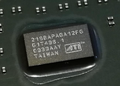
I'll begin with the least invasive photos. I don't see obvious bulging, but these are metal cans that typically vent more than bulge?

Last edited by MattRocks on 2026-05-07, 19:01. Edited 1 time in total.

Desktop timeline [ MOS 7501 → 68030 → x86(P5/MMX) → x86(K6-2) → x86(K7*) → PPC(G3*) → x86-64(K8) → x86-64(Xeon) → x86-64(i5) → x86-64(i7) ] * lost

Reply 4 of 6, by MattRocks

User metadata
Rank Oldbie
Rank
Oldbie
tehsiggi wrote on Yesterday, 16:15:

Please provide:
- Pictures of the card if possible
- Pictures of the artifacts in different stages

Again, starting with the least invasive photos (least amount of GPU heating) - turquoise in white characters during POST. It's similar in BIOS setup where it's clear this particular corruption is repeating across specific characters rather than screen coordinates. In this photo all the "I" characters have a corruption. But, it's a different corruption in AMIBIOS vs PCI and the "s" in "ss" is inconsistently impacted.

I don't see the same artefacts in the repair case studies, and I felt slightly unwell on seeing the post about heat damaging the ASIC! 🙁

I'm going to replace the heat transfer compound before running R3MEMID because my gut is telling me this all stems from a sudden overheating. I'm kicking myself.

Desktop timeline [ MOS 7501 → 68030 → x86(P5/MMX) → x86(K6-2) → x86(K7*) → PPC(G3*) → x86-64(K8) → x86-64(Xeon) → x86-64(i5) → x86-64(i7) ] * lost

Reply 5 of 6, by The Serpent Rider

User metadata
Rank l33t++
Rank
l33t++

Seems to be a dead memory. Probably it was already on its way and PCB warping from reseating the card has put the final nail in the coffin.

I must be some kind of standard: the anonymous gangbanger of the 21st century.