VOGONS


First post, by Omarkoman

User metadata
Rank Member
Rank
Member

I am looking for some opinions on sound configuration for my new retro build.

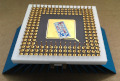
System is a socket 4 Pentium 60Mhz with 32MB RAM, VLB controller and a 2MB PCI S3 Trio64V+.

I am currently thinking of having this purely as a DOS gaming machine as I have many other systems that are bit faster (eg P75, P90, P100, P133, P200mmx) that run Win 95 and 98 and imo are better suited for Windows 95 onwards.

This brings me to dilemma what soundcards to use.

I have quite a lot of options, few to list:

Picogus with Dreamblaster S2
AWE32 with 32MB RAM CT3900
Classic and reliable ESS1868F (has wavetable header)
SB16 CT with genuine Yamaha OPL
Opti 82C928 with genuine Yamaha OPL
Yamaha OPL YMF701B-S (has wavetable header)
Acer Magic S30 (Vibra 16 chip and genuine Yamaha OPL and wavetable header)
Ensoniq Soundscape OPUS

I basically want to be able to play early to late DOS games. When I say early, I am not talking XT era but anything that started using digitised sound so a soundblaster was needed, or perhaps a year or two before that when Adlib did the job.

I thought initially I use the CT3990 with a Dreamblaster S2 on it so I have solid SB compatibility and General Midi working well in older games, in newer ones that support AWE32 I can use the card directly.

Issue is that the SB compatibility for early DOS games will only work as SB 2.0 as the chipset doesn't do SB Pro properly. I also like the Yamaha OPL FM vs Creative.

So then I was thinking, do I use the Yamaha OPL card with dreamblaster on it or the ESS? They both have very solid SB PRo compatibility ( I am yet to come across a game that doesnt work on them) and with a Dreamblaster on them I can get General Midi working and no TSR required for either of them.

However, I feel it would be too simple of a setup if I did that and see the sad CT3990 sitting in the corner asking to be used along with the Ensoniq and PicoGUS to make the machine more exciting. Maybe I am just over complicating it too much but the P60 has a very soft spot in my heart as it was one of my early machines when we uprgaded from a 386 sx33 to this and it blew my mind.

Keen to get some thoughts, perhaps something I haven't thought of.
Last edited by Omarkoman on 2026-05-15, 02:48. Edited 1 time in total.

Reply 1 of 15, by jakethompson1

User metadata
Rank l33t
Rank
l33t

Unisound is the game changer here; I would use anything compatible with it since you don't have to deal with the vendor's drivers or configuration utilities

Reply 2 of 15, by Omarkoman

User metadata
Rank Member
Rank
Member

I admit, I have not looked into unisound much as I like to use orginally intended settings for retro HW but open to explore since I am introducing modern pieces like Picogus to my collection.

How would unisound help though depending what I select for a sound card? Can you give me an example?

Reply 3 of 15, by jakethompson1

User metadata
Rank l33t
Rank
l33t

It sets IRQ, DMA, etc. on soft-configured or ISAPNP sound cards without spraying your config.sys and autoexec.bat with drivers or TSRs like CTCM.

Reply 4 of 15, by Shponglefan

User metadata
Rank l33t
Rank
l33t

Do you have room for multiple sound cards? If so, I would just install a couple sound cards, for example the Yamaha and AWE32.

If you can do three, I'd add the PicoGUS for GUS support as well.

Pentium 4 Multi-OS Build
486 DX4-100 with 6 sound cards
486 DX-33 with 5 sound cards

Reply 5 of 15, by Omarkoman

User metadata
Rank Member
Rank
Member

yeah thats what I am thinking, Yamaha with Dreamblaster to get General Midi and SB Pro support, AWE 32 for only games that support it, Picogus for Gravis Ultrasound emulation for games that support it and mod players / tech demos.

The Ensoniq Soundscape is quite tempting too but it might be too much including managing resources.

I'll start playing with unisound. If I have multiple cards, does it autimatically assign resources ?

Reply 6 of 15, by nach

User metadata
Rank Newbie
Rank
Newbie

if it helps, in my 486 system i installed an ensoniq sondscape vivo 90 along with the sound blaster 16 that was already installed and i am very happy with it, although it was a nightmare for me to have both configured and running at the same time but with unisound i was able to do it.

I am planning to get a picogus soon and maybe i will try to configure all 3 at the same time but i have the ensoniq mainly for the fake intelligent mpu-401 mode that the picogus can do better so i am doubting if discarding it for a different project.

For nostalgic reasons (the first sound card i bought with my own money) i am tempted to get an awe32 but here in Japan is not that easy to get.

Roland MT-32, Roland CM-32L, Roland SCP-55, Roland SC-88, Roland MT-90U, Roland PMA-5, Casio GZ-70SP, Casio GZ-50M, Yamaha MU90B, Yamaha MDP-5, Panasonic CF-VEW212, TDK Digital Music Card 9000, Kawai Gmega

Reply 7 of 15, by theelf

User metadata
Rank Oldbie
Rank
Oldbie

Awe+picogus

Reply 8 of 15, by Fazeshift

User metadata
Rank Newbie
Rank
Newbie

You seem to be looking for the same characteristics as I did, and the same wide variety of use cases - late DOS games, external MIDI, module players, demoscene. For my pure DOS Pentium, my favorite combo is Yamaha + PicoGUS. I would recommend that pair, along with that Dreamblaster S2.

My 2nd place combo would be CT3990 + PicoGUS. Perhaps a distant 2nd though. I have done many recent comparisons in DOS rotating between Yamaha OPL3, PicoGUS and SB32/AWE32.

I have a soft spot for the SB AWE32 (specifically, my original SB 32 CT3600, I also have a CT3990 and RAM) but there are too many quirks that make the experience a pain and/or disappointing. Bad/flawed external/header MIDI support, the on-board IDE port tends to cause resource conflicts for me, limited native AWE32 MIDI support in DOS games, no SB Pro stereo support, CQM instead of real OPL on many cards, and the conventional memory hit using AWEUTIL.

I typically run the Yamaha @ Port 220, IRQ 5, DMA 1, and PicoGUS in GUS mode @ Port 240, IRQ 7.
The PicoGUS has fantastic MPU-401 support. For DOS games, I often use that paired with a Roland Sound Canvas (SC-55 usually) and digital sound via Yamaha as SB Pro.
PicoGUS in GUS mode for games with module-based music (OMF 2097, Pinball Fantasies, Epic Pinball, etc)
Some module file players also support WSS (E.g., Cubic Player) which adds 16-bit support to the Yamaha card (port 530). The hardware mixing of the GUS is the better choice, except for modules with large samples that don't fit in GUS RAM.

The PicoGUS is quite flexible - very easy to switch modes/config. With all of the added SB-modes, it technically might be the most versatile choice, but I like having some real (non-emulated) hardware to support the difficult software.

I do not recommend more than 2 ISA sound cards.

I need to revisit Unisound - I forgot that Yamaha OPL3SA mixer/utility always modifies CONFIG.SYS and AUTOEXEC.BAT, and puts things in the wrong spot of my boot menu.

Hopefully that helps.

Reply 9 of 15, by appiah4

User metadata
Rank l33t++
Rank
l33t++

AWE32 + PicoGUS with Dreamblaster S2 will be my advice. You can use the PicoGUS as an intelligent mode MIDI Interface and route its output to AWE32 line input. You can also use PicoGUS as GUS when you really want to. That gives you OPL3, General MIDI, AWE and GUS in one machine. The 32MB RAM will probably be wasted but oh well..

Reply 10 of 15, by Shponglefan

User metadata
Rank l33t
Rank
l33t
Fazeshift wrote on Yesterday, 13:32:

I do not recommend more than 2 ISA sound cards.

There is nothing wrong with more than 2 ISA sound cards if enough hardware resources are available for configuring them. I've had as many as 6 ISA sound cards all running concurrently in a system.

For early-to-mid 90s DOS era, there were so many different sound standards that one could easily run 3 or 4 sound cards just to cover all the bases (OPL FM, SB Pro, SB16/AWE32, General MIDI, GUS, etc.).

Pentium 4 Multi-OS Build
486 DX4-100 with 6 sound cards
486 DX-33 with 5 sound cards

Reply 11 of 15, by Omarkoman

User metadata
Rank Member
Rank
Member

I just realised the AWE32 is CT3900 not CT3990 so its superior and has genuine Yamaha OPL, I think I will be going with that plus Pico for GUS emulation.

I still wont have SB Pro though ... so ... maybe I'll use the ESS card as that works very well and has also clean sound.

thanks all !

Reply 12 of 15, by appiah4

User metadata
Rank l33t++
Rank
l33t++
Omarkoman wrote on Today, 02:49:

I just realised the AWE32 is CT3900 not CT3990 so its superior and has genuine Yamaha OPL, I think I will be going with that plus Pico for GUS emulation.

I still wont have SB Pro though ... so ... maybe I'll use the ESS card as that works very well and has also clean sound.

thanks all !

PicoGUS can emulate an SB Pro 2.0, so you are covered.

Reply 13 of 15, by aitotat

User metadata
Rank Member
Rank
Member

For a socket 4 build I would only use period correct parts. And I think that is more important for a socket 4 build than for anything else. You just have to experience the very expensive system with all the bugs (those first buggy PCI IDE controllers etc) and socket 4 differences to other systems at the time (try to find a PCI graphics card from 1993, not easy and no VLB on Intel boards).

But since you mention VLB and PCI, you must have non-Intel chipset so the build is going to be a lot different than mine (I want only what was available in 1993, so for sound cards that would be something like PAS16, GUS classic and Roland SCC-1).

But from your list of sound cards... Go with something that does not have DMA clicking bug (since this seems to be slowest of your builds). So basically anything but SB16 or AWE (Vibra is fine here). Perhaps just use least noisiest of your clone cards?

My youtube channel

Reply 14 of 15, by Fazeshift

User metadata
Rank Newbie
Rank
Newbie
Shponglefan wrote on Yesterday, 15:32:

There is nothing wrong with more than 2 ISA sound cards if enough hardware resources are available for configuring them. I've had as many as 6 ISA sound cards all running concurrently in a system.

For early-to-mid 90s DOS era, there were so many different sound standards that one could easily run 3 or 4 sound cards just to cover all the bases (OPL FM, SB Pro, SB16/AWE32, General MIDI, GUS, etc.).

That is true, and I have done 3 for some time. Perhaps I should clarify - I don't recommend more than 2 PnP ISA sound cards. That is simply my personal opinion on the sweet spot. Beyond that, resource management and configuration starts becoming time consuming. That is especially true if the sound cards have an on-board IDE CD-ROM interface.

The OP already has most if it covered in the collection, and the PicoGUS can fill in the rest.

Omarkoman wrote on Today, 02:49:

I just realised the AWE32 is CT3900 not CT3990 so its superior and has genuine Yamaha OPL, I think I will be going with that plus Pico for GUS emulation.

I still wont have SB Pro though ... so ... maybe I'll use the ESS card as that works very well and has also clean sound.

thanks all !

The PicoGUS has SB Pro support. SB16 support was recently added too - I haven't had a chance to try that yet.

Reply 15 of 15, by MadMac_5

User metadata
Rank Member
Rank
Member

The SB16 support on the PicoGUS is pretty good! I posted about my experience along with a video link comparing the audio output over in the PicoGUS thread.

I also am running a mid/late DOS sound setup with a PicoGUS (with X2GS) and an AWE64. It covers pretty much everything except for EAX/A3D support in Windows 98, but I have been pretty happy with it so far. Using an external mixer helps a lot, but one could use the AWE64's Line In output for the PicoGUS without too much trouble; it would just take a bit of judicious mixer use.

I use Unisound to configure the AWE card to Port 220, IRQ 7, DMA 3/5, MPU 330, and the PicoGUS is set up as Port 240, IRQ 5, DMA 1/1, and MPU 320. It's pretty novel being able to play TIE Fighter or Tyrian with SB16 sound and GUS music, and to have a bug-free MPU implementation on the PicoGUS to enjoy the X2GS.