VOGONS


First post, by bloodbath2you
User metadata
Rank Newbie
Rank
Newbie

Hi, in the last three months i've been working on my glorified text editor. I wrote it because i needed a tool for digging some C programming in my old machines, it has some modern editor features mostly inspired on visual studio code.

I wrote it in C with some inline assembly and yeah i used AI 🤡, not on everything but on data structures and input library... also used for fixing bugs that got me trapped for some time. You will notice instantly which part was written by an actual human being.

This editor is aimed for 386+ machines, it uses protected mode and requires at least 8 MB of RAM , yeah it uses quite a lot for now, it is compiled with Watcom C 10.6

I want to hear you think about it, if you also like programming DOS stuff but you need an editor that fits your needs for your retro machine, what features you'd like the most to have to? Or just roast my noob coding practices, just for the fun of it 😜

https://github.com/VincebusRiveruptum/dcode-i … tag/MAY-30-2026

pd: still very WIP

pd: Bundled DOS4GW executable and fixed the default resolution setting.

Last edited by bloodbath2you on 2026-05-30, 19:41. Edited 3 times in total.

Reply 1 of 17, by MagefromAntares

User metadata
Rank Member
Rank
Member

Hi,

I have only tried it in Dosbox not real HW, but the following:
1. DOS4GW.EXE is not bundled with the program, so I have copied DOS4GW from my own copy of Watcom C to run it.
2. After copying the DOS4GW.EXE the program just prints a new number on the screen when pressing enter, see attached image.

"A process cannot be understood by stopping it. Understanding must move with the flow of the process, must join it and flow with it." - Dune

Reply 2 of 17, by bloodbath2you

User metadata
Rank Newbie
Rank
Newbie
MagefromAntares wrote on 2026-05-30, 19:25:
Hi, […]
Show full quote

Hi,

I have only tried it in Dosbox not real HW, but the following:
1. DOS4GW.EXE is not bundled with the program, so I have copied DOS4GW from my own copy of Watcom C to run it.
2. After copying the DOS4GW.EXE the program just prints a new number on the screen when pressing enter, see attached image.

oh, its the default video mode from my machine (mode VID_132x60), i'll upload the the RAR with the default mode set at 80x25, but you can fix by cycling the modes with F11 or by modifying default.cfg config file, line 54, setting DEFAULT_VIDEO_MODE to 1.

The modes over 80 columns are VESA only.

Reply 3 of 17, by MagefromAntares

User metadata
Rank Member
Rank
Member

Setting the video mode to a VGA mode makes the program run and mostly work, but Dosbox console output shows a lot of such messages:

Illegal read from f000108b, CS:IP      160:  17fd6f
Illegal write to f0001081, CS:IP 160: 17fd91

If the target minimum requirement of the program is a 386, then a check for a VESA compatible adapter to be present at the start when selecting the modes required to have VESA would be nice, simply print out "The configured mode requires a VESA <insert version used> adapter to work" and exit.

"A process cannot be understood by stopping it. Understanding must move with the flow of the process, must join it and flow with it." - Dune

Reply 4 of 17, by bloodbath2you

User metadata
Rank Newbie
Rank
Newbie
MagefromAntares wrote on 2026-05-30, 19:36:
Setting the video mode to a VGA mode makes the program run and mostly work, but Dosbox console output shows a lot of such messag […]
Show full quote

Setting the video mode to a VGA mode makes the program run and mostly work, but Dosbox console output shows a lot of such messages:

Illegal read from f000108b, CS:IP      160:  17fd6f
Illegal write to f0001081, CS:IP 160: 17fd91

If the target minimum requirement of the program is a 386, then a check for a VESA compatible adapter to be present at the start when selecting the modes required to have VESA would be nice, simply print out "The configured mode requires a VESA <insert version used> adapter to work" and exit.

i'll take note of that! thanks 😀

Reply 5 of 17, by DaveDDS

User metadata
Rank Oldbie
Rank
Oldbie

I haven't looked at it yet (but I will)

You'd be hard pressed to get me to switch - I wrote my text editor back in the 1970s - it is by far the tool I use the most - I write all my source, documents and text files related to pretty much anything I've produced in it - I even use it to write longer things I post here "offline", then cut-paste to enter here.

Most would consider it "simple" ... no fancy presentation you couldn't do in a seriaal terminal (what I was using when I wrote it) - and it pretty much follows the idea that "everything you seen on the screen is exactly what appears in your text file. As someone who's worked on *MANY* different systems and OSs, I can't describe how nice it is the have the SAME text editor on each of those systems. I've compiled it for DOS, Winblows(32&64), many flavors if Unix/Linux, CUBIX, DVM and a few other OSs that aren't very commonly known... it's all in clean standard 'C' - quite easy to move it to new platforms as I need.
--- Described a bit more: Re: FOSS lightweight stable text editors

For any given platform - you will always be able to find nicer looking, more complete and feature packed editors (with corresponding large "fan" bases) than any general editor - but don't underestimate the value in portability. FWIW my recommendations:
- Keep it "clean" standard C, avoid add-on features and libraries specific to your compiler vendor.
- Avoid use of libraries specific to any platform (anything beyond the C standard library may have to be re-implemented on a given target)
- Avoid assembly language (although my earliest programming was .ASM and it remains one of my preferred ways to do a lot of stuff, recognize that using ASM will tie it to a specific processor, and possible a certain development toolset - unlike C which was designed to be portable, many assemblers are less-so)

- Dave ; https://dunfield.themindfactory.com ; "Daves Old Computers" ; SW dev addict best known:
ImageDisk: rd/wr ANY floppy PChardware can ; Micro-C: compiler for DOS+ManySmallCPU ; DDLINK: simple/small FileTrans(w/o netSW)via Lan/Lpt/Serial

Reply 6 of 17, by bloodbath2you

User metadata
Rank Newbie
Rank
Newbie
DaveDDS wrote on 2026-05-30, 20:16:
I haven't looked at it yet (but I will) […]
Show full quote

I haven't looked at it yet (but I will)

You'd be hard pressed to get me to switch - I wrote my text editor back in the 1970s - it is by far the tool I use the most - I write all my source, documents and text files related to pretty much anything I've produced in it - I even use it to write longer things I post here "offline", then cut-paste to enter here.

Most would consider it "simple" ... no fancy presentation you couldn't do in a seriaal terminal (what I was using when I wrote it) - and it pretty much follows the idea that "everything you seen on the screen is exactly what appears in your text file. As someone who's worked on *MANY* different systems and OSs, I can't describe how nice it is the have the SAME text editor on each of those systems. I've compiled it for DOS, Winblows(32&64), many flavors if Unix/Linux, CUBIX, DVM and a few other OSs that aren't very commonly known... it's all in clean standard 'C' - quite easy to move it to new platforms as I need.
--- Described a bit more: Re: FOSS lightweight stable text editors

For any given platform - you will always be able to find nicer looking, more complete and feature packed editors (with corresponding large "fan" bases) than any general editor - but don't underestimate the value in portability. FWIW my recommendations:
- Keep it "clean" standard C, avoid add-on features and libraries specific to your compiler vendor.
- Avoid use of libraries specific to any platform (anything beyond the C standard library may have to be re-implemented on a given target)
- Avoid assembly language (although my earliest programming was .ASM and it remains one of my preferred ways to do a lot of stuff, recognize that using ASM will tie it to a specific processor, and possible a certain development toolset - unlike C which was designed to be portable, many assemblers are less-so)

Super cool, i appreaciate your comment a lot, about your editor i will check it out. Out of curiosity, is the source code available?.

About portability, i absolutely agree. I want to make this editor compatible with linux in the future, right now can be a challenge to refactor the hardware and filesystem calls and add a strategy or abstraction layer. I think once the editor reaches to the point is fully useful for me i'll start refactoring, so i could use it also for web developing in linux at my work, that would make it also much more useful for anyone.

Reply 7 of 17, by DaveDDS

User metadata
Rank Oldbie
Rank
Oldbie

Ok - I tried....

I almost never use .RARs ... the one downloaded directly from above post is 169k ... the one downloaded from the github link is 58k (so obviously different)

7zip doesn't know about .RARs - I use an ancient DOS tool called "UNRAR" which normally work fine - but reports that the content of both of the above downloaded files are not RAR (and crashes - which is typical of it when given a corrupt file)

Last edited by DaveDDS on 2026-05-30, 20:45. Edited 1 time in total.

- Dave ; https://dunfield.themindfactory.com ; "Daves Old Computers" ; SW dev addict best known:
ImageDisk: rd/wr ANY floppy PChardware can ; Micro-C: compiler for DOS+ManySmallCPU ; DDLINK: simple/small FileTrans(w/o netSW)via Lan/Lpt/Serial

Reply 8 of 17, by bloodbath2you

User metadata
Rank Newbie
Rank
Newbie
DaveDDS wrote on 2026-05-30, 20:32:

Ok - I tried....

I almost never use .RARs ... the one downloaded directly from above post is 169k ... the one downloaded from the github link is 58k (so obviously different)

7zip doesn't know about .RSRs - I use an ancient DOS tool called "UNRAR" which normally work find - but re ports that the content of both of the above downloaded files are not RAR (and crashes - which is typical of it when given a corrupt file)

The difference between them that the one here has the DOS4GW executable bundled, which the github one does not yet.

Reply 9 of 17, by DaveDDS

User metadata
Rank Oldbie
Rank
Oldbie
bloodbath2you wrote on 2026-05-30, 20:30:

Super cool, i appreaciate your comment a lot, about your editor i will check it out. Out of curiosity, is the source code available?.

Yes, It has been since near the beginning - but also, fairly recently I undertook a "retirement project" to release all (40+ years worth) of my source code, which in available on an area on my site.

About portability, i absolutely agree. I want to make this editor compatible with linux in the future, right now can be a challenge to refactor the hardware and filesystem calls and add a strategy or abstraction layer. I think once the editor reaches to the point is fully useful for me i'll start refactoring, so i could use it also for web developing in linux at my work, that would make it also much more useful for anyone.

The references to DOS4GW had me concerned. One of the reasons my editor has such simple screen output is that I write it originally on a system with a VT100 serial terminal as a console.

For DOS, I created my own video/screen library code which gets linked in, but it basically does the VT100 functions that I use (GotoXY, ClearEOL, ClearEOS, Highlight etc.) most OSs which use a dedicated video console (like a PC does) provide some sort of simple VT100 (or other capable ASCII Terminal) emulation for the console allowing fairly simple screen control without needing a lot of libraries or "layers".

- Dave ; https://dunfield.themindfactory.com ; "Daves Old Computers" ; SW dev addict best known:
ImageDisk: rd/wr ANY floppy PChardware can ; Micro-C: compiler for DOS+ManySmallCPU ; DDLINK: simple/small FileTrans(w/o netSW)via Lan/Lpt/Serial

Reply 10 of 17, by DaveDDS

User metadata
Rank Oldbie
Rank
Oldbie

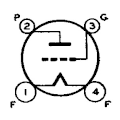
Btw - I like the use of a triode (vacuum tube) for your pic!

- Dave ; https://dunfield.themindfactory.com ; "Daves Old Computers" ; SW dev addict best known:
ImageDisk: rd/wr ANY floppy PChardware can ; Micro-C: compiler for DOS+ManySmallCPU ; DDLINK: simple/small FileTrans(w/o netSW)via Lan/Lpt/Serial

Reply 11 of 17, by bloodbath2you

User metadata
Rank Newbie
Rank
Newbie
DaveDDS wrote on 2026-05-30, 20:47:

Btw - I like the use of a triode (vacuum tube) for your pic!

Thanks man! hehehe

Reply 12 of 17, by BitWrangler

User metadata
Rank l33t++
Rank
l33t++

My taste in editors runs "better than edlin, worse than emacs" and definitely abstemious with disk space, RAM and CPU cycles and features. So I am afraid I have no use for this one based on thus far described attributes. The one I stick on utility disks is usually LE the laplink editor, for being nice enough not to be masochistic while not being too huge.

Unicorn herding operations are proceeding, but all the totes of hens teeth and barrels of rocking horse poop give them plenty of hiding spots.

Reply 13 of 17, by tcaud

User metadata
Rank Newbie
Rank
Newbie
DaveDDS wrote on 2026-05-30, 20:16:
I haven't looked at it yet (but I will) […]
Show full quote

I haven't looked at it yet (but I will)

You'd be hard pressed to get me to switch - I wrote my text editor back in the 1970s - it is by far the tool I use the most - I write all my source, documents and text files related to pretty much anything I've produced in it - I even use it to write longer things I post here "offline", then cut-paste to enter here.

Most would consider it "simple" ... no fancy presentation you couldn't do in a seriaal terminal (what I was using when I wrote it) - and it pretty much follows the idea that "everything you seen on the screen is exactly what appears in your text file. As someone who's worked on *MANY* different systems and OSs, I can't describe how nice it is the have the SAME text editor on each of those systems. I've compiled it for DOS, Winblows(32&64), many flavors if Unix/Linux, CUBIX, DVM and a few other OSs that aren't very commonly known... it's all in clean standard 'C' - quite easy to move it to new platforms as I need.
--- Described a bit more: Re: FOSS lightweight stable text editors

For any given platform - you will always be able to find nicer looking, more complete and feature packed editors (with corresponding large "fan" bases) than any general editor - but don't underestimate the value in portability. FWIW my recommendations:
- Keep it "clean" standard C, avoid add-on features and libraries specific to your compiler vendor.
- Avoid use of libraries specific to any platform (anything beyond the C standard library may have to be re-implemented on a given target)
- Avoid assembly language (although my earliest programming was .ASM and it remains one of my preferred ways to do a lot of stuff, recognize that using ASM will tie it to a specific processor, and possible a certain development toolset - unlike C which was designed to be portable, many assemblers are less-so)

Might add to that "insert a no-AI use clause in the license"....

Reply 14 of 17, by DracoNihil

User metadata
Rank Oldbie
Rank
Oldbie
DaveDDS wrote on 2026-05-30, 20:32:

7zip doesn't know about .RARs - I use an ancient DOS tool called "UNRAR" which normally work fine - but reports that the content of both of the above downloaded files are not RAR (and crashes - which is typical of it when given a corrupt file)

7-Zip actually does understand how to decompress the RAR format because of a "gentlemens agreement" with the RAR developer and the usage of LZMA algorithms or something to that effect.

If you have a 7-Zip that for some reason does not have the ability to decompress RAR archives you may have accidentally gotten a "libre" version of 7Z that has that functionality stripped out due to the proprietary nature of RAR.

EDIT: Might as well throw this in here just for the record

$ file DC300506.rar 
DC300506.rar: RAR archive data, v5

$ 7z l ./DC300506.rar

7-Zip (z) 26.01 (x64) : Copyright (c) 1999-2026 Igor Pavlov : 2026-04-27
64-bit locale=en_US.utf8 Threads:8 OPEN_MAX:524288

Scanning the drive for archives:
1 file, 172777 bytes (169 KiB)

Listing archive: ./DC300506.rar

--
Path = ./DC300506.rar
Type = Rar5
Physical Size = 172777
Characteristics = Locator QuickOpen:172633
Encrypted = -
Solid = -
Blocks = 4
Method = v6:512K:m3
Multivolume = -
Volumes = 1

Date Time Attr Size Compressed Name
------------------- ----- ------------ ------------ ------------------------
2026-05-30 15:17:36 ....A 5524 2026 READ.ME
2026-05-30 14:46:16 ....A 117067 56238 DCODE.EXE
2026-05-30 14:32:27 ....A 1489 709 default.cfg
2010-02-05 14:19:36 ....A 265396 113470 dos4gw.exe
------------------- ----- ------------ ------------ ------------------------
2026-05-30 15:17:36 389476 172443 4 files

“I am the dragon without a name…”
― Κυνικός Δράκων

Reply 15 of 17, by Yoghoo

User metadata
Rank Oldbie
Rank
Oldbie
DracoNihil wrote on 2026-06-05, 16:03:

7-Zip actually does understand how to decompress the RAR format because of a "gentlemens agreement" with the RAR developer and the usage of LZMA algorithms or something to that effect.

If you have a 7-Zip that for some reason does not have the ability to decompress RAR archives you may have accidentally gotten a "libre" version of 7Z that has that functionality stripped out due to the proprietary nature of RAR.

7-Zip does support RAR files since version 2.30 or so. There are multiple RAR versions/formats btw so it could be that the version he used doesn't support RAR's or not the newer RAR formats.

As DaveDDS is old school 😉 he's probably using an ancient unrar version that doesn't support the newer RAR formats.

Reply 16 of 17, by DracoNihil

User metadata
Rank Oldbie
Rank
Oldbie
Yoghoo wrote on 2026-06-05, 16:19:

7-Zip does support RAR files since version 2.30 or so. There are multiple RAR versions/formats btw so it could be that the version he used doesn't support RAR's or not the newer RAR formats.

I still had to specifically in my use case get the p7zip that actually has the ability to access RAR whatsoever because it's "non-free".

But yeah I assume "Rar5" is the latest incarnation of it, I don't know how to understand what the "Method" line as reported by p7zip is necessarily saying but that also probably doesn't help older utilities if it's a very newer algorithm.

“I am the dragon without a name…”
― Κυνικός Δράκων

Reply 17 of 17, by DaveDDS

User metadata
Rank Oldbie
Rank
Oldbie
Yoghoo wrote on 2026-06-05, 16:19:

7-Zip does support RAR files since version 2.30 or so. There are multiple RAR versions/formats btw so it could be that the version he used doesn't support RAR's or not the newer RAR formats.

As DaveDDS is old school 😉 he's probably using an ancient unrar version that doesn't support the newer RAR formats.

I tend not to "fix" things that aren't broken - hence I'm not constantly updating the various tools I use to the "latest" - because sometimes this brings "new bugs".
If something works well - I'll continue to use it till for some reason I "have" to change it.

7-Zip is a good example - I tend to "sign" my .ZIPs (which I usually create with my old register edition of PKZIP), which unpack fine in the older version of 7-zip I use (9.20 1999-2010) but newer editions have trouble with signed archives: Re: MSDOS on Supermicro C2SBC-Q

I'm sure my UNRAR is ancient (DOS edition - 2.06 1993-1998) ... I never use .RARs and to be honest I had forgotten that I had an UNRAR and had to go looking to see if I had anything that might deal with a .RAR - I'm sure I could find something newer, but I never use .RARs and avoid installing "stuff" (esp packages I don't know) on my systems.

- Dave ; https://dunfield.themindfactory.com ; "Daves Old Computers" ; SW dev addict best known:
ImageDisk: rd/wr ANY floppy PChardware can ; Micro-C: compiler for DOS+ManySmallCPU ; DDLINK: simple/small FileTrans(w/o netSW)via Lan/Lpt/Serial