VOGONS


First post, by targeted

User metadata
Rank Newbie
Rank
Newbie

Hello everyone, I'd like to bring to your attention this project of mine.

MIDIplan

Realtime MIDI sequencer to play General MIDI (i.e. DOS games) on older non-General MIDI-compatible synthesizers.

An MCU-based board to which you plug your DOS MPU from one end, one or more retro MIDI synths from the other, and sound comes out.

Current status:

what it does already

1. Program (instrument) remapping.
2. Channel multiplexing.
3. Device-specific sysex support for bank switching etc.
3. Controller values tracking and restoration.
4. Transposition (also layering).
5. Volume/velocity change.
6. Program routing to different devices. Helps with dedicated drum machines for example.
7. Program load balancing, when there is more than one identical device present.

Currently supported devices:

1. Yamaha EMT-1
2. Yamaha EMR-1 (drum)
3. Yamaha FB-01
4. Yamaha DOM-30
5. Casio CSM-1
6. Kawai PHm
7. Kawai XS-1
8. Zoom RT-234 (drum + bass)

Demo recordings:

https://youtube.com/@MIDIplan

*) there also are recordings on General MIDI-compatible synths there, for reference and fun.
**) got a lot more, will be publishing gradually.

Source code:

https://github.com/targeted/midiplan

Directions to improve:

1. Add support to more MIDI synths.
2. Add UI in a form of LCD with buttons or what have you.
3. Design a custom board, put in in a case, have a product.

Please feel free to contact me at dmitry@targeted.org

Thank you !

Reply 1 of 11, by Stretch

User metadata
Rank Oldbie
Rank
Oldbie

Can this work with the EMU Proteus VX VST?

Win 11 - Intel i7-1360p - 32 GB - Intel Iris Xe - ESI Maya22 USB

Reply 2 of 11, by targeted

User metadata
Rank Newbie
Rank
Newbie
Stretch wrote on 2026-03-10, 01:01:

Can this work with the EMU Proteus VX VST?

Isn't it a software VST plugin for Windows ? I don't know much about VST software, but if you can plug your DOS machine into a USB audio interface
and route it into the VST player (or have a standalone VST player), I don't see a problem to have it supported. All I need is a manual and a "device" 😀

Also, Proteus/1 and /2 are in the queue, progress will be made.

Reply 3 of 11, by targeted

User metadata
Rank Newbie
Rank
Newbie

Speaking of progress, I added support to Roland GR-09.

It is a guitar synth, and has a lot of really nice sounds, BUT is monotimbral i.e. can only play one instrument at a time.
Not much of gaming can be done on that (even though the tunes remain recognizable)

Instead, I attach a recording of all 128 MIDI instruments playing one after another .

Reply 4 of 11, by GL1zdA

User metadata
Rank Oldbie
Rank
Oldbie

Fun project! My friend tests GM quality by checking, whether the tubular bells sound nice in Grabbag, they sound quite nice on the Yamaha modules you've posted on Youtube.

getquake.gif | InfoWorld/PC Magazine Indices

Reply 6 of 11, by targeted

User metadata
Rank Newbie
Rank
Newbie

Update: added support to Korg PSS60.

This is a device from 1987, and it comes from its own set of quirks .

Its biggest limit is the assignment of MIDI channels, there are just three monotimbral channels - one for a "bass" program, one for an "accompaniment" program and one for drums.
What it implies that you can't even reliably play two melodic instruments at the same time. This is as low as you can go while it is still worth trying multiplexing General MIDI onto.

Demonstration recordings here:
https://www.youtube.com/watch?v=YNPX6cND09Q&l … pXmfPCEHx2-fO4R

Reply 7 of 11, by targeted

User metadata
Rank Newbie
Rank
Newbie

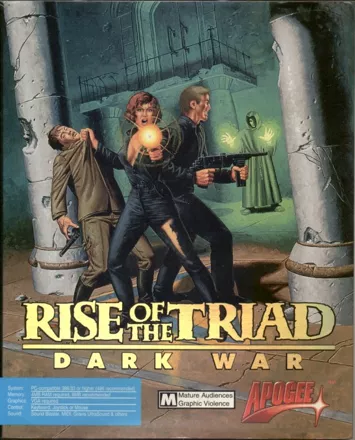
New pack of recordings, this time it is Rise of the Triad: Dark War (1994), "Adagio for Strings".

e7340a60-aba2-11ed-8b70-02420a00019a.webp

YouTube playlist here

One thing to note is that the Casio CSM-1 version is now recorded on *two* modules simultaneously, giving better sound, twice the channels, twice the instruments.

Reply 8 of 11, by targeted

User metadata
Rank Newbie
Rank
Newbie

Update:
added support for Roland CM-32P, a module version of Roland U-110 synthesizer, a member of the honored Roland CM family, but probably the least wanted.

This one is an odd creature.

It has generous 64 patches, but the selection is awful. There is several versions of "strings", several versions of "piano" etc., and they sound very much alike in between.

There are no woodwinds such as flute. There is no distorted/overdriven guitar. There is no likes of accordion, banjo or melodic drums. The organs are terrible. There are no synths nor effects. I understand there is an extension ROM card, but the thing has to stand on its own without having to buy one.

But still, the sounds that it has, they are decent, when they fit the bill.

Odd creature I'm telling you.

Playlist here

Reply 9 of 11, by targeted

User metadata
Rank Newbie
Rank
Newbie

Update:

added support for Alesis SR-16, a classic drum machine.

It is not a sound module but a programmable drum machine, therefore its sounds are organized around its own interface, buttons and all. It is not supposed to be used programmatically. The way to adapt it to a General MIDI is to take full memory dump, patch it to remap the percussion notes to GM, and then have the patched memory uploaded at initialization. Then it becomes GM-compatible and no further note remapping is needed.

Since it plays only percussions, I will be using it in the future to accompany sound modules that do not have percussions (like Roland CM-32P), but to demonstrate it alone, I attach a fragment of it playing the "El Pam Pam" MIDI track.

Reply 10 of 11, by SuperDeadite

User metadata
Rank Member
Rank
Member
targeted wrote on 2026-04-27, 19:02:
Update: added support for Roland CM-32P, a module version of Roland U-110 synthesizer, a member of the honored Roland CM family […]
Show full quote

Update:
added support for Roland CM-32P, a module version of Roland U-110 synthesizer, a member of the honored Roland CM family, but probably the least wanted.

This one is an odd creature.

It has generous 64 patches, but the selection is awful. There is several versions of "strings", several versions of "piano" etc., and they sound very much alike in between.

There are no woodwinds such as flute. There is no distorted/overdriven guitar. There is no likes of accordion, banjo or melodic drums. The organs are terrible. There are no synths nor effects. I understand there is an extension ROM card, but the thing has to stand on its own without having to buy one.

But still, the sounds that it has, they are decent, when they fit the bill.

Odd creature I'm telling you.

Playlist here

32P was designed to be linked to a 32L/MT32, resulting in the CM64. It's a wonderful setup when used properly, mostly by Sharp X68000 games. The Rock Drum expansion card still sounds wonderful imo. I also have a soft spot for the Electric Guitar card, but it sounds a little cheesy by today's standards.

Fully supporting the CM64 would be a lovely addition to your project.

Also, if you are looking for recommendations, the Yamaha SY22 / TG33 is a fave of mine.

CM-64, CM-500, SC-55MkII, SC-88 Pro, SY22, TG100, MU2000EX, PLG100-SG, PLG150-DR, PLG150-AN, SG01k, NS5R, GZ-50M, SN-U110-07, SN-U110-10, Pocket Studio 5, DreamBlaster S2, X2, McFly, E-Wave, QWave, CrystalBlaster C2, Yucatan FX, BeepBlaster, SuperOctet!

Reply 11 of 11, by targeted

User metadata
Rank Newbie
Rank
Newbie

Thank you for correction. CM-64 is in the queue, and my understanding was that CM-64 = MT-32 + CM-32P, quite literally, both in hardware and in logic (channel) separation, so it would make sense to add support for MT-32 first.

TG-33, the one with the joystick, is it ? I wish I had it, it seems to be special indeed.