VOGONS


Weird issues with two Socket A motherboards (long post!)

Topic actions

Reply 40 of 63, by TELVM

User metadata
Rank Oldbie
Rank
Oldbie
CharlieFoxtrot wrote on 2026-08-10, 09:01:

It is difficult to say, my observation just is that they are not uncommon. First, I often make more or less full shotgun replacments, that is I change everything or at least large majority of capacitors. I don’t still often measure every cap I remove, often I check caps that I think are most prone to failing and important, such as VRM caps or main filter caps on PSU secondary side.

If I’d had to make an estimate, of all the failed caps I have encountered, I’d say it is at least around 10% that have failed without any visual signs. Most likely it still higher as I have bias for low esr stuff for my measurements, which are more likely prone to swelling/leaking than general use caps, which gradually just dry out or at least the chemistry fails without pressure build up. One thing to note, often the capacitance might still be in spec, but ESR isn’t. Sometimes these caps are completely dead, I can’t get any kind of measurement. I’ve even measured leaked caps that still show good capacitance, but ESR has shot up. These caps are wildly unstable, although one parameter still seems to be fine. So your basic component tester which can’t measure ESR might not even show any issues.

^ Thanks for your detailed response CharlieFoxtrot. 👍

Let the air flow!

Reply 41 of 63, by shevalier

User metadata
Rank Oldbie
Rank
Oldbie
CharlieFoxtrot wrote on 2026-08-10, 09:01:
TELVM wrote on 2026-08-09, 15:44:

From your experience, what's the approximate percentage of caps that get completely out of spec without showing any external visual signs of it?

It is difficult to say, my observation just is that they are not uncommon. First, I often make more or less full shotgun replacments, that is I change everything or at least large majority of capacitors. I don’t still often measure every cap I remove, often I check caps that I think are most prone to failing and important, such as VRM caps or main filter caps on PSU secondary side.

If I’d had to make an estimate, of all the failed caps I have encountered, I’d say it is at least around 10% that have failed without any visual signs. Most likely it still higher as I have bias for low esr stuff for my measurements, which are more likely prone to swelling/leaking than general use caps, which gradually just dry out or at least the chemistry fails without pressure build up. One thing to note, often the capacitance might still be in spec, but ESR isn’t. Sometimes these caps are completely dead, I can’t get any kind of measurement. I’ve even measured leaked caps that still show good capacitance, but ESR has shot up. These caps are wildly unstable, although one parameter still seems to be fine. So your basic component tester which can’t measure ESR might not even show any issues.

Honestly, measuring 20-year-old electrolytic capacitors is a pretty pointless exercise.
You're not going to solder them back in anyway, and you already have the motherboard sitting right there with cleared through-holes.

Soldering in new ones ends up being way less work overall.

Aopen MX3S, PIII-S Tualatin 1133, Radeon 9800Pro@XT BIOS, Audigy 4 SB0610
JetWay K8T8AS, Athlon DH-E6 3000+, Radeon HD2600Pro AGP, Audigy 2 Value SB0400
Gigabyte Ga-k8n51gmf, Turion64 ML-30@2.2GHz , Radeon X800GTO PL16, Diamond monster sound MX300

Reply 42 of 63, by tehsiggi

User metadata
Rank Oldbie
Rank
Oldbie
shevalier wrote on 2026-08-11, 04:51:
Honestly, measuring 20-year-old electrolytic capacitors is a pretty pointless exercise. You're not going to solder them back in […]
Show full quote
CharlieFoxtrot wrote on 2026-08-10, 09:01:
TELVM wrote on 2026-08-09, 15:44:

From your experience, what's the approximate percentage of caps that get completely out of spec without showing any external visual signs of it?

It is difficult to say, my observation just is that they are not uncommon. First, I often make more or less full shotgun replacments, that is I change everything or at least large majority of capacitors. I don’t still often measure every cap I remove, often I check caps that I think are most prone to failing and important, such as VRM caps or main filter caps on PSU secondary side.

If I’d had to make an estimate, of all the failed caps I have encountered, I’d say it is at least around 10% that have failed without any visual signs. Most likely it still higher as I have bias for low esr stuff for my measurements, which are more likely prone to swelling/leaking than general use caps, which gradually just dry out or at least the chemistry fails without pressure build up. One thing to note, often the capacitance might still be in spec, but ESR isn’t. Sometimes these caps are completely dead, I can’t get any kind of measurement. I’ve even measured leaked caps that still show good capacitance, but ESR has shot up. These caps are wildly unstable, although one parameter still seems to be fine. So your basic component tester which can’t measure ESR might not even show any issues.

Honestly, measuring 20-year-old electrolytic capacitors is a pretty pointless exercise.
You're not going to solder them back in anyway, and you already have the motherboard sitting right there with cleared through-holes.

Soldering in new ones ends up being way less work overall.

I guess he just does it as I do for empirical evidence. When I recap boards, I just measure the caps to know what state they have been in - not for re-using them, but for gaining knowledge. It's not like that more often than not the majority was just fine and got changed because I was at it already, as you mentioned, not because they really needed it.

AGP Card Real Power Consumption
AGP Power monitor - diagnostic hardware tool
Graphics card repair collection

Reply 43 of 63, by CharlieFoxtrot

User metadata
Rank Oldbie
Rank
Oldbie
tehsiggi wrote on 2026-08-11, 07:50:
shevalier wrote on 2026-08-11, 04:51:
Honestly, measuring 20-year-old electrolytic capacitors is a pretty pointless exercise. You're not going to solder them back in […]
Show full quote
CharlieFoxtrot wrote on 2026-08-10, 09:01:

It is difficult to say, my observation just is that they are not uncommon. First, I often make more or less full shotgun replacments, that is I change everything or at least large majority of capacitors. I don’t still often measure every cap I remove, often I check caps that I think are most prone to failing and important, such as VRM caps or main filter caps on PSU secondary side.

If I’d had to make an estimate, of all the failed caps I have encountered, I’d say it is at least around 10% that have failed without any visual signs. Most likely it still higher as I have bias for low esr stuff for my measurements, which are more likely prone to swelling/leaking than general use caps, which gradually just dry out or at least the chemistry fails without pressure build up. One thing to note, often the capacitance might still be in spec, but ESR isn’t. Sometimes these caps are completely dead, I can’t get any kind of measurement. I’ve even measured leaked caps that still show good capacitance, but ESR has shot up. These caps are wildly unstable, although one parameter still seems to be fine. So your basic component tester which can’t measure ESR might not even show any issues.

Honestly, measuring 20-year-old electrolytic capacitors is a pretty pointless exercise.
You're not going to solder them back in anyway, and you already have the motherboard sitting right there with cleared through-holes.

Soldering in new ones ends up being way less work overall.

I guess he just does it as I do for empirical evidence. When I recap boards, I just measure the caps to know what state they have been in - not for re-using them, but for gaining knowledge. It's not like that more often than not the majority was just fine and got changed because I was at it already, as you mentioned, not because they really needed it.

This is exactly why I measure them, to generally understand better how these things age in different applications and what possible quality differences there are between different brands and series, if any. After caps are removed it isn’t a big deal to measure the condition they are. And as I said, if I remove for example 30 caps, I rarely bother to meaure all, but mostly those that I think are most suspect. Which mostly happen to be low-esr stuff, main filter caps etc.

Reply 44 of 63, by shevalier

User metadata
Rank Oldbie
Rank
Oldbie

It’s interesting the first time around just for general knowledge.
A couple of times, I reinstalled name-brand capacitors that tested fine, but a year or two down the line, they started causing trouble. Over time, I came to the rule: "if you desolder it, toss it immediately."
Polymer caps, on the other hand—those really are immortal. Transplanting them from a donor board onto retro gear is a pure joy.

Aopen MX3S, PIII-S Tualatin 1133, Radeon 9800Pro@XT BIOS, Audigy 4 SB0610
JetWay K8T8AS, Athlon DH-E6 3000+, Radeon HD2600Pro AGP, Audigy 2 Value SB0400
Gigabyte Ga-k8n51gmf, Turion64 ML-30@2.2GHz , Radeon X800GTO PL16, Diamond monster sound MX300

Reply 45 of 63, by Shponglefan

User metadata
Rank l33t
Rank
l33t

I always test caps i remove. In part it helps to confirm whether original caps were a potential source of issues in cases where they don't show physical signs of failure.

Sometimes caps can be wildly out of spec despite looking perfectly fine. Testing them is simply a way of diagnosing the prospective faults on a board.

Pentium 4 Multi-OS Build
486 DX4-100 with 6 sound cards
486 DX-33 with 5 sound cards

Reply 46 of 63, by myne

User metadata
Rank l33t
Rank
l33t

What's the word on modern caps on old boards?
Is the modern ordinary cap on par with the old esr?

Got an old quadro I should recap at some point.

I built:
Convert old ASUS ASC boardviews to KICAD PCB!
Re: A comprehensive guide to install and play MechWarrior 2 on new versions on Windows.
Dos+Windows 3.11+tcp+vbe_svga auto-install iso template
Script to backup Win9x\ME drivers from a working install
Re: The thing no one asked for: KICAD 440bx reference schematic

Reply 47 of 63, by shevalier

User metadata
Rank Oldbie
Rank
Oldbie
myne wrote on 2026-08-11, 13:04:

What's the word on modern caps on old boards?
Is the modern ordinary cap on par with the old esr?

Got an old quadro I should recap at some point.

Sanyo invented polymers capacitors back in 1985.
OS-CONs were used starting with Pentium Pro motherboards.
Which modern ones are you talking about? 😀
Hybrid ones?

Aopen MX3S, PIII-S Tualatin 1133, Radeon 9800Pro@XT BIOS, Audigy 4 SB0610
JetWay K8T8AS, Athlon DH-E6 3000+, Radeon HD2600Pro AGP, Audigy 2 Value SB0400
Gigabyte Ga-k8n51gmf, Turion64 ML-30@2.2GHz , Radeon X800GTO PL16, Diamond monster sound MX300

Reply 48 of 63, by shevalier

User metadata
Rank Oldbie
Rank
Oldbie

s-l1600-10-67f91de795b40433326300.jpeg
Jetway k8t8as s754
Vrm zone -Lelon polymer cap
By that point, the patent on some film had expired, and nobody cared about Sanyo’s crazy prices anymore. Everyone started making polymer capacitors themselves.
P.S. Silver capacitors without heat shrink tubing are actually cheap electrolytics despite their appearance. They were already bulging 10 years ago on my motherboard.

Aopen MX3S, PIII-S Tualatin 1133, Radeon 9800Pro@XT BIOS, Audigy 4 SB0610
JetWay K8T8AS, Athlon DH-E6 3000+, Radeon HD2600Pro AGP, Audigy 2 Value SB0400
Gigabyte Ga-k8n51gmf, Turion64 ML-30@2.2GHz , Radeon X800GTO PL16, Diamond monster sound MX300

Reply 49 of 63, by SlowA

User metadata
Rank Newbie
Rank
Newbie

Lot’s of knowledge from this topic, I love it.

Reply 50 of 63, by Shponglefan

User metadata
Rank l33t
Rank
l33t
myne wrote on 2026-08-11, 13:04:

What's the word on modern caps on old boards?
Is the modern ordinary cap on par with the old esr?

Got an old quadro I should recap at some point.

Depends on the board and specific application of the caps.

Replacing electrolytics with low ESR polymer caps (poly modding) is an option. I recently did this for several P4 boards.

Pentium 4 Multi-OS Build
486 DX4-100 with 6 sound cards
486 DX-33 with 5 sound cards

Reply 51 of 63, by shevalier

User metadata
Rank Oldbie
Rank
Oldbie
Shponglefan wrote on 2026-08-11, 14:13:

(poly modding) is an option. I recently did this for several P4 boards.

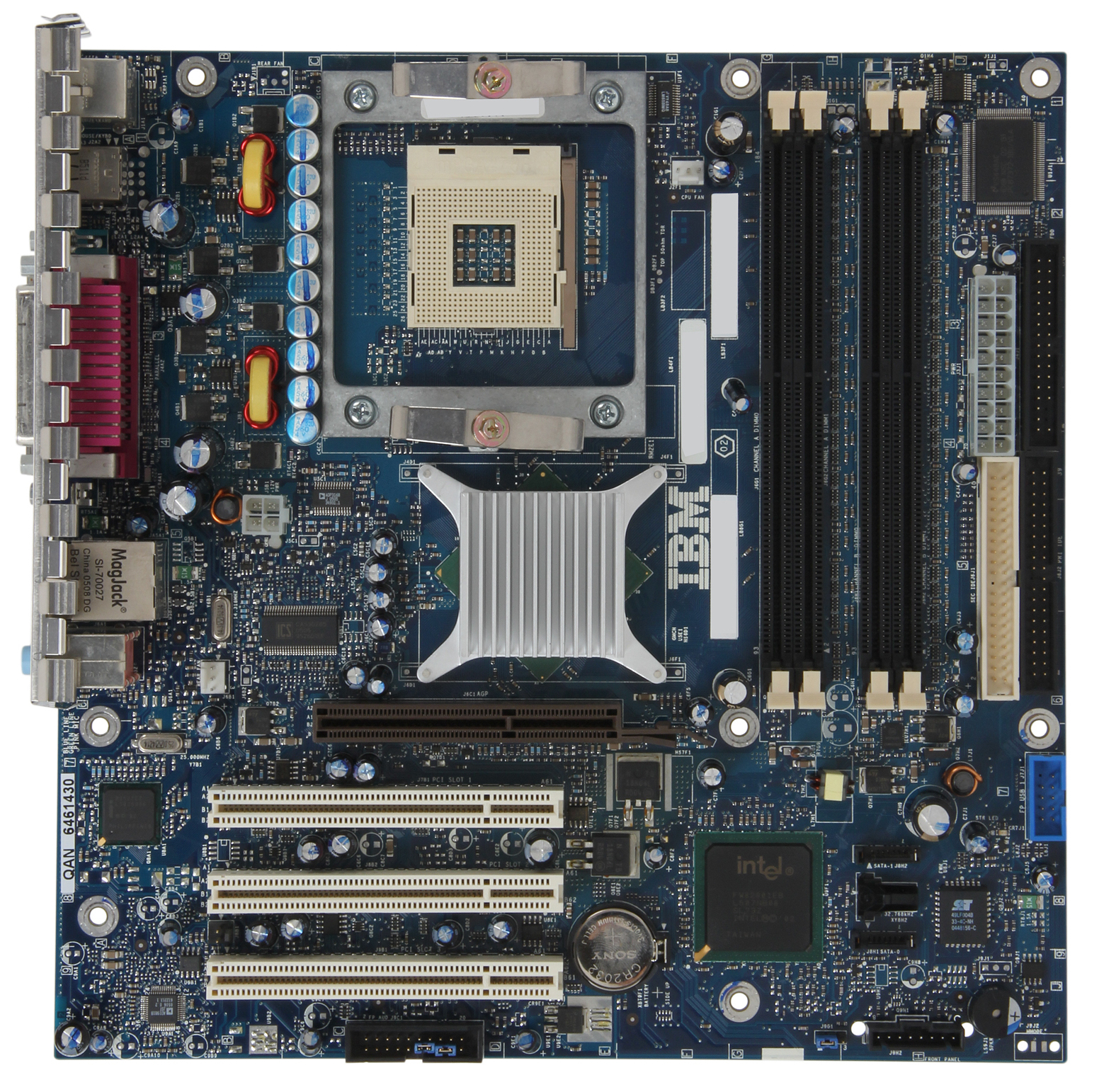
Boromir did this...
IBM did this 20y ago.
d865gkd-ibm-609e356d4d6f9457709067.jpg

Though to be fair, Intel did it 10 years earlier
50430602.2cb50ee7.640.jpg

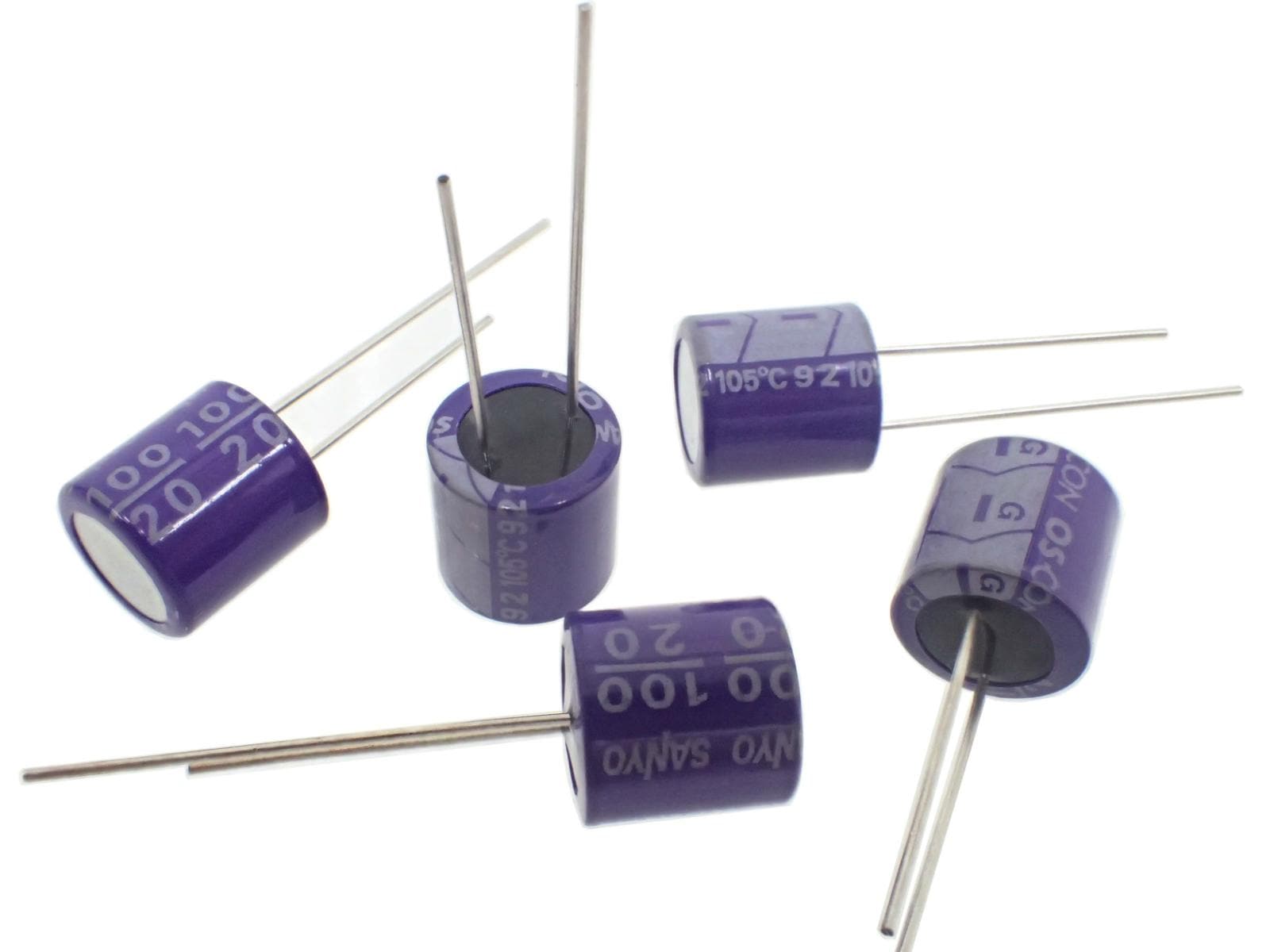
For those who are too young for this shit and don't know what the first Sanyo OS-CON polymer capacitors (~1985y) looked like 😀
000000002859_mj6tHYg.jpg

Aopen MX3S, PIII-S Tualatin 1133, Radeon 9800Pro@XT BIOS, Audigy 4 SB0610
JetWay K8T8AS, Athlon DH-E6 3000+, Radeon HD2600Pro AGP, Audigy 2 Value SB0400
Gigabyte Ga-k8n51gmf, Turion64 ML-30@2.2GHz , Radeon X800GTO PL16, Diamond monster sound MX300

Reply 52 of 63, by myne

User metadata
Rank l33t
Rank
l33t
Shponglefan wrote on 2026-08-11, 14:13:
myne wrote on 2026-08-11, 13:04:

What's the word on modern caps on old boards?
Is the modern ordinary cap on par with the old esr?

Got an old quadro I should recap at some point.

Depends on the board and specific application of the caps.

Replacing electrolytics with low ESR polymer caps (poly modding) is an option. I recently did this for several P4 boards.

I believe most already are poly.
In any case, I think I was misunderstood.

If you take a 20yo low esr cap, and compare it to some new generic cap, have standards improved enough that modern generics are effectively "low esr" by old standards?

I built:
Convert old ASUS ASC boardviews to KICAD PCB!
Re: A comprehensive guide to install and play MechWarrior 2 on new versions on Windows.
Dos+Windows 3.11+tcp+vbe_svga auto-install iso template
Script to backup Win9x\ME drivers from a working install
Re: The thing no one asked for: KICAD 440bx reference schematic

Reply 53 of 63, by shevalier

User metadata
Rank Oldbie
Rank
Oldbie
myne wrote on 2026-08-12, 01:56:
I believe most already are poly. In any case, I think I was misunderstood. […]
Show full quote
Shponglefan wrote on 2026-08-11, 14:13:
myne wrote on 2026-08-11, 13:04:

What's the word on modern caps on old boards?
Is the modern ordinary cap on par with the old esr?

Got an old quadro I should recap at some point.

Depends on the board and specific application of the caps.

Replacing electrolytics with low ESR polymer caps (poly modding) is an option. I recently did this for several P4 boards.

I believe most already are poly.
In any case, I think I was misunderstood.

If you take a 20yo low esr cap, and compare it to some new generic cap, have standards improved enough that modern generics are effectively "low esr" by old standards?

You need to check the datasheets.

General-purpose polymer capacitors (not ultra-low ESR) are full equivalents of ultra-low ESR electrolytic capacitors from 20 years ago.

General-purpose electrolytics — I don't know, haven't looked into it.
Since controlled ESR is an important parameter, I doubt that such electrolytics had their ESR reduced on purpose.
Therefore, most likely not.

Aopen MX3S, PIII-S Tualatin 1133, Radeon 9800Pro@XT BIOS, Audigy 4 SB0610
JetWay K8T8AS, Athlon DH-E6 3000+, Radeon HD2600Pro AGP, Audigy 2 Value SB0400
Gigabyte Ga-k8n51gmf, Turion64 ML-30@2.2GHz , Radeon X800GTO PL16, Diamond monster sound MX300

Reply 54 of 63, by myne

User metadata
Rank l33t
Rank
l33t

Right.
So if I recap an NV 6800, plain current polymer will be fine without looking too hard at the original/new esr stats.
Or any electrolytic > polymer will be by default better.

I built:
Convert old ASUS ASC boardviews to KICAD PCB!
Re: A comprehensive guide to install and play MechWarrior 2 on new versions on Windows.
Dos+Windows 3.11+tcp+vbe_svga auto-install iso template
Script to backup Win9x\ME drivers from a working install
Re: The thing no one asked for: KICAD 440bx reference schematic

Reply 55 of 63, by shevalier

User metadata
Rank Oldbie
Rank
Oldbie

Some random low-esr at 2005 y is d=8-10mm, 1500-2200 u and 15mOhm

For example, Capson PS - general use poly:
10mm, 1000-2200u (for 6.3v) , 12mOhm

Yep, its direct replace

Aopen MX3S, PIII-S Tualatin 1133, Radeon 9800Pro@XT BIOS, Audigy 4 SB0610
JetWay K8T8AS, Athlon DH-E6 3000+, Radeon HD2600Pro AGP, Audigy 2 Value SB0400
Gigabyte Ga-k8n51gmf, Turion64 ML-30@2.2GHz , Radeon X800GTO PL16, Diamond monster sound MX300

Reply 56 of 63, by CharlieFoxtrot

User metadata
Rank Oldbie
Rank
Oldbie
myne wrote on 2026-08-12, 01:56:

If you take a 20yo low esr cap, and compare it to some new generic cap, have standards improved enough that modern generics are effectively "low esr" by old standards?

With electrolytic caps absolutely no, if you mean ultra low esr caps used in most MB VRMs by the rarly 2000s. General use cap would have far too high ESR for something as replacements for VRM ultra low electrolytics. However, with some motherboards many modern low esr caps will do just fine, this is easy enough to calculate if that is the case and you have the data sheets of old caps.

Polymodding is probably still often the most viable solution. You can almost pick any polymer capacitor out there and they will have specs that at least match the old cap, at least if we are talking about early 2000s motherboards, I don’t have experience with newer stuff.

There really are very little downsides with polymers, except they tend to cost little bit more. And using them makes boards look weird 🤣. They get this odd mix of old and new to them, but I think this matters for very few of us in the end.

Reply 57 of 63, by shevalier

User metadata
Rank Oldbie
Rank
Oldbie
CharlieFoxtrot wrote on 2026-08-12, 08:00:
myne wrote on 2026-08-12, 01:56:

If you take a 20yo low esr cap, and compare it to some new generic cap, have standards improved enough that modern generics are effectively "low esr" by old standards?

And using them makes boards look weird 🤣. They get this odd mix of old and new to them, but I think this matters for very few of us in the end.

https://theretroweb.com/motherboards?itemsPer … Ids%5B0%5D=2883
For example, FIC KG-6211
The entire board is covered in Sanyo OS-CON, as were many server solutions of the time.
kg-6211-62ebb80b184a6486309585.png
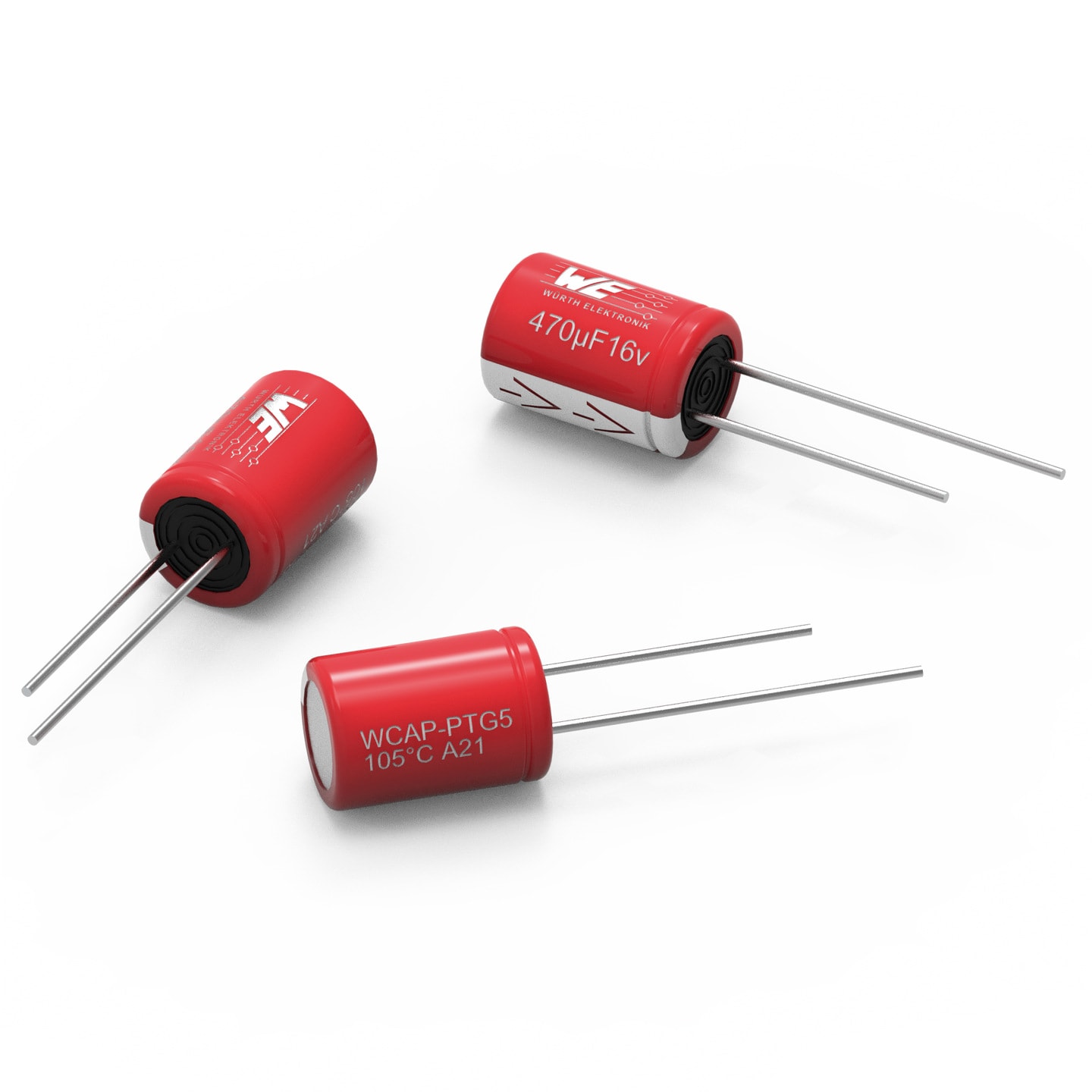
If you're looking for a retro look, Wurst still makes heat-shrinkable polymers.
o14739v209%20PTG5_8x11.5x3.5x0.6_Group.jpg
https://www.we-online.com/en/components/products/WCAP-PTG5

PS. Polymod, for example, involves using them in ATX power supplies with a group-regulated choke, where they perform very poorly due to resonance.
For motherboards, they're a direct replacement. If they had been cheaper back then, they would have been used everywhere, not just in servers and workstations.

To make everything look clean, you need to replace the capacitors with ones of matching diameter and choose a color scheme that matches the PCB. Naturally, all capacitors should be the same color—otherwise, you'll end up with that "AM3-era Gigabyte" look.

Aopen MX3S, PIII-S Tualatin 1133, Radeon 9800Pro@XT BIOS, Audigy 4 SB0610
JetWay K8T8AS, Athlon DH-E6 3000+, Radeon HD2600Pro AGP, Audigy 2 Value SB0400
Gigabyte Ga-k8n51gmf, Turion64 ML-30@2.2GHz , Radeon X800GTO PL16, Diamond monster sound MX300

Reply 58 of 63, by TELVM

User metadata
Rank Oldbie
Rank
Oldbie
shevalier wrote on 2026-08-12, 08:35:

... Polymod, for example, involves using them in ATX power supplies with a group-regulated choke, where they perform very poorly due to resonance ...

^ This, careful with this Vogoners.

Polys work superbly on vintage motherboards & GPUs, but not so much on many old-style group-regulated PSUs, where they can bring trouble. Better stick to lytics on vintage PSUs.

.

Modern-style PSUs with DC-DC regulation for the minor rails are more poly-friendly. Example, OEM 1500uF polys filtering the +5V & +3.3V outputs in a Corsair CX650M:

file.php?mode=view&id=247300

Let the air flow!

Reply 59 of 63, by shevalier

User metadata
Rank Oldbie
Rank
Oldbie

Step-down DC-DC converters have only a single inductor and a very fast feedback loop. Furthermore, they are originally designed around 10 mΩ capacitors. A ±50% variation in capacitance is not an issue for them—it's their standard operating condition.
ATX PSUs, especially those with group regulation chokes, have crazy propagation delays, a ton of resonances, and other quirks.
Modding them requires a solid understanding of control theory—which, unfortunately, isn't my strong suit.
Maybe if you have those 2700 µF / 16 V @10 mOhm polymer caps that recently came out, it might work.
But my own attempts to build a cap bank out of smaller capacitors turned out pretty mediocre. The PSU is completely stable, but it whines as the load increases.
Maybe it was already like that to begin with, I don't know—it was given to me. 😀

Aopen MX3S, PIII-S Tualatin 1133, Radeon 9800Pro@XT BIOS, Audigy 4 SB0610
JetWay K8T8AS, Athlon DH-E6 3000+, Radeon HD2600Pro AGP, Audigy 2 Value SB0400
Gigabyte Ga-k8n51gmf, Turion64 ML-30@2.2GHz , Radeon X800GTO PL16, Diamond monster sound MX300