VOGONS


Reply 20 of 46, by shevalier

User metadata
Rank Oldbie
Rank
Oldbie
Lylat1an wrote on 2026-08-19, 09:03:
Mike_ wrote on 2026-08-19, 08:34:

There are a lot of games that came out after Windows XP, which came out in 2001, but before 2005. 😀

Yes, but I imagine those games were also compatible with 98 in that time, rather than requiring XP.

(I haven't verified that yet.)

Radeon 9100-9200 or MX440 in versions with a switching GPU VRM.
This motherboard's AGP voltage regulator isn't particularly powerful.

Aopen MX3S, PIII-S Tualatin 1133, Radeon 9800Pro@XT BIOS, Audigy 4 SB0610
JetWay K8T8AS, Athlon DH-E6 3000+, Radeon HD2600Pro AGP, Audigy 2 Value SB0400
Gigabyte Ga-k8n51gmf, Turion64 ML-30@2.2GHz , Radeon X800GTO PL16, Diamond monster sound MX300

Reply 21 of 46, by Lylat1an

User metadata
Rank Member
Rank
Member
shevalier wrote on 2026-08-19, 09:31:

Radeon 9100-9200 or MX440 in versions with a switching GPU VRM.
This motherboard's AGP voltage regulator isn't particularly powerful.

How will I know which one(s) have that type of VRM?

Or is it just any black rectangle with 3 legs on one side?

I see that the MX440 comes in 128MB versions, are those worthwhile?

Reply 22 of 46, by shevalier

User metadata
Rank Oldbie
Rank
Oldbie
Lylat1an wrote on 2026-08-19, 10:42:
shevalier wrote on 2026-08-19, 09:31:

Radeon 9100-9200 or MX440 in versions with a switching GPU VRM.
This motherboard's AGP voltage regulator isn't particularly powerful.

How will I know which one(s) have that type of VRM?

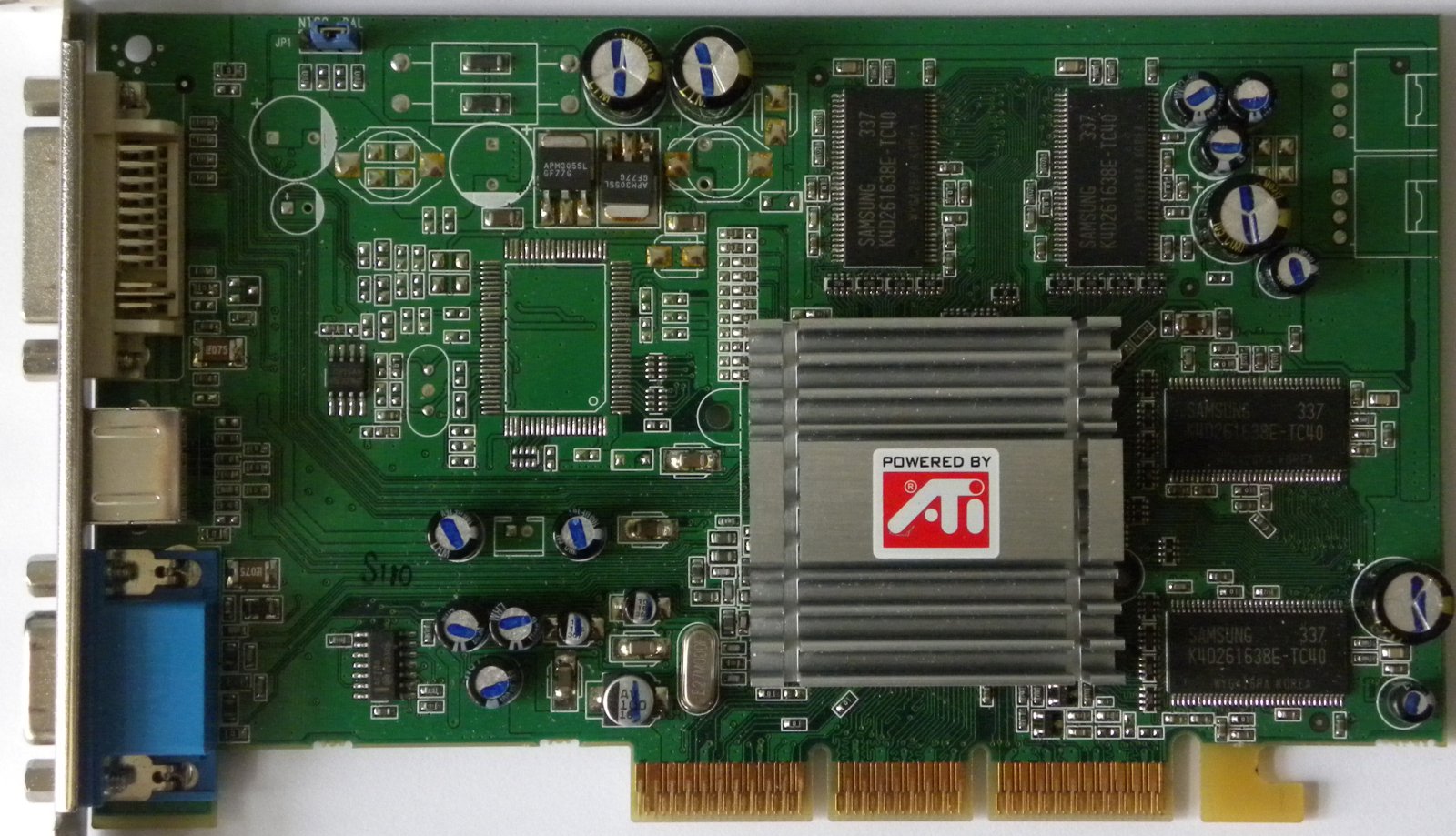
Linear - without Inductor
7416-ati-radeon-9200-5441135466715427022.jpg
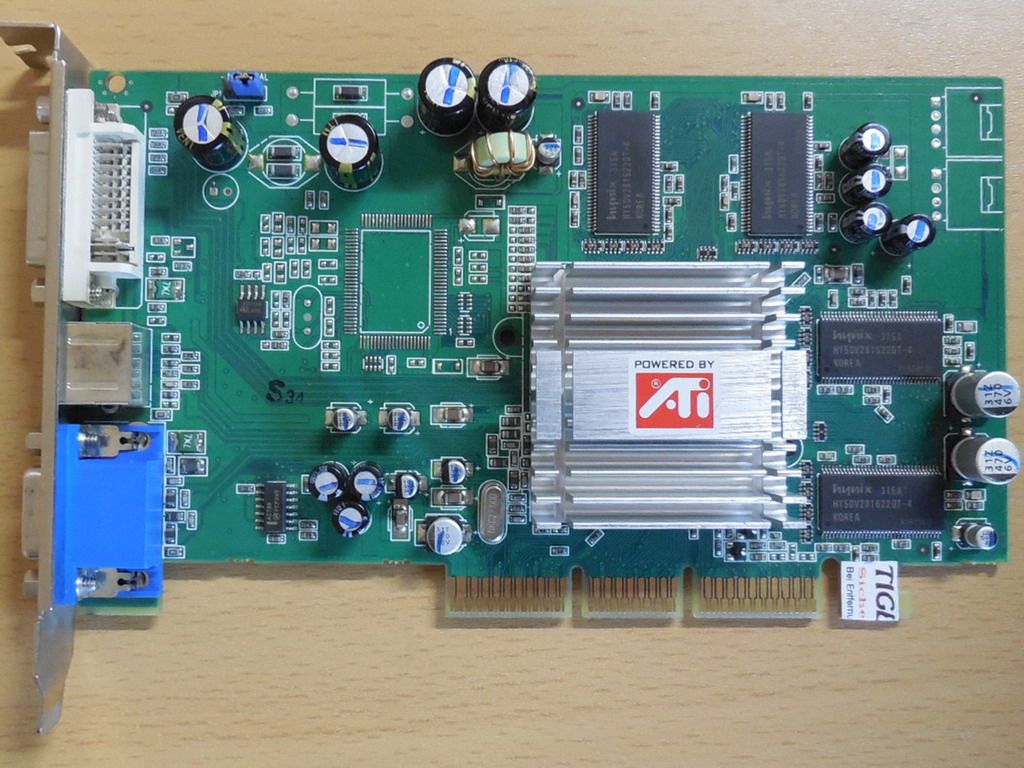
Switching VRM - Yellow round thingy wrapped in wires
11998_1.jpg

Aopen MX3S, PIII-S Tualatin 1133, Radeon 9800Pro@XT BIOS, Audigy 4 SB0610
JetWay K8T8AS, Athlon DH-E6 3000+, Radeon HD2600Pro AGP, Audigy 2 Value SB0400
Gigabyte Ga-k8n51gmf, Turion64 ML-30@2.2GHz , Radeon X800GTO PL16, Diamond monster sound MX300

Reply 23 of 46, by tehsiggi

User metadata
Rank Oldbie
Rank
Oldbie
shevalier wrote on 2026-08-19, 09:31:
Lylat1an wrote on 2026-08-19, 09:03:
Mike_ wrote on 2026-08-19, 08:34:

There are a lot of games that came out after Windows XP, which came out in 2001, but before 2005. 😀

Yes, but I imagine those games were also compatible with 98 in that time, rather than requiring XP.

(I haven't verified that yet.)

Radeon 9100-9200 or MX440 in versions with a switching GPU VRM.
This motherboard's AGP voltage regulator isn't particularly powerful.

I'd not use a 9100 - it draws way more power on the 3.3V rail than the 9000 Pro or 9200 (128bit) respectively:

9100 - 5.4A under load
9200 (128bit) - 3A under load
9000Pro - 2.2A under load

AGP Card Real Power Consumption
AGP Power monitor - diagnostic hardware tool
Graphics card repair collection

Reply 24 of 46, by shevalier

User metadata
Rank Oldbie
Rank
Oldbie
tehsiggi wrote on 2026-08-19, 11:24:
I'd not use a 9100 - it draws way more power on the 3.3V rail than the 9000 Pro or 9200 (128bit) respectively: […]
Show full quote
shevalier wrote on 2026-08-19, 09:31:
Lylat1an wrote on 2026-08-19, 09:03:

Yes, but I imagine those games were also compatible with 98 in that time, rather than requiring XP.

(I haven't verified that yet.)

Radeon 9100-9200 or MX440 in versions with a switching GPU VRM.
This motherboard's AGP voltage regulator isn't particularly powerful.

I'd not use a 9100 - it draws way more power on the 3.3V rail than the 9000 Pro or 9200 (128bit) respectively:

9100 - 5.4A under load
9200 (128bit) - 3A under load
9000Pro - 2.2A under load

Yes, you're right.
At the same 150nm process, the Radeon 9100 has 60 million transistors, while the 9200 has 36 million.
That should clearly result in higher power consumption.
However, if it uses a switching VRM, the consumption would be roughly the same as that of the "linear" 9200.
71Dwy14O0CL._AC_SL1029_.jpg

Aopen MX3S, PIII-S Tualatin 1133, Radeon 9800Pro@XT BIOS, Audigy 4 SB0610
JetWay K8T8AS, Athlon DH-E6 3000+, Radeon HD2600Pro AGP, Audigy 2 Value SB0400
Gigabyte Ga-k8n51gmf, Turion64 ML-30@2.2GHz , Radeon X800GTO PL16, Diamond monster sound MX300

Reply 25 of 46, by Lylat1an

User metadata
Rank Member
Rank
Member
shevalier wrote on 2026-08-19, 11:11:
Linear - without Inductor https://www.abclinuxu.cz/images/screenshots/6/1/7416-ati-radeon-9200-5441135466715427022.jpg Switching […]
Show full quote
Lylat1an wrote on 2026-08-19, 10:42:
shevalier wrote on 2026-08-19, 09:31:

Radeon 9100-9200 or MX440 in versions with a switching GPU VRM.
This motherboard's AGP voltage regulator isn't particularly powerful.

How will I know which one(s) have that type of VRM?

Linear - without Inductor
7416-ati-radeon-9200-5441135466715427022.jpg
Switching VRM - Yellow round thingy wrapped in wires
11998_1.jpg

I'm not seeing any MX440 models with switching VRMs that don't also have linear VRMs.

Are both bad in my situation as well?

Reply 26 of 46, by tehsiggi

User metadata
Rank Oldbie
Rank
Oldbie
shevalier wrote on 2026-08-19, 11:34:
Yes, you're right. At the same 150nm process, the Radeon 9100 has 60 million transistors, while the 9200 has 36 million. That sh […]
Show full quote
tehsiggi wrote on 2026-08-19, 11:24:
I'd not use a 9100 - it draws way more power on the 3.3V rail than the 9000 Pro or 9200 (128bit) respectively: […]
Show full quote
shevalier wrote on 2026-08-19, 09:31:

Radeon 9100-9200 or MX440 in versions with a switching GPU VRM.
This motherboard's AGP voltage regulator isn't particularly powerful.

I'd not use a 9100 - it draws way more power on the 3.3V rail than the 9000 Pro or 9200 (128bit) respectively:

9100 - 5.4A under load
9200 (128bit) - 3A under load
9000Pro - 2.2A under load

Yes, you're right.
At the same 150nm process, the Radeon 9100 has 60 million transistors, while the 9200 has 36 million.
That should clearly result in higher power consumption.
However, if it uses a switching VRM, the consumption would be roughly the same as that of the "linear" 9200.
71Dwy14O0CL._AC_SL1029_.jpg

Since the 9100 is kind of a unicorn, I'd just go for the 9200 128Bit from HIS or others (if team red is the goal). The 128 bit often have switching VRMs. Performance wise it'll be good enough.
Price wise the 9200 is usually way cheaper than a 9100 and readily available. Not hard to find one with switching VRM.

AGP Card Real Power Consumption
AGP Power monitor - diagnostic hardware tool
Graphics card repair collection

Reply 27 of 46, by shevalier

User metadata
Rank Oldbie
Rank
Oldbie
Lylat1an wrote on 2026-08-19, 11:37:
shevalier wrote on 2026-08-19, 11:11:
Linear - without Inductor https://www.abclinuxu.cz/images/screenshots/6/1/7416-ati-radeon-9200-5441135466715427022.jpg Switching […]
Show full quote
Lylat1an wrote on 2026-08-19, 10:42:

How will I know which one(s) have that type of VRM?

Linear - without Inductor
7416-ati-radeon-9200-5441135466715427022.jpg
Switching VRM - Yellow round thingy wrapped in wires
11998_1.jpg

I'm not seeing any MX440 models with switching VRMs that don't also have linear VRMs.

Are both bad in my situation as well?

this cool
https://www.ebay.com/itm/198550096958
reference designe
https://www.ebay.com/itm/168491576930 😀

not bad
https://www.ebay.com/itm/114025917784

and another, but 64 bit bus
https://www.ebay.com/itm/325094166427
https://www.ebay.com/itm/117057405179
https://www.ebay.com/itm/358514524850

Aopen MX3S, PIII-S Tualatin 1133, Radeon 9800Pro@XT BIOS, Audigy 4 SB0610
JetWay K8T8AS, Athlon DH-E6 3000+, Radeon HD2600Pro AGP, Audigy 2 Value SB0400
Gigabyte Ga-k8n51gmf, Turion64 ML-30@2.2GHz , Radeon X800GTO PL16, Diamond monster sound MX300

Reply 28 of 46, by Ozzuneoj

User metadata
Rank l33t
Rank
l33t
Lylat1an wrote on 2026-08-19, 09:03:
Mike_ wrote on 2026-08-19, 08:34:

There are a lot of games that came out after Windows XP, which came out in 2001, but before 2005. 😀

Yes, but I imagine those games were also compatible with 98 in that time, rather than requiring XP.

(I haven't verified that yet.)

What are the specs of the rest of the system?

Unless you are okay with very low frame rates (sub-35fps) and game settings, even a 500Mhz K6-2 is generally going to struggle with most 3D games made after 1998. I wouldn't plan on using it for games made after 2000, regardless of the video card.

Now for some blitting from the back buffer.

Reply 29 of 46, by shevalier

User metadata
Rank Oldbie
Rank
Oldbie

Pentium MMX 100FSB*2.5 whith MX440 runs Need for Speed 3 pretty well...

Aopen MX3S, PIII-S Tualatin 1133, Radeon 9800Pro@XT BIOS, Audigy 4 SB0610
JetWay K8T8AS, Athlon DH-E6 3000+, Radeon HD2600Pro AGP, Audigy 2 Value SB0400
Gigabyte Ga-k8n51gmf, Turion64 ML-30@2.2GHz , Radeon X800GTO PL16, Diamond monster sound MX300

Reply 30 of 46, by Ozzuneoj

User metadata
Rank l33t
Rank
l33t
shevalier wrote on 2026-08-19, 12:59:

Pentium MMX 100FSB*2.5 whith MX440 runs Need for Speed 3 pretty well...

NFS3 is from 1998. It seems that in 1999 the viability of Socket 7 for most new 3D games really dropped off.

In those days a lot of people were accustomed to gaming at what would be considered slideshow frame rates today, so people still played new games on such systems... But it was often at 15-30fps. It's good to be realistic about what to expect when planning out a build.

The gap between a Socket 7 system and a modern system that will run everything from 2005 and up is huge and pretty much necessitates having another system to fill the gap.

Last edited by Ozzuneoj on 2026-08-21, 06:06. Edited 1 time in total.

Now for some blitting from the back buffer.

Reply 31 of 46, by shevalier

User metadata
Rank Oldbie
Rank
Oldbie

That’s why I recommended low-end DX8.1 GPUs (a Radeon 9200 running DX9 is pretty awful).
P.S. Though there was a thread here titled "Is a 9800 XT enough for my Socket 7 system with a K6-2? 😀

Aopen MX3S, PIII-S Tualatin 1133, Radeon 9800Pro@XT BIOS, Audigy 4 SB0610
JetWay K8T8AS, Athlon DH-E6 3000+, Radeon HD2600Pro AGP, Audigy 2 Value SB0400
Gigabyte Ga-k8n51gmf, Turion64 ML-30@2.2GHz , Radeon X800GTO PL16, Diamond monster sound MX300

Reply 32 of 46, by Mike_

User metadata
Rank Member
Rank
Member
Lylat1an wrote on 2026-08-19, 09:03:

Yes, but I imagine those games were also compatible with 98 in that time, rather than requiring XP.

(I haven't verified that yet.)

Yes, most games up to 2003 work in Windows 98 (some 2004 games do require Windows 2000/XP), but they do not work in a super socket 7 system no matter what GPU you are using. 😁

If you want to play games up to 2003 and maybe some 2004 games as well, an Athlon XP build is about the minimum you want. Ideally, you'd want a Pentium 4 build with an industrial motherboard that has an ISA slot, but those get a bit pricey.

Ozzuneoj wrote on 2026-08-19, 15:39:

NFS3 is from 1998. It seems that in 1999 the viability of Socket 7 for most new 3D games really dropped off.

I'm those days a lot of people were accustomed to gaming at what would be considered slideshow frame rates today, so people still played new games on such systems... But it was often at 15-30fps. It's good to be realistic about what to expect when planning out a build.

The gap between a Socket 7 system and a modern system that will run everything from 2005 and up is huge and pretty much necessitates having another system to fill the gap.

It shouldn't be quite *that* bad, after all K6-III came out in 1999. I'd say most pre-2000 games should be fine, but 2000 becomes iffy and after that just no way.

Reply 33 of 46, by Ozzuneoj

User metadata
Rank l33t
Rank
l33t
Mike_ wrote on 2026-08-19, 16:17:
Yes, most games up to 2003 work in Windows 98 (some 2004 games do require Windows 2000/XP), but they do not work in a super sock […]
Show full quote
Lylat1an wrote on 2026-08-19, 09:03:

Yes, but I imagine those games were also compatible with 98 in that time, rather than requiring XP.

(I haven't verified that yet.)

Yes, most games up to 2003 work in Windows 98 (some 2004 games do require Windows 2000/XP), but they do not work in a super socket 7 system no matter what GPU you are using. 😁

If you want to play games up to 2003 and maybe some 2004 games as well, an Athlon XP build is about the minimum you want. Ideally, you'd want a Pentium 4 build with an industrial motherboard that has an ISA slot, but those get a bit pricey.

Ozzuneoj wrote on 2026-08-19, 15:39:

NFS3 is from 1998. It seems that in 1999 the viability of Socket 7 for most new 3D games really dropped off.

I'm those days a lot of people were accustomed to gaming at what would be considered slideshow frame rates today, so people still played new games on such systems... But it was often at 15-30fps. It's good to be realistic about what to expect when planning out a build.

The gap between a Socket 7 system and a modern system that will run everything from 2005 and up is huge and pretty much necessitates having another system to fill the gap.

It shouldn't be quite *that* bad, after all K6-III came out in 1999. I'd say most pre-2000 games should be fine, but 2000 becomes iffy and after that just no way.

It really can be pretty bad depending on the game. The K6-III was released four months before the first Athlon as a budget stop-gap product and is nowhere near as fast in gaming (even compared to a Duron). A K6-III or III+ (or 2+) is decently faster than a K6-2 as well, but it's a lot less likely that OP has anything faster than a K6-2 500 given how relatively uncommon or expensive the others are. So, if he has a K6-2 500 (not III, non-plus) he's basically got somewhere in the Pentium II 300-350Mhz range of performance on average, with some games being a lot better or a lot worse.

This post has some interesting benchmarks.
Re: Sharing my benchmark results on a AMD k6-2 with various AGP cards

The viability of a K6-2 for 1999-2000 games comes down to what games are being played and if the user is okay with minimum settings at low and\or unstable (10-25) frame rates in the way that people may have tolerated them back in the day. After 2000 there is very little chance that a K6-2 will be fast enough for most 3D games regardless of settings.

Just as a general rule, I would say that if you play any modern or recent games on a high-Hz (120+) display because you appreciate the smoothness or are someone that likes to keep things at or near 60fps minimum, a K6-2 won't be pleasant to use for 3D gaming beyond 1998.

EDIT: Found another thread. The benchmark results attached to the first post are very helpful.
Sharing my benchmark results on a AMD k6-2 with various AGP cards

Now for some blitting from the back buffer.

Reply 34 of 46, by Lylat1an

User metadata
Rank Member
Rank
Member
Ozzuneoj wrote on 2026-08-19, 12:53:

What are the specs of the rest of the system?

Unless you are okay with very low frame rates (sub-35fps) and game settings, even a 500Mhz K6-2 is generally going to struggle with most 3D games made after 1998. I wouldn't plan on using it for games made after 2000, regardless of the video card.

That is the CPU I'm using.

I also have 512MB RAM and a SB16 sound card.

My motherboard is a "PCPartner MVP3BS7-954", the smallest Baby-AT I could find.

The case is from an IBM5160, so a very short Baby AT is required.

I already had the CPU, and I didn't see any 370 or slot 1 boards as small as the board I'm using.

Reply 35 of 46, by Ozzuneoj

User metadata
Rank l33t
Rank
l33t
Lylat1an wrote on 2026-08-19, 19:58:
That is the CPU I'm using. […]
Show full quote
Ozzuneoj wrote on 2026-08-19, 12:53:

What are the specs of the rest of the system?

Unless you are okay with very low frame rates (sub-35fps) and game settings, even a 500Mhz K6-2 is generally going to struggle with most 3D games made after 1998. I wouldn't plan on using it for games made after 2000, regardless of the video card.

That is the CPU I'm using.

I also have 512MB RAM and a SB16 sound card.

My motherboard is a "PCPartner MVP3BS7-954", the smallest Baby-AT I could find.

The case is from an IBM5160, so a very short Baby AT is required.

I already had the CPU, and I didn't see any 370 or slot 1 boards as small as the board I'm using.

Sounds like a really cool build to put into a 5160! Baby-AT Socket 370 and Slot 1 boards exist but they're pretty uncommon, so Super Socket 7 is a good option for a solid early Windows 9x + DOS system.

I would find a graphics card for it that is nice and compatible, but fast enough to remove any video card bottlenecks, like a TNT2 Pro (much faster than an M64) or Geforce 2 MX. Check the benchmarks in the last couple posts I made for more details. With these specs it should perform well in games through 1998 or so. If you aren't picky about performance or image quality it would also run some games from 1999-2000.

One thing to keep in mind is that your board has 512KB of L2 cache (the K6-2 has no L2 cache on chip), so the VIA MVP3 chipset will only be able to cache 128MB of system memory. You can still use more, but this apparently has some impact on overall system performance. I don't have personal experience with this, but someone else can probably explain if it's better to reduce your memory to 128MB or to keep 512MB in it. For practical purposes, it is unlikely that any games that will run well on a K6-2 500 will utilize more than 64MB-128MB of RAM.

Now for some blitting from the back buffer.

Reply 36 of 46, by Mike_

User metadata
Rank Member
Rank
Member
Ozzuneoj wrote on 2026-08-19, 18:14:
It really can be pretty bad depending on the game. The K6-III was released four months before the first Athlon as a budget stop- […]
Show full quote

It really can be pretty bad depending on the game. The K6-III was released four months before the first Athlon as a budget stop-gap product and is nowhere near as fast in gaming (even compared to a Duron). A K6-III or III+ (or 2+) is decently faster than a K6-2 as well, but it's a lot less likely that OP has anything faster than a K6-2 500 given how relatively uncommon or expensive the others are. So, if he has a K6-2 500 (not III, non-plus) he's basically got somewhere in the Pentium II 300-350Mhz range of performance on average, with some games being a lot better or a lot worse.

This post has some interesting benchmarks.
Re: Sharing my benchmark results on a AMD k6-2 with various AGP cards

The viability of a K6-2 for 1999-2000 games comes down to what games are being played and if the user is okay with minimum settings at low and\or unstable (10-25) frame rates in the way that people may have tolerated them back in the day. After 2000 there is very little chance that a K6-2 will be fast enough for most 3D games regardless of settings.

Just as a general rule, I would say that if you play any modern or recent games on a high-Hz (120+) display because you appreciate the smoothness or are someone that likes to keep things at or near 60fps minimum, a K6-2 won't be pleasant to use for 3D gaming beyond 1998.

EDIT: Found another thread. The benchmark results attached to the first post are very helpful.
Sharing my benchmark results on a AMD k6-2 with various AGP cards

Aren't Quake III and Unreal Tournament basically the most demanding games of 1999?

But yes, a 500MHz K6-2 isn't great for 1999 games. I was thinking more along the lines of a K6-III(+) clocked at 500MHz or so, I didn't realize those are expensive. I bought two 400MHz K6-III+s for like 20 euros + postage years ago...

Reply 37 of 46, by Ozzuneoj

User metadata
Rank l33t
Rank
l33t
Mike_ wrote on Yesterday, 19:15:

Aren't Quake III and Unreal Tournament basically the most demanding games of 1999?

Basically, yes (though I'm sure there are some other more obscure games too).

Without a list of games that the system will be used for, I just go by the benchmarks that people provide. In this case, Q3 and UT are some of the most popular PC games from 1999 and are a pretty decent indicator of whether a system is good for that year or not. If it is barely cracking 30fps average at low settings at 640x480 in UT it probably isn't going to be a great experience in a lot of other games from that year.

Mike_ wrote on Yesterday, 19:15:

But yes, a 500MHz K6-2 isn't great for 1999 games. I was thinking more along the lines of a K6-III(+) clocked at 500MHz or so, I didn't realize those are expensive. I bought two 400MHz K6-III+s for like 20 euros + postage years ago...

Yeah, I have been collecting for many years and it wasn't until 2023 that I stumbled across my first K6-III (had also never had a 2+ or a III+). They are pretty uncommon unless you're diligently looking and willing to spend some money.

I have found tons of K6-2 500s though. Seems like they made an awful lot of that particular model. And they are great processors for retro PCs, for sure. I have had one in a dedicated DOS\98SE system for close to 20 years. I only ever used it for games made before 1999 and it worked great for that.

To be honest, getting a Windows XP system to run everything from 1999 and up is a great next step up from a K6-2 system. The cut-off for the year would depend mostly on whatever GPU you can get your hands on, though running the oldest games may get a little more complicated if you go with a newer card. To save costs you could get a PCI-E based system. You can get some dirt cheap but really nice GPUs that will run the vast majority of games back to 1999 with absolutely no concerns about performance or graphics settings.

I think what a lot of people do these days is just grab some old outdated Optiplex from the Core 2 through 3rd Gen i5 era, throw in some old card from 2009-2014 that has XP drivers and you've got a system that will fly for games of that time period.

Now for some blitting from the back buffer.

Reply 38 of 46, by leileilol

User metadata
Rank l33t++
Rank
l33t++

I wouldn't consider Q3 nor UT the most demanding. There's far less optimized games out that year, such as Ultima IX, Nocturne, and Wheel of Time. Battlezone II was also slow as hell but that barely slipped past 1999 for most (Dec 30 in stores) so its 1999 status is debatable.

Anyway, your K6 will happily play Quake3 better than Battlezone II and Ultima IX, and i'm not talking about the 'optimized to the maxx' bullshit repack.

apsosig.png
long live PCem
FUCK "AI". It is a tool of fascism. We do not need it. We do not use it.

Reply 39 of 46, by Lylat1an

User metadata
Rank Member
Rank
Member

Thank you for your replies, everyone.

I have a GeForce 2 MX on order for now.

Would it be possible to upgrade the motherboard to safely handle a more power-hungry GPU in the AGP slot, and possibly other motherboard power components for more demanding games?

I'm using a modern 600w ATX PSU.