VOGONS


Any sense buying modern PSU for old hardware?

Topic actions

Reply 300 of 313, by Kasreyn

User metadata
Rank Newbie
Rank
Newbie

I opened up a Zasilacz Akyga Basic 700W (AK-B1-700) and took some pictures.

Better let people judge these components for themselves. But please comment with opinions.
Whether or not they want this to be the keeper of their retro treasures 😁

Scripts for fully automated partitioning and installation of GRUB bootloader with Windows 98 & Linux 7.0.11 & Memtest86+ v8.00. Can create BlueSCSI images or write direct to physical drive.
https://archive.org/details/make-win-98-dos-grub-loader

Reply 301 of 313, by Kasreyn

User metadata
Rank Newbie
Rank
Newbie

HWMonitor readouts can't be trusted on my 8K3A (running from Akyga Basic 700W (AK-B1-700)). That 5.6V would be much outside ATX allowed +4.75 V to +5.25 V tolerance.

With a multimeter I can see the +5V rail drop from 4.9V to 4.82 after starting Prime95.
Also with multimeter.. 12.7V on the +12V rail, slightly naughty.

Scripts for fully automated partitioning and installation of GRUB bootloader with Windows 98 & Linux 7.0.11 & Memtest86+ v8.00. Can create BlueSCSI images or write direct to physical drive.
https://archive.org/details/make-win-98-dos-grub-loader

Reply 302 of 313, by tehsiggi

User metadata
Rank Oldbie
Rank
Oldbie

The S30C45F dual-diode rectifier is rated for 30A whole device - all of the rails are rated above 30A. That's a red flag already.

The attachment Screenshot 2026-10-28 at 19.12.34.png is no longer available

AGP Card Real Power Consumption
AGP Power monitor - diagnostic hardware tool
Graphics card repair collection

Reply 303 of 313, by DaveDDS

User metadata
Rank Oldbie
Rank
Oldbie

Not necessarily. You have to think in "effective Watts" (VxA)

In a switching PS the primary regulator is typically handelling 110v/220v mains ... 30A at 110v is 3300 watts. Disregarding effeciency thats equivalent to 660A at 5V, 275A at 12V etc. The sum of what you can draw at lower (PCish) volrages greatly exceeds the draw from mains.

I'd have to see a schematic and go through a bunch of specs to guess at reasoanle numbers, but assuming mains AC->DC for switcher inputs, I can see 30A being lots for a pretty high end supply (std mains here in N.A. is 110v at 15A(fuse/breaker)) and I've not seen a "personal" system needing even close to that.

https://dunfield.themindfactory.com ; "Daves Old Computers" ; SW dev addict best known:
ImageDisk: rd/wr ANY floppy PChw can ; Micro-C: compiler for DOS+ManySmallCPU ; DDLINK: simple/small filetransfer(w/o netSW)via Lan/Lpt/Com

Reply 304 of 313, by Mondodimotori

User metadata
Rank Member
Rank
Member
Kasreyn wrote on Yesterday, 17:54:

With a multimeter I can see the +5V rail drop from 4.9V to 4.82 after starting Prime95.
Also with multimeter.. 12.7V on the +12V rail, slightly naughty.

Those are... Not great but also not terrifying.
I have a 462 MOBO without p4 connector and, with an Athlon 1400C + Enermax vintage PSU, I get those voltages readings from Everest. If I had a multimeter I would test them directly. System is rocksolid but, as said, it's a vintage PSU that was probably a decent unit 20+ years ago. Now? Not so sure.

But even then, on that system + the chinesium PSU that claimed 25A on the 5V and max rating of 180W, on Everest the voltages would drop down to 4.6, so well outside ATX standard. And yet the system would POST and I would game on it no fuss.

Reply 305 of 313, by tehsiggi

User metadata
Rank Oldbie
Rank
Oldbie
DaveDDS wrote on Yesterday, 20:56:

Not necessarily. You have to think in "effective Watts" (VxA)

In a switching PS the primary regulator is typically handelling 110v/220v mains ... 30A at 110v is 3300 watts. Disregarding effeciency thats equivalent to 660A at 5V, 275A at 12V etc. The sum of what you can draw at lower (PCish) volrages greatly exceeds the draw from mains.

I'd have to see a schematic and go through a bunch of specs to guess at reasoanle numbers, but assuming mains AC->DC for switcher inputs, I can see 30A being lots for a pretty high end supply (std mains here in N.A. is 110v at 15A(fuse/breaker)) and I've not seen a "personal" system needing even close to that.

That rectifier is for the secondary voltage. We're not talking the mains input rectifier here.

That one is used in any of the output rails and is rated at 30Amps max for both diodes together. And those rails are rated for more than 30A. So the math isn't working out. The current rating of the diode would be too low for any of the rails.

AGP Card Real Power Consumption
AGP Power monitor - diagnostic hardware tool
Graphics card repair collection

Reply 306 of 313, by DaveDDS

User metadata
Rank Oldbie
Rank
Oldbie
tehsiggi wrote on Yesterday, 21:39:

That rectifier is for the secondary voltage. We're not talking the mains input rectifier here.

Fair enough, Like I said, I'd have to see circuits/specs to say for sure (which I don't care too 😀 )

I admit that it has been *MANY* years since I've designed a PSU, those being simpler, more dedicated and less generic than a PC one. I also know PSUs have increased in capability/complexity a lot since those days and I make no claim of knowing the ins/outs of "modern" ones.

But.. I do know that PSUs are more complex than most people think, and making "rash" judgments based on one component rating without more design details is likely to be inaccurate.

https://dunfield.themindfactory.com ; "Daves Old Computers" ; SW dev addict best known:
ImageDisk: rd/wr ANY floppy PChw can ; Micro-C: compiler for DOS+ManySmallCPU ; DDLINK: simple/small filetransfer(w/o netSW)via Lan/Lpt/Com

Reply 307 of 313, by Ydee

User metadata
Rank Oldbie
Rank
Oldbie

When I look at Akyga’s product lineup, I get the impression that it’s just one of many retailers selling Chinese-made products sourced from various suppliers, with price being the main criterion. Product quality is therefore likely to vary significantly from batch to batch, and while I don’t rule out the possibility that some high-quality products might be among them, I’d rather stick with tried-and-true brands. But to each his own...

Reply 308 of 313, by Mike_

User metadata
Rank Member
Rank
Member
tehsiggi wrote on Yesterday, 18:12:

The S30C45F dual-diode rectifier is rated for 30A whole device - all of the rails are rated above 30A. That's a red flag already.

The attachment Screenshot 2026-10-28 at 19.12.34.png is no longer available

That's at 100°C case temperature, at lower temperatures it should be able to do more.

Reply 309 of 313, by DaveDDS

User metadata
Rank Oldbie
Rank
Oldbie
Ydee wrote on Today, 08:53:

... I’d rather stick with tried-and-true brands. ...

Agreed completely ... a PSU is NOT something you want to "cheap out" on!

https://dunfield.themindfactory.com ; "Daves Old Computers" ; SW dev addict best known:
ImageDisk: rd/wr ANY floppy PChw can ; Micro-C: compiler for DOS+ManySmallCPU ; DDLINK: simple/small filetransfer(w/o netSW)via Lan/Lpt/Com

Reply 310 of 313, by kagura1050

User metadata
Rank Newbie
Rank
Newbie

The fact that a high-power Schottky Barrier Diode (SBD) is attached to a heat sink strongly suggests that it functions either as a freewheeling diode for an internal DC-DC converter or as a component in a path that carries the bulk of the power for a given voltage rail.
In terms of quality, a design can hardly be considered "good" unless it uses a component rated for at least double the current of the rail—for instance, a 60A-rated part for a 30A rail. Relying on a component rated exactly for the operating current—or worse, banking on performance margins that only manifest at low temperatures—is, frankly, not a sound design approach.

古いマシンで新しいOS(Linux/NetBSD)を動かすのが好き。
All or most of the posts are created using Google Translate.
Timezone : UTC+9

Reply 311 of 313, by DaveDDS

User metadata
Rank Oldbie
Rank
Oldbie
Mike_ wrote on Today, 09:06:

That's at 100°C case temperature, at lower temperatures it should be able to do more.

True, but without a spec for the lower temp, you can't base an informed decision on that. (and you want your stuff to be able to handle high temps that might occur for various reasone - not to mention you don't want to "hit the limit". 100 seems reasonable to me.)

https://dunfield.themindfactory.com ; "Daves Old Computers" ; SW dev addict best known:
ImageDisk: rd/wr ANY floppy PChw can ; Micro-C: compiler for DOS+ManySmallCPU ; DDLINK: simple/small filetransfer(w/o netSW)via Lan/Lpt/Com

Reply 312 of 313, by tehsiggi

User metadata
Rank Oldbie
Rank
Oldbie
Mike_ wrote on Today, 09:06:
tehsiggi wrote on Yesterday, 18:12:

The S30C45F dual-diode rectifier is rated for 30A whole device - all of the rails are rated above 30A. That's a red flag already.

The attachment Screenshot 2026-10-28 at 19.12.34.png is no longer available

That's at 100°C case temperature, at lower temperatures it should be able to do more.

It is not spec'ed to do more:

The attachment Screenshot 2026-10-29 at 10.10.23.png is no longer available

The datasheet also claims:

Peak Repetitive Forward Current
(Rate V R, Square Wave, 20kHz) - 30A

It's a 30A diode. Both diodes individually rated for 15A. It is not adequate for the task at hand. Might be that they have a second on the other side of the heatsink in parallel, but that'd be gambling as well, the one with the lower forward voltage would have to carry more load. And I doubt they did that.

And this is from the MOSPEC datasheet.. that up there is not a genuine mospec part, so I suspect it'll not be better.

DaveDDS wrote on Today, 07:29:

But.. I do know that PSUs are more complex than most people think, and making "rash" judgments based on one component rating without more design details is likely to be inaccurate.

This is just an ordinary cheap style ATX power supply. Cheapest capacitors, passive PFC, the mounting screw of the secondary side heatsink nearly pushing into the main transformer. I'd doubt there is any magic sauce in it. And the outputs of the transformer are usually center tapped windings per rail, meaning you need two diodes for rectification. They use a dual schottky like the one here. It's rated for 30A. The sticker claims more than 30A for each rail.

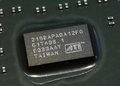
They basically lie, that's it. You can be lucky and the diode survives it's torture, but I wouldn't bet on it. This one looks, by the pictures, to be positioned to belong to the 3.3V rail - it's rated at 35A. It's neighboring dual diode might be for the 5V line and I wouldn't trust it to provide 38A either.

They took a design and slapped a sticker on it. It's a cheap PSU that, if you are planning to drive it to it's limits, should not be considered for a build.

Reminds me of the codegen one I posted here as well. That one btw, did die under high load with >32A on 5V.

kagura1050 wrote on Today, 09:12:

The fact that a high-power Schottky Barrier Diode (SBD) is attached to a heat sink strongly suggests that it functions either as a freewheeling diode for an internal DC-DC converter or as a component in a path that carries the bulk of the power for a given voltage rail.

It's just the secondary side rectifier for the 3.3V rail. So it just eats up the whole load of that rail. I completely agree, the rating is completely off.

Kasreyn wrote on Yesterday, 17:08:

I opened up a Zasilacz Akyga Basic 700W (AK-B1-700) and took some pictures.

Could you do some more, if possible:
- controller chip on the board
- inner heatsink side next to the transformer, basically the opposite of the (2S)D209L

I looks like for the 5V rail they might have slapped 2 double diodes together, but it's hard to say from that angle.

AGP Card Real Power Consumption
AGP Power monitor - diagnostic hardware tool
Graphics card repair collection

Reply 313 of 313, by DaveDDS

User metadata
Rank Oldbie
Rank
Oldbie

Yep, I agree - I've not looked at a schematic but if it is on the final output side and rated lower than stated rail output, if is indeed a lie, Stay away.

Even if it were rated 35a I'd still stay away. You want an overloaded PSU to fail by not providing the power you are requesting, not by catastrophic failure.

IME makers of cheap PSUs often lie - they are counting on the fact that very few users actually draw the rated loads (and users like big numbrs even when they don't need them)

https://dunfield.themindfactory.com ; "Daves Old Computers" ; SW dev addict best known:
ImageDisk: rd/wr ANY floppy PChw can ; Micro-C: compiler for DOS+ManySmallCPU ; DDLINK: simple/small filetransfer(w/o netSW)via Lan/Lpt/Com