Reply 220 of 264, by mbalmer
trunk70 wrote on 2026-02-01, 09:18:Oh thank you! But i live in Europe (Belgium) and I already have 3D printed the 5.25 enclosure :-) (I'm new in 3D Printing, Bamb […]
mbalmer wrote on 2026-01-31, 23:58:Front-panel board designer and enclosure designer here. […]
trunk70 wrote on 2026-01-31, 12:05:Page 4... Sorry for asking.
It's a shame that we can't buy it officially and that this isn't clearly stated on the official website (on the store page). 🙁
Front-panel board designer and enclosure designer here.
Part of the reason it wasn't there from the start is that when the ZuluIDE was first conceived, a front panel wasn't seen as needed because the initial assumption was that it would largely be used in cases where the media wasn't being changed often or where the media could be cycled using the OS's software-eject mechanism (think Mac OS 9, OS X, modern Windows and Linux versions).
Obviously, that assumption didn't hold up very long. 🤣
At the same time, one of the major pushes that we've been trying to make has been largely in the realm of device speed -- which, as you noted earlier, is the best amongst the bunch of IDE device emulators out there -- something we're definitely proud of.
That said, the consistent need for a hardware-based front panel is definitely something we're on. It's DIY at the moment primarily for a few reasons: first, getting it to work consistently at the start wasn't particularly simple and it's needed a lot of internal revisions to get to the point where it's as polished as it is; second, much like the DAC add-on board, not everyone wanted it, and the number of people who did want it and couldn't make their own with a small amount of effort was very, very small -- to the point where I've actually made a few of them myself and shipped them to a couple of folks who contacted me privately in that circumstance; third, because so much of the codebase is shared with the sister ZuluSCSI project, we've actually been trying to marry the two devices together in that regard so that both the ZuluIDE and the ZuluSCSI have workable, functional front panel controls.
If you're in the US (or really, anywhere that the US can ship to) you can always PM me and I will be happy to look up how much it would take for me to make up a front panel board on its own or a full 3D-printed 5.25" drive bay enclosure for you and ship it to you. Just please be aware that if I have to ship it internationally, there may be additional duties necessary for you to receive it.
Oh thank you! But i live in Europe (Belgium) and I already have 3D printed the 5.25 enclosure 😀 (I'm new in 3D Printing, Bambulab P2S 😉 ).
I need the parts :
-Oled screen
-Rotary Encoder
-Push buttonsBut I don't know what and where to order (I have the Zulu IDE V1 + DAC + PICO) and how to assemble the all parts. I don't understand very well the use of Qwiic port.
The final goal is to put the Zulu IDE in my main MS-DOS machine (i don't like the web interface and i switch often CD-ROM for my testing purpose).
Thanks 😀
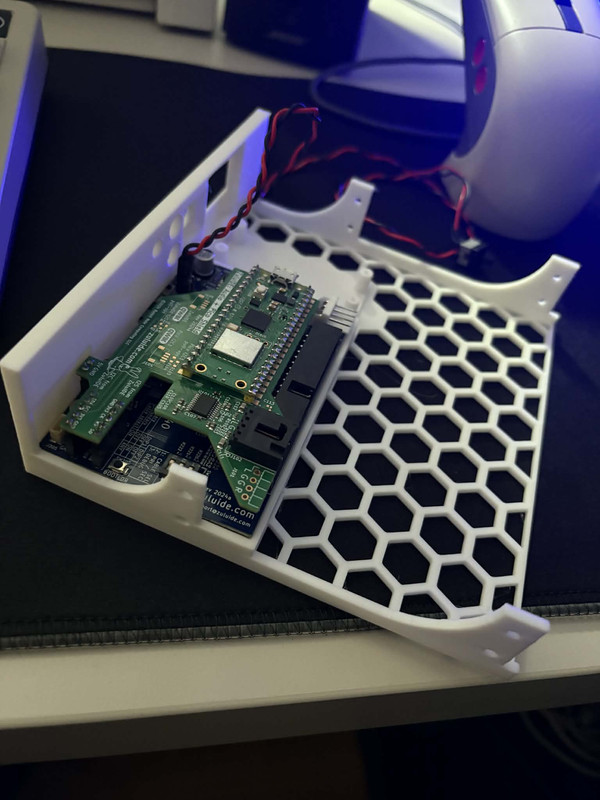
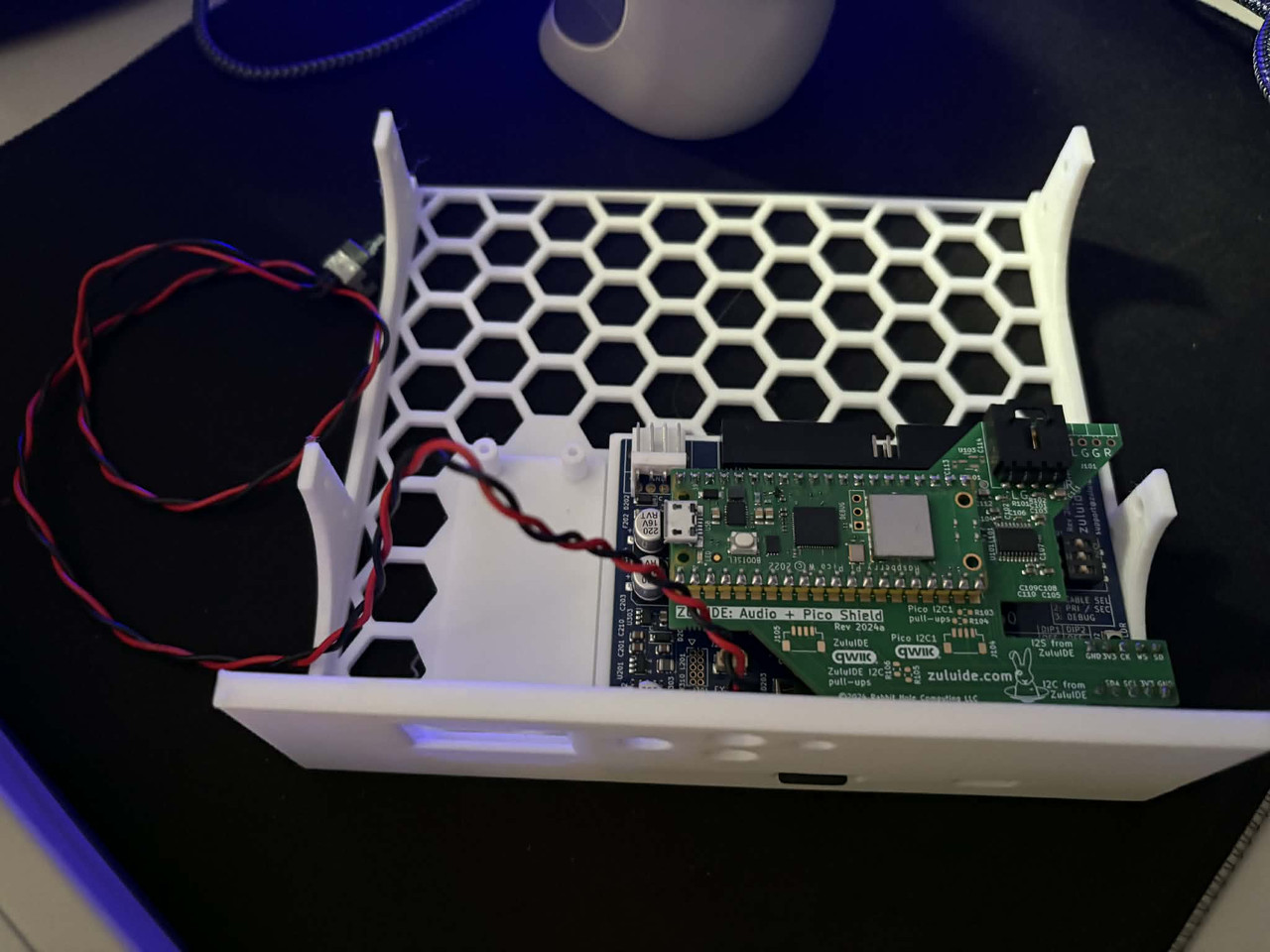
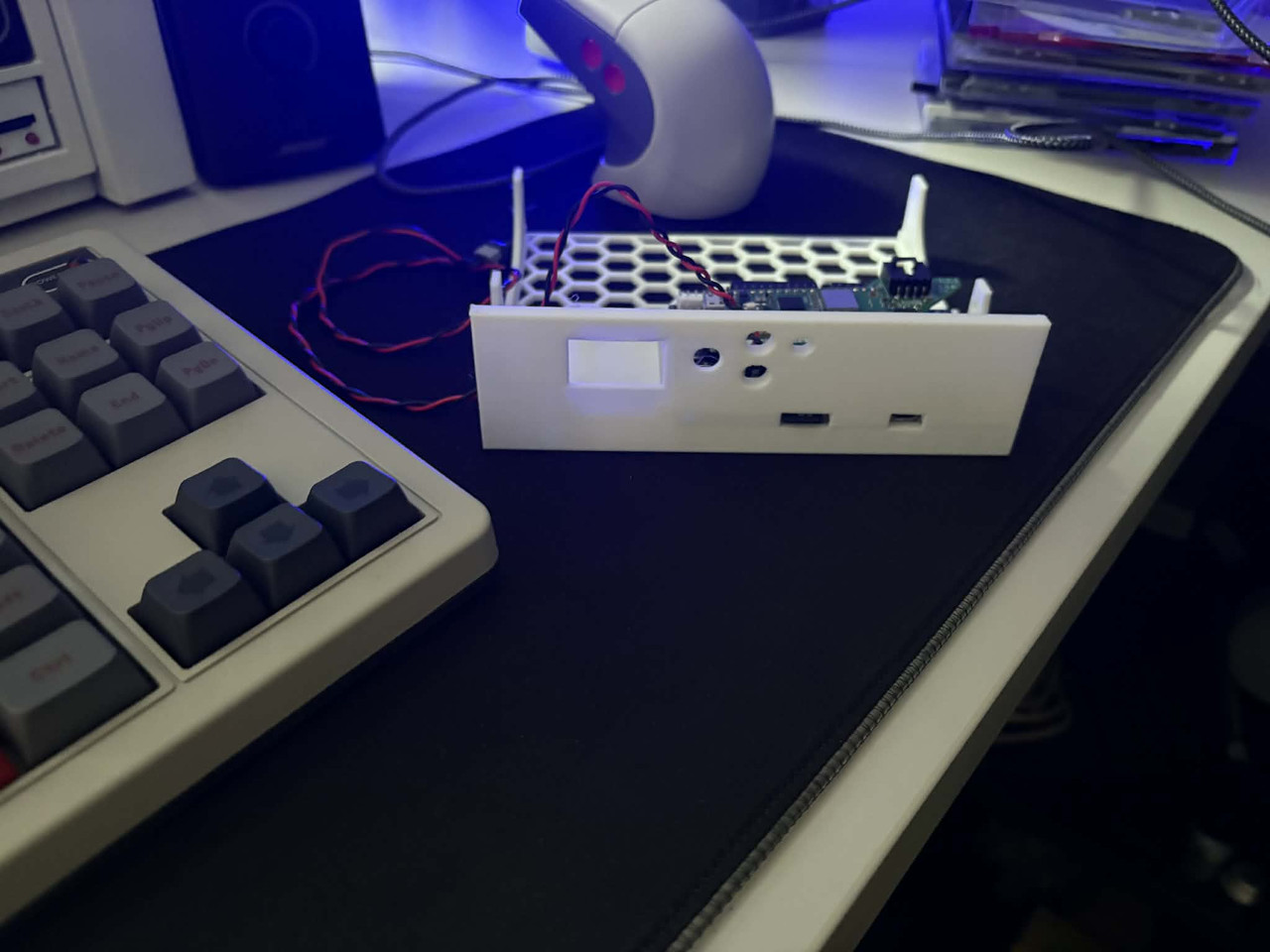
There is an updated version of the enclosure that closes the gaps around the SD card slot and USB port and also provides a nice footprint to plop down the control board. There's two options with the updated enclosure: a full-length bracket that's intended to fit in a full-depth 5.25" bay, and a "stubby" version that fits in small cases where the full 5.25" bay width and height are present, but the depth of the bay is reduced. I've attached STL files for those for those that want them here.
As for the interface board, it's not terribly difficult to put it together from a blank PCB and parts but it does require some surface-mount soldering skills. The interface isn't quite as simple as the Gotek -- unlike the Gotek, where the screen is the only external device on the I2C bus, the ZuluIDE has to combine the screen, rotary encoder, and pushbuttons together all onto the I2C bus. As a result, the interface board needs a little I/O expander chip that allows us to combine all of those signals together in a fashion that doesn't cause problems.
If you're comfortable putting that together on your own, I'm happy to provide you with instructions on how to do that, but if not, I'm happy to make up a board for you and send it your way with instructions on how to either finish the through-hole parts off yourself, or fully-assembled and ready to plug in to your ZuluIDE.