VOGONS


First post, by TheMobRules

User metadata
Rank Oldbie
Rank
Oldbie

I'm interested in knowing how much time it took after the first 3V 486 processors were introduced (Intel DX4 in early 1994) for the appearance of solutions that allowed to run these CPUs in older 5V only motherboards.

So, on one side we have Intel Overdrive chips which have a voltage regulation circuit integrated into the processor package. The earliest DX4 overdrives I have seen are V1.0 (SZ926) from around mid to late 1994, with V1.1 (SZ959) dated 1995 or later. The Pentium Overdrives also were released in 1995.

Then we have the third party sandwich-like interposers such as the Kingston Turbochip, but pretty much all of the instances I've seen of these are from around 1996 or 1997, after the AMD 5x86 was introduced and the 486 was on its last legs. Does anyone know of early versions of these interposers from around 1994?

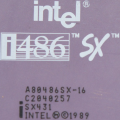
I was curious about this since I have a very early DX4 CPU (SX900 from March-April 1994) and I was wondering what would have been the available options to run a CPU like that at the time, since I suppose motherboards with 3V regulators took some time to appear in the market.
Reply 1 of 4, by Disruptor

User metadata
Rank Oldbie
Rank
Oldbie

Can you tell more about the first DX4 and Overdrives?
Were the first ones write-through only? When did they support write-back?

Reply 2 of 4, by TheMobRules

User metadata
Rank Oldbie
Rank
Oldbie
Disruptor wrote on 2025-12-22, 14:21:

Can you tell more about the first DX4 and Overdrives?
Were the first ones write-through only? When did they support write-back?

All the original DX4 and DX4-Overdrives were WT-only. The DX4 with WB L1 was released later, Wikipedia says October 1994 but there are no sources for that, I would say it's more like mid to late 1995, probably around the same time AMD released their own WB-enhanced DX4. Intel doesn't even mention anything about WB DX4 on their datasheets until end of 1995 so I'm going with that unless someone finds an example with late '94 date code.

As far as I know, no DX4 Overdrives support L1 WB cache, probably because they were intended to run on 5V-only motherboards with older chipsets that had no WB support for L1 and Intel may have considered it was not worth it.

Reply 3 of 4, by rmay635703

User metadata
Rank Oldbie
Rank
Oldbie

I doubt you would count the first 3v CPUs being used as intended as apart of this discussion but various 3ish volt 486 CPUs from all the manufacturers released in 1992 primarily intended for laptops but some OEMs put them in early power savings equipped desktop and all in one machines.

I had a 3v 486-25 chip soldered to a socket 3 adapter found in a desktop pc so it did happen earlier even if it wasn’t intended as an overdrive.

With the included OEM specific windows 3.1 you could put the desktop system to sleep for power saving.

Reply 4 of 4, by TheMobRules

User metadata
Rank Oldbie
Rank
Oldbie
rmay635703 wrote on 2025-12-23, 00:54:

I doubt you would count the first 3v CPUs being used as intended as apart of this discussion but various 3ish volt 486 CPUs from all the manufacturers released in 1992 primarily intended for laptops but some OEMs put them in early power savings equipped desktop and all in one machines.

I had a 3v 486-25 chip soldered to a socket 3 adapter found in a desktop pc so it did happen earlier even if it wasn’t intended as an overdrive.

With the included OEM specific windows 3.1 you could put the desktop system to sleep for power saving.

Ahh, very interesting! I knew about early 3V CPUs being used on laptops, but I didn't know about OEMs using them on desktops at the time. I assume those laptop CPUs were QFP, so the adapter would be simpler than the "sandwich" type used for regular PGA processors.