VOGONS


First post, by MattRocks

User metadata
Rank Oldbie
Rank
Oldbie

Hi folks,

Following on from my recent purchase of a Leadtek (LRI) GeForce 256, I am struggling to find a like-for-like replacement for the seized fan.

The original cooler has a 12V 40x40 ADDA fan on a 3-pin 1.0 mm pitch plug.

Servicing: I cannot find a hole for the oil well; can I drill a hole?

Replacement: I found some potential 12V 40x40 fans that should physically fit the original heatsink, but they are all 2 wires with 2.0mm pitch connectors. If I can find a 1.0mm 3 pin pigtail, will there be a side-effect to leaving the tach sensor unpopulated?

What does a GeForce 256 actually do with the tach feedback?

Many thanks!

Desktop timeline [ MOS 7501 → 68030 → x86(P5/MMX) → x86(K6-2) → x86(K7*) → PPC(G3*) → x86-64(K8) → x86-64(Xeon) → x86-64(i5) → x86-64(i7) ] * lost

Reply 1 of 7, by tehsiggi

User metadata
Rank Oldbie
Rank
Oldbie

The PCB they use is the same as here https://theretroweb.com/expansioncards/s/nvid … -32mb-reference
I don't see any places / spaces where a hardware monitoring IC would be, so my bet (99% sure) is they don't use it.
Can't see where the trace is going, but I'd highly doubt the GPU itself has fan monitoring built in.

AGP Card Real Power Consumption
AGP Power monitor - diagnostic hardware tool
Graphics card repair collection

Reply 2 of 7, by MattRocks

User metadata
Rank Oldbie
Rank
Oldbie

That was hunch also, and I found no documentation on that third wire/pin.

It feels uncomfortable though, because adding a third line is not something a board maker would add do convenience or for cost cutting. And, I'm unsure how any of the RetroWeb samples can be categorised nVidia reference boards given none of those are branded nVidia?

For completeness I include photos of the original three connector pins. My guess based on proximity alone is that R678 may be related to the tach sensor circuit, and it appears to me unpopulated on my board - but there are layers to these boards and I don't actually know much. I also noted some extra components populated on my board - but those are further along the AGP fingers and I've no clue how to tell if they are related.

In the meantime, I'm waiting on a delivery from China with some bits that might physically fit - assuming the middle blue wire can be left dangling.

Desktop timeline [ MOS 7501 → 68030 → x86(P5/MMX) → x86(K6-2) → x86(K7*) → PPC(G3*) → x86-64(K8) → x86-64(Xeon) → x86-64(i5) → x86-64(i7) ] * lost

Reply 3 of 7, by tehsiggi

User metadata
Rank Oldbie
Rank
Oldbie
MattRocks wrote on Yesterday, 10:25:

It feels uncomfortable though, because adding a third line is not something a board maker would add do convenience or for cost cutting. And, I'm unsure how any of the RetroWeb samples can be categorised nVidia reference boards given none of those are branded nVidia

Reference design does not mean they have to be manufactured by Nvidia. Nvidia provided reference material which the AIBs just used to create their cards. Which is why they almost all look the same.

I'm very certain they don't care about the tach signal. There is no hardware monitoring IC to be seen and GPUs didn't have something like that built in until after the Radeon 9000/FX era. Even then relying on things like the LM63.

AGP Card Real Power Consumption
AGP Power monitor - diagnostic hardware tool
Graphics card repair collection

Reply 4 of 7, by The Serpent Rider

User metadata
Rank l33t++
Rank
l33t++

Regular GeForce 256 can't monitor RPM. ASUS V6600/V6800 Deluxe probably can.

I must be some kind of standard: the anonymous gangbanger of the 21st century.

Reply 5 of 7, by MattRocks

User metadata
Rank Oldbie
Rank
Oldbie

Cheers, that's useful.

I don't believe nVidia or any AIB included pointless pins for laughs. Given my LRI board has no dedicated hardware monitoring IC yet definitely expects three pin fans, my best guess is the PCB routes the tach signal to the headers on the PCB to be read in a factory (testing, debugging, production validation, supplier acceptance, system-builder testing, etc.) I don't feel like putting any electrons through the board to find out though.

The Serpent Rider wrote on Yesterday, 12:39:

ASUS V6600/V6800 Deluxe probably can.

I feel the ASUS Deluxe boards give us a hint of what those factory debugging instruments could do.

Desktop timeline [ MOS 7501 → 68030 → x86(P5/MMX) → x86(K6-2) → x86(K7*) → PPC(G3*) → x86-64(K8) → x86-64(Xeon) → x86-64(i5) → x86-64(i7) ] * lost

Reply 6 of 7, by tehsiggi

User metadata
Rank Oldbie
Rank
Oldbie
MattRocks wrote on Yesterday, 14:47:
Cheers, that's useful. […]
Show full quote

Cheers, that's useful.

I don't believe nVidia or any AIB included pointless pins for laughs. Given my LRI board has no dedicated hardware monitoring IC yet definitely expects three pin fans, my best guess is the PCB routes the tach signal to the headers on the PCB to be read in a factory (testing, debugging, production validation, supplier acceptance, system-builder testing, etc.) I don't feel like putting any electrons through the board to find out though.

The Serpent Rider wrote on Yesterday, 12:39:

ASUS V6600/V6800 Deluxe probably can.

I feel the ASUS Deluxe boards give us a hint of what those factory debugging instruments could do.

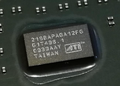
The ASUS boards have a Winbond System monitoring chip - which the 256 does not have. The winbond chip in your picture stores the BIOS.

MSI did use some three pin fans on some cards without monitoring capabilities for them.

AGP Card Real Power Consumption
AGP Power monitor - diagnostic hardware tool
Graphics card repair collection

Reply 7 of 7, by shevalier

User metadata
Rank Oldbie
Rank
Oldbie
MattRocks wrote on Yesterday, 14:47:
Cheers, that's useful. […]
Show full quote
The Serpent Rider wrote on Yesterday, 12:39:

Regular GeForce 256 can't monitor RPM. ASUS V6600/V6800 Deluxe probably can.

Cheers, that's useful.

I don't believe nVidia or any AIB included pointless pins for laughs. Given my LRI board has no dedicated hardware monitoring IC yet definitely expects three pin fans, my best guess is the PCB routes the tach signal to the headers on the PCB to be read in a factory (testing, debugging, production validation, supplier acceptance, system-builder testing, etc.) I don't feel like putting any electrons through the board to find out though.

The ASUS Deluxe boards give us a hint of what those factory debugging instruments could do.

There are three options for temperature control.
- Fully external.
- An external control circuit using a thermaldiode built into the chip.
- An internal circuit (located entirely within the CPU/GPU/etc.), integrated into the die.

The thermodiode was first introduced in the Radeon 9 series and the FX 5 series.
However, the vast majority of graphics cards were not equipped with the monitoring chip itself (lower-end FX models did not even have the necessary pads for it), which is required to read data from this thermodiode.
What’s more, the Radeon X has a monitoring chip (connected to the built-in thermodiode) with an RPM-reading function and a three-pin fan. However, the fan’s RPM pin isn’t connected to anything.
And measuring the fan speed without knowing the measured temperature is completely pointless.

PS. As far as I can remember, there were GeForce 2 series cards with a monitoring chip, but the sensor was soldered onto a flexible ‘tab’ that was pressed against the bottom of the heatsink.

off-topic/ However, modern graphics cards have come a long way.
If a blue screen of death appears on an RTX graphics card, it could be ... because the backlight connector had come loose. 😀 or 🙁

Aopen MX3S, PIII-S Tualatin 1133, Radeon 9800Pro@XT BIOS, Audigy 4 SB0610
JetWay K8T8AS, Athlon DH-E6 3000+, Radeon HD2600Pro AGP, Audigy 2 Value SB0400
Gigabyte Ga-k8n51gmf, Turion64 ML-30@2.2GHz , Radeon X800GTO PL16, Diamond monster sound MX300