First post, by zuldan

- Rank
- Oldbie
Got this beautiful card today. Unfortunately, it's got memory issues. Going to start by checking resistors on the back of the card. I hope the core is not gone 🙁

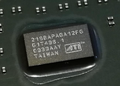
Looks like a bad memory IC or possibly it needs the memory ICs reflowed, the heat sinks complicate it a bit.
Trashbytes wrote on Yesterday, 07:09:Looks like a bad memory IC or possibly it needs the memory ICs reflowed, the heat sinks complicate it a bit.
Those heatsinks look like a nightmare to remove 😗 Will try the twist method first.
Still testing resistors. Best case scenario, bank 0 has lost power (not sure where to check voltages). Or something has gone wrong with the core.
zuldan wrote on Yesterday, 11:14:Trashbytes wrote on Yesterday, 07:09:Looks like a bad memory IC or possibly it needs the memory ICs reflowed, the heat sinks complicate it a bit.
Those heatsinks look like a nightmare to remove 😗 Will try the twist method first.
Still testing resistors. Best case scenario, bank 0 has lost power (not sure where to check voltages). Or something has gone wrong with the core.
Use some canned air, tip the can upside down and freeze the heat sinks with it, it will make the thermal bonding brittle, will help to reduce any further damage from trying to remove them.
The MATS test looks like it can detect the bank so unlikely its lost power .. check the data lines perhaps a data pin is lose.
zuldan wrote on Yesterday, 11:14:Those heatsinks look like a nightmare to remove 😗 Will try the twist method first.
Either hot or cold.. I use 100°C warm hotair - let it soak the heatsink a little and then gently twist them. Worked for me so far every time without issues.
I'll check my archives later if I have a schematic laying around somewhere.
Thank you both for the tip!
@tehsiggi that would be amazing if you had the schematics.
Look what I found
So it looks like the first 64 bits fail. Which means 4 memory chips from what I could figure out. The card has 8 chips with 16 bits each on the front.
No schematic in my stash so far. That one decoupling cap should hopefully not knock out a card that much.
Power layout seems to be one SC1175 for the GPU (two phase/dual input buck) and one SC1175 (same topology) for the memory (FBVDD). There's also one linear regulator down in the corner, low drop out. Not sure what for. For termination? (VTT) - should at least be easy to measure and see what they give.
I replaced that missing cap but as expected, no change. Still have to check those voltages on the back. Ran some games but get sparkles all over the screen which usually means dead/dying core?
zuldan wrote on Today, 09:51:I replaced that missing cap but as expected, no change. Still have to check those voltages on the back. Ran some games but get sparkles all over the screen which usually means dead/dying core?
Looks like happy dead memory / memory issues to me, not GPU.
zuldan wrote on Today, 09:51:I replaced that missing cap but as expected, no change. Still have to check those voltages on the back. Ran some games but get sparkles all over the screen which usually means dead/dying core?
Geforce 2 cores are built like tanks, they are very hard to kill and don't really die, its the memory/power circuitry that fails first ...most often its dead memory ICs or dry solder joints on the ICs.
Try reflowing the memory ICs with fresh solder and test again.
You guys are giving me hope. I will persist.
I would start using an overclkocking sw, and use it downclock the card, if you're lucky few MHz of downclock can be sufficient to get rid of the problem w/o any HW repair, and at the price of few FPS.
If you're unlucky, and consistent down-clock is needed to make the problem gone, you can use it to track down memory or GPU problems, assuming you can downclock separately the GPU and the memory clocks (not sure about that, I'm not a nvidia lover/expert)