VOGONS


I messed up. My Radeon 9700 needs rescuing.

Topic actions

First post, by MattRocks

User metadata
Rank Oldbie
Rank
Oldbie

Apologies in advance, and I'd like your advice please!

Skipping over a long history, I installed my Radeon 9700 (non Pro) into my AthlonXP.

The same GPU has been in the same machine before and nothing eventful was expected.

The Windows boot screen seemed fine.

The 9700 fan was unusually noisy but working.. a bad omen.

Windows XP began to apply stock ATI drivers.

Then, the system crashed hard. I turned off the machine and cleaned the fan before trying again - just detached the fan from the heatsink and removed the dusts with a blower and brush.

I'm always grounded and static discharged.. but the dusts on an electric fan might not be.

I screwed the fan back on, reseated the AGP card and powered up. The fans were spinning quietly. There was calm POST beep.

And now I see tiny artefacts in characters on BIOS setup (some capital letters), Windows boot screen (specific colour replaced with purple), and Windows desktop (some horizontal and some vertical lines).

I'm praying its only marginal electrolytics!

Could you please share your thoughts on what I should do now?

Desktop timeline [ MOS 7501 → 68030 → x86(P5/MMX) → x86(K6-2) → x86(K7*) → PPC(G3*) → x86-64(K8) → x86-64(Xeon) → x86-64(i5) → x86-64(i7) ] * lost

Reply 1 of 22, by tehsiggi

User metadata
Rank Oldbie
Rank
Oldbie

Please provide:
- Pictures of the card if possible
- Pictures of the artifacts in different stages

See Hercules Radeon 9700 Pro repair report and try running R3MEMID. Also see VGA Repair report collection - there is a bunch of R300 based card repairs in there. Check if one of the error screenshots matches your error pattern.

I am yet to see a Radeon 9700 with bad caps.

Last edited by tehsiggi on 2026-05-07, 16:22. Edited 2 times in total.

AGP Card Real Power Consumption
AGP Power monitor - diagnostic hardware tool
Graphics card repair collection

Reply 2 of 22, by DaveDDS

User metadata
Rank Oldbie
Rank
Oldbie

How long has it been since these were in service?

Could be bad caps, do you see any buldging?

But it also sounds like a possible bad bus connection... if card or system was unused for lengthy, there could be fine surface corrosion, I'd give the card and socket a good cleaning, and probably unseat/reseat the card a few times... just to help clean the connections.

https://dunfield.themindfactory.com ; "Daves Old Computers" ; SW dev addict best known:
ImageDisk: rd/wr ANY floppy PChw can ; Micro-C: compiler for DOS+ManySmallCPU ; DDLINK: simple/small filecopy(w/o netSW)via Lan/Lpt/Com

Reply 3 of 22, by MattRocks

User metadata
Rank Oldbie
Rank
Oldbie
DaveDDS wrote on 2026-05-07, 16:21:

How long has it been since these were in service?

The motherboard has been used recently with various GPUs. This particular 9700 non-pro was purchased with blind faith weeks/months ago, and only lightly tested with no artefacts spotted until after today's hard crash. I dusted the whole card with air from a manual air pump, and wiped the gold fingers using a light brush and isopropyl alcohol. Looking at the heatsink nylon plugs, I think condition reflects the original factory fitting. In my experience, a very loud fan is followed by a serious failure - in hindsight it feels like noise reflects compromised cooling, which is followed by component overheating. Next time I hear a fan I'll yank the main plug out!

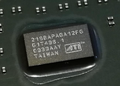
I'll begin with the least invasive photos. I don't see obvious bulging, but these are metal cans that typically vent more than bulge?

Last edited by MattRocks on 2026-05-07, 19:01. Edited 1 time in total.

Desktop timeline [ MOS 7501 → 68030 → x86(P5/MMX) → x86(K6-2) → x86(K7*) → PPC(G3*) → x86-64(K8) → x86-64(Xeon) → x86-64(i5) → x86-64(i7) ] * lost

Reply 4 of 22, by MattRocks

User metadata
Rank Oldbie
Rank
Oldbie
tehsiggi wrote on 2026-05-07, 16:15:

Please provide:
- Pictures of the card if possible
- Pictures of the artifacts in different stages

Again, starting with the least invasive photos (least amount of GPU heating) - turquoise in white characters during POST. It's similar in BIOS setup where it's clear this particular corruption is repeating across specific characters rather than screen coordinates. In this photo all the "I" characters have a corruption. But, it's a different corruption in AMIBIOS vs PCI and the "s" in "ss" is inconsistently impacted.

I don't see the same artefacts in the repair case studies, and I felt slightly unwell on seeing the post about heat damaging the ASIC! 🙁

I'm going to replace the heat transfer compound before running R3MEMID because my gut is telling me this all stems from a sudden overheating. I'm kicking myself.

Desktop timeline [ MOS 7501 → 68030 → x86(P5/MMX) → x86(K6-2) → x86(K7*) → PPC(G3*) → x86-64(K8) → x86-64(Xeon) → x86-64(i5) → x86-64(i7) ] * lost

Reply 5 of 22, by The Serpent Rider

User metadata
Rank l33t++
Rank
l33t++

Seems to be a dead memory. Probably it was already on its way and PCB warping from reseating the card has put the final nail in the coffin.

I must be some kind of standard: the anonymous gangbanger of the 21st century.

Reply 7 of 22, by MattRocks

User metadata
Rank Oldbie
Rank
Oldbie
The Serpent Rider wrote on 2026-05-08, 08:05:

Seems to be a dead memory. Probably it was already on its way and PCB warping from reseating the card has put the final nail in the coffin.

I think dead memory is likely, and I think the cause is unlikely to be PCB flex.

PBC flex feels very unlikely because I’ve handled thousands of cards in my career and I’ve not had a damaged one before - except the time I attached a wrong voltage and a VBIOS chip caught fire 😉

The chronology is - the 9700 was displaying no artefacts, fan had a problem, and it then suffered a hard crash. I should have turned off the PC as soon as the fan made an unhealthy noise.

An unhealthy noise is a defect that should not be ignored.

Desktop timeline [ MOS 7501 → 68030 → x86(P5/MMX) → x86(K6-2) → x86(K7*) → PPC(G3*) → x86-64(K8) → x86-64(Xeon) → x86-64(i5) → x86-64(i7) ] * lost

Reply 8 of 22, by tehsiggi

User metadata
Rank Oldbie
Rank
Oldbie

It's just as unlikely that the loud fan had to do with it. Don't look for causalities now, because you will not find them in a guaranteed manner.

If you wanna fix it, the threads show how to start. Happy to assist.

AGP Card Real Power Consumption
AGP Power monitor - diagnostic hardware tool
Graphics card repair collection

Reply 9 of 22, by DaveDDS

User metadata
Rank Oldbie
Rank
Oldbie
tehsiggi wrote on 2026-05-08, 12:15:

It's just as unlikely that the loud fan had to do with it. ...

Agreed, fan's can be loud when for whatever reason (poor thermal paste etc) they are not cooling...

But ... stuff almost always stops working correctly due to heat quite some time before permanent damage occurs.

Its not like it failed while unattended and you didn't "notice" for a lengthy time. You were booting it cold and noticed failure right away, I highly doubt it would have even got to the failure point before you saw it, let alone the permanent damage point.

https://dunfield.themindfactory.com ; "Daves Old Computers" ; SW dev addict best known:
ImageDisk: rd/wr ANY floppy PChw can ; Micro-C: compiler for DOS+ManySmallCPU ; DDLINK: simple/small filecopy(w/o netSW)via Lan/Lpt/Com

Reply 10 of 22, by MattRocks

User metadata
Rank Oldbie
Rank
Oldbie
tehsiggi wrote on 2026-05-08, 12:15:

If you wanna fix it, the threads show how to start. Happy to assist.

Thank you!

I do want to fix it and need to push the fix to next month.

Right now I’m in hospital, and when I get home will not be allowed to lift my PC cases for two weeks. I also need to buy a heat gun to work with BGA chips.

Desktop timeline [ MOS 7501 → 68030 → x86(P5/MMX) → x86(K6-2) → x86(K7*) → PPC(G3*) → x86-64(K8) → x86-64(Xeon) → x86-64(i5) → x86-64(i7) ] * lost

Reply 11 of 22, by MattRocks

User metadata
Rank Oldbie
Rank
Oldbie
DaveDDS wrote on 2026-05-08, 16:28:
Agreed, fan's can be loud when for whatever reason (poor thermal paste etc) they are not cooling... […]
Show full quote
tehsiggi wrote on 2026-05-08, 12:15:

It's just as unlikely that the loud fan had to do with it. ...

Agreed, fan's can be loud when for whatever reason (poor thermal paste etc) they are not cooling...

But ... stuff almost always stops working correctly due to heat quite some time before permanent damage occurs.

Its not like it failed while unattended and you didn't "notice" for a lengthy time. You were booting it cold and noticed failure right away, I highly doubt it would have even got to the failure point before you saw it, let alone the permanent damage point.

I get what you are saying and I have a counter argument.

I only recently came back to old hardware, and what I think I’m seeing is the exact same familiar stuff but often with +20 years of hardened grime in difficult to reach spaces. The age of the grime changes the physics and the rules.

The physics changed because a flake of dried out grime can lift off and rattle the fan, reducing speed like a bicycle brake. In fact, the noise I’m referring to is not unlike a playing card in a child’s bicycle spokes.

I’ve experienced two failures in as many weeks, both involved loud fans. The other one was a PC tower that I bought, checked inside to see it was clean/complete, and then turned it on. I heard a very loud PSU fan. I saw the BIOS, noted the CPU and RAM, and then bang! Smoke from the PSU..

It’s all anecdotal, but I feel that in both examples the hardware would be in better health today if I had disassembled the cooling and made it all run smooth and efficient before powering up.

The Radeon 9700 fan now spins practically silent. 20 years ago I’d have tuned routinely so things didn’t get as grimy to start with..

Before coming into hospital I did clean one noisy 9600 XT fan assembly and it was atrocious because the amount of old dried grime removed using a cocktail stick was almost as big as the fan itself!

Desktop timeline [ MOS 7501 → 68030 → x86(P5/MMX) → x86(K6-2) → x86(K7*) → PPC(G3*) → x86-64(K8) → x86-64(Xeon) → x86-64(i5) → x86-64(i7) ] * lost

Reply 12 of 22, by tehsiggi

User metadata
Rank Oldbie
Rank
Oldbie
MattRocks wrote on 2026-05-09, 05:47:
Thank you! […]
Show full quote
tehsiggi wrote on 2026-05-08, 12:15:

If you wanna fix it, the threads show how to start. Happy to assist.

Thank you!

I do want to fix it and need to push the fix to next month.

Right now I’m in hospital, and when I get home will not be allowed to lift my PC cases for two weeks. I also need to buy a heat gun to work with BGA chips.

No pressure, recover and get well again. Once you're making progress on the repair, feel free to share. I'll be watching the topic for updates.

AGP Card Real Power Consumption
AGP Power monitor - diagnostic hardware tool
Graphics card repair collection

Reply 13 of 22, by DaveDDS

User metadata
Rank Oldbie
Rank
Oldbie
MattRocks wrote on 2026-05-09, 06:04:

I get what you are saying and I have a counter argument. ...

Fair enough, fans can get quite dirty to the point where it impeeds operation (which is why when testing equipment with fans, before power: I always give the fan a spin with my finger and see how smooth it is and how fast it slows down)

But ... over the years, In testing, there have been several times when I brought up "high heat" (ie: should have cooling fans) briefly without bothering to install the fan, just to see if they worked.

Without a cooler (ie: bare chip), these can get hot very fast, but still work enough to see POST etc. .. with a cooler and no fan attached, it takes a much longer time, lots long for an OS to boot.

In your case, fan was "noisy" which means it was attached and moving some air, so although it might still allow heat failure, that would have occurred well past boot.

Even in cases of "degrading thermal compound", it will still do some cooling, which will reduce operational time, but I've never seen so much so that it wouldn't even boot.

The "big test" to see if this might actually have been caused by the fan is - feel the cooler!
If it gets so hot that it's uncomfortable to touch quickly, your problem isn't airflow.
If it takes minutes to get warm, everything is good.
(I realize that you've already cleaned the fan - but unpowering it would be equivalent to it still being "grimy" (slightly worse))

In cases where you suspect bad heat conduction between device and cooler, power-off and feel the underside of the board just
below the chip (socket/pins will conduct head to the board)

These are the reasons I keep a fine temp probe... so I can accurately measure temps of components with small access (like edges of covered chips in this case)

https://dunfield.themindfactory.com ; "Daves Old Computers" ; SW dev addict best known:
ImageDisk: rd/wr ANY floppy PChw can ; Micro-C: compiler for DOS+ManySmallCPU ; DDLINK: simple/small filecopy(w/o netSW)via Lan/Lpt/Com

Reply 14 of 22, by MattRocks

User metadata
Rank Oldbie
Rank
Oldbie
DaveDDS wrote on 2026-05-09, 10:20:

In your case, fan was "noisy" which means it was attached and moving some air, so although it might still allow heat failure, that would have occurred well past boot.

Even in cases of "degrading thermal compound", it will still do some cooling, which will reduce operational time, but I've never seen so much so that it wouldn't even boot.

Thank you for all the tips. I'll be more cautious in the future.

I note you keep pointing to the boot, but the chronology is that the VGA output was good until after Windows started to apply Catalyst drivers and crashed - that is far beyond boot. It's bad all the time now indicating physical damage.

DaveDDS wrote on 2026-05-09, 10:20:

The "big test" to see if this might actually have been caused by the fan is - feel the cooler!

Too late as I have now fixed the fan, and I'm nervous about making a bad situation worse.

But I still have not done any thermal paste, and I'm no longer sure that is a good idea because these cards shipped with a thermal pad and shim - the shim would have been measured to match the pad thickness. To restore original thermal performance, the pad would be replaced with one of the same thickness to bridge the prescribed air gap and I cannot find that thickness reported.

Paste is to smooth surface undulations, not to bridge a spaced gap. If swapping to paste then the gap should be removed, and that's a modification described here:
https://www.overclockers.com/taking-the-shim- … adeon-9700-pro/

I also don't have a clear plan on replacing/reusing the factory nylon plugs.

DaveDDS wrote on 2026-05-09, 10:20:

These are the reasons I keep a fine temp probe...

Ironically, I had cheap Chinese temperature probes in a box. They are not ideal, but using those would have been wise.. and I'll dig them out when I'm back.

Desktop timeline [ MOS 7501 → 68030 → x86(P5/MMX) → x86(K6-2) → x86(K7*) → PPC(G3*) → x86-64(K8) → x86-64(Xeon) → x86-64(i5) → x86-64(i7) ] * lost

Reply 16 of 22, by Trashbytes

User metadata
Rank Oldbie
Rank
Oldbie
tehsiggi wrote on 2026-05-10, 05:30:

The shim issue does not exist on all 9700s.

This is true but nothing will be harmed by fixing the stock cooler to be better than the woeful ATI stock one, better retention is a good thing with these 9700/9800 GPUs, its also an opportunity to check/reapply the thermal paste which after 20 years will want some attention.

Reply 17 of 22, by DaveDDS

User metadata
Rank Oldbie
Rank
Oldbie
MattRocks wrote on 2026-05-09, 19:00:

... I note you keep pointing to the boot, but the chronology is that the VGA output was good until after Windows started to apply Catalyst drivers and crashed - that is far beyond boot. ...

Ok, but by "boot", I wasn't referring to just loading the boot sector, I mean time for the OS to get up and running. I did assume that video drivers are being loaded fairly early on during OS startup...

I wouldn't try to "boot" a system bare (not even a cooler), but with a noisy fan it should still have had enough cooling (much better than a seized - ie: no noise fan) to get well past startup.
If everything works fine at boot and after 10mins or more you see failure then yeah, it could have been fan.

https://dunfield.themindfactory.com ; "Daves Old Computers" ; SW dev addict best known:
ImageDisk: rd/wr ANY floppy PChw can ; Micro-C: compiler for DOS+ManySmallCPU ; DDLINK: simple/small filecopy(w/o netSW)via Lan/Lpt/Com

Reply 18 of 22, by MattRocks

User metadata
Rank Oldbie
Rank
Oldbie
DaveDDS wrote on 2026-05-10, 11:51:
Ok, but by "boot", I wasn't referring to just loading the boot sector, I mean time for the OS to get up and running. I did assum […]
Show full quote
MattRocks wrote on 2026-05-09, 19:00:

... I note you keep pointing to the boot, but the chronology is that the VGA output was good until after Windows started to apply Catalyst drivers and crashed - that is far beyond boot. ...

Ok, but by "boot", I wasn't referring to just loading the boot sector, I mean time for the OS to get up and running. I did assume that video drivers are being loaded fairly early on during OS startup...

I wouldn't try to "boot" a system bare (not even a cooler), but with a noisy fan it should still have had enough cooling (much better than a seized - ie: no noise fan) to get well past startup.
If everything works fine at boot and after 10mins or more you see failure then yeah, it could have been fan.

It was after WinXP had logged on, recognised that the VGA card had changed, completed device detection, and was applying automatically selected drivers - the moment when you'd expect the resolution to successfully change is the moment the screen went blank and keyboard lights went out. Total hard crash. On the next POST the artefacts were present.

It feels like something shorted in the graphics card.

Desktop timeline [ MOS 7501 → 68030 → x86(P5/MMX) → x86(K6-2) → x86(K7*) → PPC(G3*) → x86-64(K8) → x86-64(Xeon) → x86-64(i5) → x86-64(i7) ] * lost

Reply 19 of 22, by tehsiggi

User metadata
Rank Oldbie
Rank
Oldbie
MattRocks wrote on 2026-05-10, 14:17:
DaveDDS wrote on 2026-05-10, 11:51:
Ok, but by "boot", I wasn't referring to just loading the boot sector, I mean time for the OS to get up and running. I did assum […]
Show full quote
MattRocks wrote on 2026-05-09, 19:00:

... I note you keep pointing to the boot, but the chronology is that the VGA output was good until after Windows started to apply Catalyst drivers and crashed - that is far beyond boot. ...

Ok, but by "boot", I wasn't referring to just loading the boot sector, I mean time for the OS to get up and running. I did assume that video drivers are being loaded fairly early on during OS startup...

I wouldn't try to "boot" a system bare (not even a cooler), but with a noisy fan it should still have had enough cooling (much better than a seized - ie: no noise fan) to get well past startup.
If everything works fine at boot and after 10mins or more you see failure then yeah, it could have been fan.

It was after WinXP had logged on, recognised that the VGA card had changed, completed device detection, and was applying automatically selected drivers - the moment when you'd expect the resolution to successfully change is the moment the screen went blank and keyboard lights went out. Total hard crash. On the next POST the artefacts were present.

It feels like something shorted in the graphics card.

That's pretty normal behavior for having a memory faulty GPU loading the driver and trying to actually access / use the affected memory banks more intense.

AGP Card Real Power Consumption
AGP Power monitor - diagnostic hardware tool
Graphics card repair collection