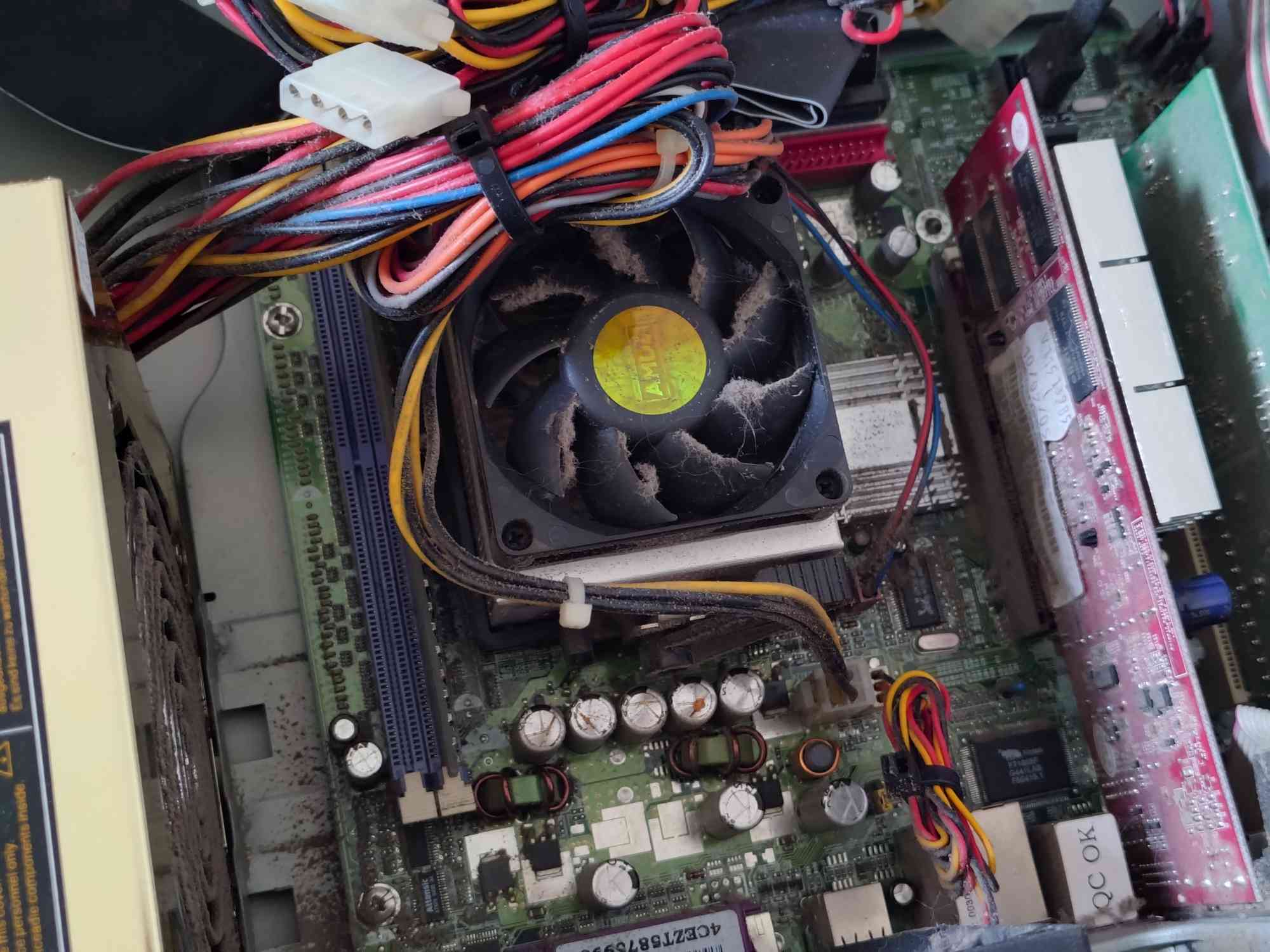
This one was fully disassembled, washed, and reassembled. Just good old soap and water here, no Retrobrite.
CPU: Intel Pentium III @ 866MHz
RAM: 512MB SDRAM (133MHz)
GPU: NVIDIA Riva TNT2 Pro (16MB)
Audio: SoundMAX Integrated Audio (it even has a built-in speaker!)
HDD: 40GB Seagate Barracuda 7200.7 (7200 RPM)
Optical: 40X CD-ROM
Floppy: 1.44MB FDD
Monitor: Compaq S710 CRT (Still bright and sharp! Set to 80% brightness in the photos)
Mouse: Compaq S34 PS/2 ball mouse
Keyboard: Keytronic PS/2 keyboard (Estonian layout)
While this hardware screams "Windows 2000 Workstation," (it's even on the license sticker!) it makes for a beautiful Windows 98 gaming machine. Windows is fully updated thanks to windowsupdaterestored.com, and I've configured a Protoweb proxy so I can enjoy the early-2000s web properly.
This feels like the perfect baseline to drop in a Voodoo 2 and turn it into the ultimate late-90s gaming rig. Now, if only I could track down a matching period-correct Compaq keyboard to finish the look...
While the main task was giving it a deep clean, I did have to fix a few broken components along the way:
* The PSU Fan Fix: The single 80mm fan in the system was originally wired directly to the 5V rail. Looking closer, the fan controller components inside the PSU were fried, and a previous owner had done a lazy "fix" to bypass it. The fan was incredibly noisy, too. I managed to trace the broken components on the PSU board (A TIP115 darlington transistor), replaced them (similar TIP117), and installed a brand-new fan. Now, the fan speed is properly regulated by the system based on internal temperatures.
* Plastic Repairs: A few plastic elements were snapped, most notably on the CRT housing. I used solvent/chemical welding to fuse the pieces back together. The joints are now rock-solid—probably stronger than the rest of the housing, given how brittle the original untouched plastic has become over the years.
"640K ought to be enough for anybody." - And i intend to get every last bit out of it even after loading every damn driver!
A little about software engineering: https://byteaether.github.io/