VOGONS


First post, by TheMobRules

User metadata
Rank Oldbie
Rank
Oldbie

A few years ago I got a Radeon 9800 Pro that appeared to be in good physical condition when it comes to the components, although it was completely covered in that disgusting tar so common on smoker's items. Also, the original heatsink was stuck and completely clogged with that crap, so I removed it, gave the card a good cleaning and tested it with a temp heatsink, luckily everything was working fine.

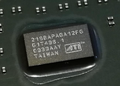
Fast forward some time and I got one of those Zalman VF700 coolers from the mid-2000's and when I was going to install it something caught my eye: all the chips and components, including the GPU itself, have date codes from mid-2008. I find that strange, what would be the reason to keep manufacturing a high-end card from 2003 five years later? Is that a common practice? I don't think this just a case of leftover GPU stock, since the GPU is from 2008 as well! Also, on the back there's a Dell P/N so that gives other clues about its origins... don't know much about Dell computers from that era, maybe someone familiar can identify what model it came from.

The attachment R9800Pro.jpg is no longer available
The attachment R9800Pro_GPU.jpg is no longer available

At least it's an R360 instead of R350, which means I could probably increase the core clock to 9800XT speeds without much trouble right? What tool would be best for doing this?

Reply 1 of 10, by shevalier

User metadata
Rank Oldbie
Rank
Oldbie

https://archive.techarp.com/showarticle0a06.h … artno=92&pgno=2

Aopen MX3S, PIII-S Tualatin 1133, Radeon 9800Pro@XT BIOS, Audigy 4 SB0610
JetWay K8T8AS, Athlon DH-E6 3000+, Radeon HD2600Pro AGP, Audigy 2 Value SB0400
Gigabyte Ga-k8n51gmf, Turion64 ML-30@2.2GHz , Radeon X800GTO PL16, Diamond monster sound MX300

Reply 2 of 10, by tehsiggi

User metadata
Rank Oldbie
Rank
Oldbie

Yep, it's a Radeon 9800Pro reference layout (based off of the 9700Pros reference layout) with an R360. The core will likely do XT speeds just fine. Memory depends on what memory is installed, but in all honesty, I wouldn't stress that BGA memory any more than necessary, the 256 bit bus already shovels a lot of data for the GPU.

This card will not be able to give you information such as GPU or ambient temp, as the layout has no room for an LM63 (like the XT PCB has), but that's a gimmick anyway.

For testing XT speeds you can just use ATITool or ATITrayTools.

AGP Card Real Power Consumption
AGP Power monitor - diagnostic hardware tool
Graphics card repair collection

Reply 3 of 10, by TheMobRules

User metadata
Rank Oldbie
Rank
Oldbie
shevalier wrote on 2026-05-11, 05:42:

Thanks! It has become harder to find those old articles as many of the sites have taken them down (or they are even completely gone), so the only hope is to find archived data.

tehsiggi wrote on 2026-05-11, 07:12:

Yep, it's a Radeon 9800Pro reference layout (based off of the 9700Pros reference layout) with an R360. The core will likely do XT speeds just fine. Memory depends on what memory is installed, but in all honesty, I wouldn't stress that BGA memory any more than necessary, the 256 bit bus already shovels a lot of data for the GPU.

This card will not be able to give you information such as GPU or ambient temp, as the layout has no room for an LM63 (like the XT PCB has), but that's a gimmick anyway.

For testing XT speeds you can just use ATITool or ATITrayTools.

Yeah, I think I'll keep the RAM speed at Pro stock value, I've heard the number one cause of death for these cards is the BGA RAM...

Reply 4 of 10, by shevalier

User metadata
Rank Oldbie
Rank
Oldbie

I don't think the Radeon 97/800 has any issues with the memory itself.
1. Poor cooling (except for models with a big turbine fan. The small fan is essentially a turbine, whereas the large one is a conventional fan.
The big turbine was introduced in the X800/X1900 models)
2. A poorly designed and awkwardly placed Molex connector. If it’s plugged in carelessly, the card bends significantly.
This is precisely why the memory chips come loose.
So memory with heatsinks won’t cause any problems.
At the same time, the XT BIOS offers some advantages on its own, unlocking additional core features.

Aopen MX3S, PIII-S Tualatin 1133, Radeon 9800Pro@XT BIOS, Audigy 4 SB0610
JetWay K8T8AS, Athlon DH-E6 3000+, Radeon HD2600Pro AGP, Audigy 2 Value SB0400
Gigabyte Ga-k8n51gmf, Turion64 ML-30@2.2GHz , Radeon X800GTO PL16, Diamond monster sound MX300

Reply 5 of 10, by tehsiggi

User metadata
Rank Oldbie
Rank
Oldbie
shevalier wrote on 2026-05-11, 10:11:
I don't think the Radeon 97/800 has any issues with the memory itself. 1. Poor cooling (except for models with a big turbine fan […]
Show full quote

I don't think the Radeon 97/800 has any issues with the memory itself.
1. Poor cooling (except for models with a big turbine fan. The small fan is essentially a turbine, whereas the large one is a conventional fan.
The big turbine was introduced in the X800/X1900 models)
2. A poorly designed and awkwardly placed Molex connector. If it’s plugged in carelessly, the card bends significantly.
This is precisely why the memory chips come loose.
So memory with heatsinks won’t cause any problems.
At the same time, the XT BIOS offers some advantages on its own, unlocking additional core features.

I wouldn't leave it at that. I've had attempts at memory repairs which were only successful by replacing the whole chip. Reballing the existing chip did not work. So there it wasn't only a matter of lose connections between BGA and PCB.

I've also seen failures in 9600TX (Medion 9500Pro) with fast TSOP memory where the TSOP memory ICs died and needed to be replaced.

AGP Card Real Power Consumption
AGP Power monitor - diagnostic hardware tool
Graphics card repair collection

Reply 6 of 10, by shevalier

User metadata
Rank Oldbie
Rank
Oldbie
tehsiggi wrote on 2026-05-11, 10:27:
shevalier wrote on 2026-05-11, 10:11:
I don't think the Radeon 97/800 has any issues with the memory itself. 1. Poor cooling (except for models with a big turbine fan […]
Show full quote

I don't think the Radeon 97/800 has any issues with the memory itself.
1. Poor cooling (except for models with a big turbine fan. The small fan is essentially a turbine, whereas the large one is a conventional fan.
The big turbine was introduced in the X800/X1900 models)
2. A poorly designed and awkwardly placed Molex connector. If it’s plugged in carelessly, the card bends significantly.
This is precisely why the memory chips come loose.
So memory with heatsinks won’t cause any problems.
At the same time, the XT BIOS offers some advantages on its own, unlocking additional core features.

I wouldn't leave it at that. I've had attempts at memory repairs which were only successful by replacing the whole chip. Reballing the existing chip did not work. So there it wasn't only a matter of lose connections between BGA and PCB.

I've also seen failures in 9600TX (Medion 9500Pro) with fast TSOP memory where the TSOP memory ICs died and needed to be replaced.

ATI has already realised that it’s time to cool the memory in the 9800XT model.
https://www.guru3d.com/miraserver/images/revi … xt/DSC03513.JPG

https://www.guru3d.com/miraserver/images/revi … xt/DSC03514.JPG

But @TheMobRules has already fitted the radiators as a precaution, so there won’t be any issues with overheating.
Besides, that doesn’t necessarily mean that his graphics card will be able to reach those VRAM frequencies..

Aopen MX3S, PIII-S Tualatin 1133, Radeon 9800Pro@XT BIOS, Audigy 4 SB0610
JetWay K8T8AS, Athlon DH-E6 3000+, Radeon HD2600Pro AGP, Audigy 2 Value SB0400
Gigabyte Ga-k8n51gmf, Turion64 ML-30@2.2GHz , Radeon X800GTO PL16, Diamond monster sound MX300

Reply 7 of 10, by tehsiggi

User metadata
Rank Oldbie
Rank
Oldbie
shevalier wrote on 2026-05-11, 10:51:
ATI has already realised that it’s time to cool the memory in the 9800XT model. https://www.guru3d.com/miraserver/images/revi … […]
Show full quote
tehsiggi wrote on 2026-05-11, 10:27:
shevalier wrote on 2026-05-11, 10:11:
I don't think the Radeon 97/800 has any issues with the memory itself. 1. Poor cooling (except for models with a big turbine fan […]
Show full quote

I don't think the Radeon 97/800 has any issues with the memory itself.
1. Poor cooling (except for models with a big turbine fan. The small fan is essentially a turbine, whereas the large one is a conventional fan.
The big turbine was introduced in the X800/X1900 models)
2. A poorly designed and awkwardly placed Molex connector. If it’s plugged in carelessly, the card bends significantly.
This is precisely why the memory chips come loose.
So memory with heatsinks won’t cause any problems.
At the same time, the XT BIOS offers some advantages on its own, unlocking additional core features.

I wouldn't leave it at that. I've had attempts at memory repairs which were only successful by replacing the whole chip. Reballing the existing chip did not work. So there it wasn't only a matter of lose connections between BGA and PCB.

I've also seen failures in 9600TX (Medion 9500Pro) with fast TSOP memory where the TSOP memory ICs died and needed to be replaced.

ATI has already realised that it’s time to cool the memory in the 9800XT model.
https://www.guru3d.com/miraserver/images/revi … xt/DSC03513.JPG

https://www.guru3d.com/miraserver/images/revi … xt/DSC03514.JPG

But @TheMobRules has already fitted the radiators as a precaution, so there won’t be any issues with overheating.
Besides, that doesn’t necessarily mean that his graphics card will be able to reach those VRAM frequencies..

Yes they realized, but it didn't save cards really. Had 9600XT, 9700Pro and 9800Pros with memory coolers from the factory that had memory failures. Gigabyte did it for the Maya series, Hercules did as well.

So I'd state there is no definitive answer.

AGP Card Real Power Consumption
AGP Power monitor - diagnostic hardware tool
Graphics card repair collection

Reply 8 of 10, by The Serpent Rider

User metadata
Rank l33t++
Rank
l33t++

I've mentioned it before, for BGA the main culprit is Samsung 2.8ns memory. Perhaps this also applies to TSOP 3.3ns chips that Samsung used, since the issue is not connection itself.

I must be some kind of standard: the anonymous gangbanger of the 21st century.

Reply 9 of 10, by TheMobRules

User metadata
Rank Oldbie
Rank
Oldbie

Just to provide some closure on this, I was able to successfully flash my card with an XT BIOS. I used the ATI.9800XT.128MB.Samsung.E-die BIOS since it was the one that matched both vendor and memory size of my 9800 Pro.

With the Zalman cooler and RAM heatsinks the card was able to handle XT core and memory clocks with ease, but I had to relax the memory timings to match the values from the original 9800 Pro BIOS, otherwise it was artifact city as soon as I started Windows, even at Pro clock. Probably the XT BIOS I used is from a card with faster chips (my card uses Samsung 2.8ns / 350MHz chips), but with the timings of the Pro it was able to do the 365MHz memory without trouble.

So, to sum up, I flashed to 9800 XT with 412/365 MHz core/memory clocks and passed stress tests/artifact checks like ATITool and rthdribl. Some benchmark results (test system is an Athlon XP 3200+ on an nForce2 motherboard, 1GB DDR 400 running Windows XP SP2):

3DMark03: 5673 (Pro) --> 6339 (XT)
AquaMark3: 42.746 (Pro) --> 44.409 (XT)

Reply 10 of 10, by RaverX

User metadata
Rank Member
Rank
Member

New cards with old GPUs were quite common for low and mid end GPUs, I've seen many Radeon 9200 and 9600 with PCB date from 2007, 2008 and even some from 2009. It was much more uncommon for high end GPUs, but there were still such cards, as you already saw. Main reason, I think, it was that from 2004 up until 2012 there was a long transition period from AGP to PCIE. There were many users with a good motherboard + CPU that had only AGP (think Athlon64 3700+ or even Athlon 64 X2). Those were perfectly usable in late 2000s, but a lot had weak GPUs (think GF2 MX or even TNT2 M64). Upgrading to a Radeon 9600 made sense.