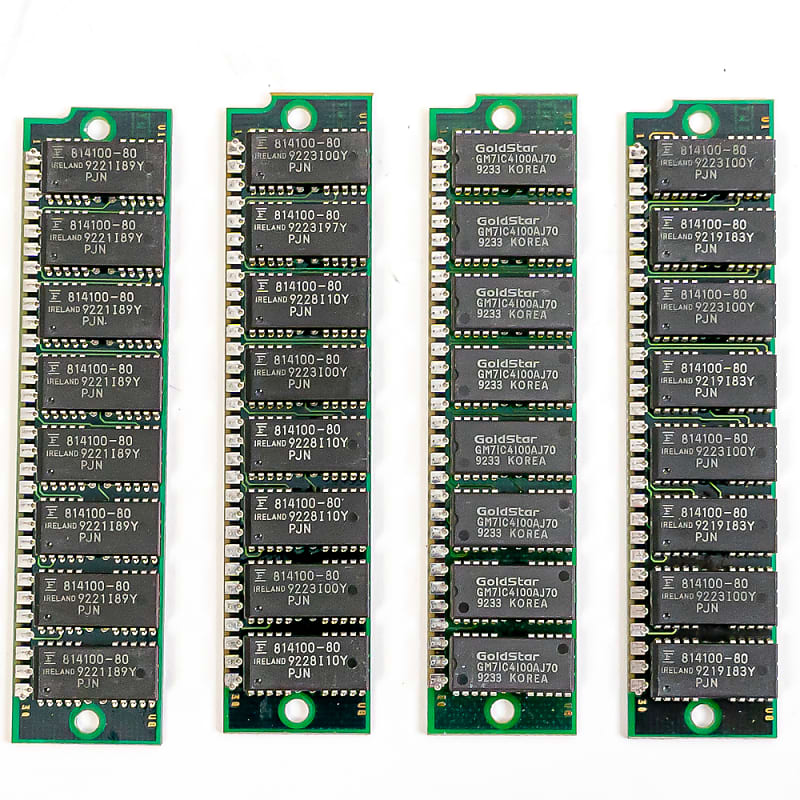
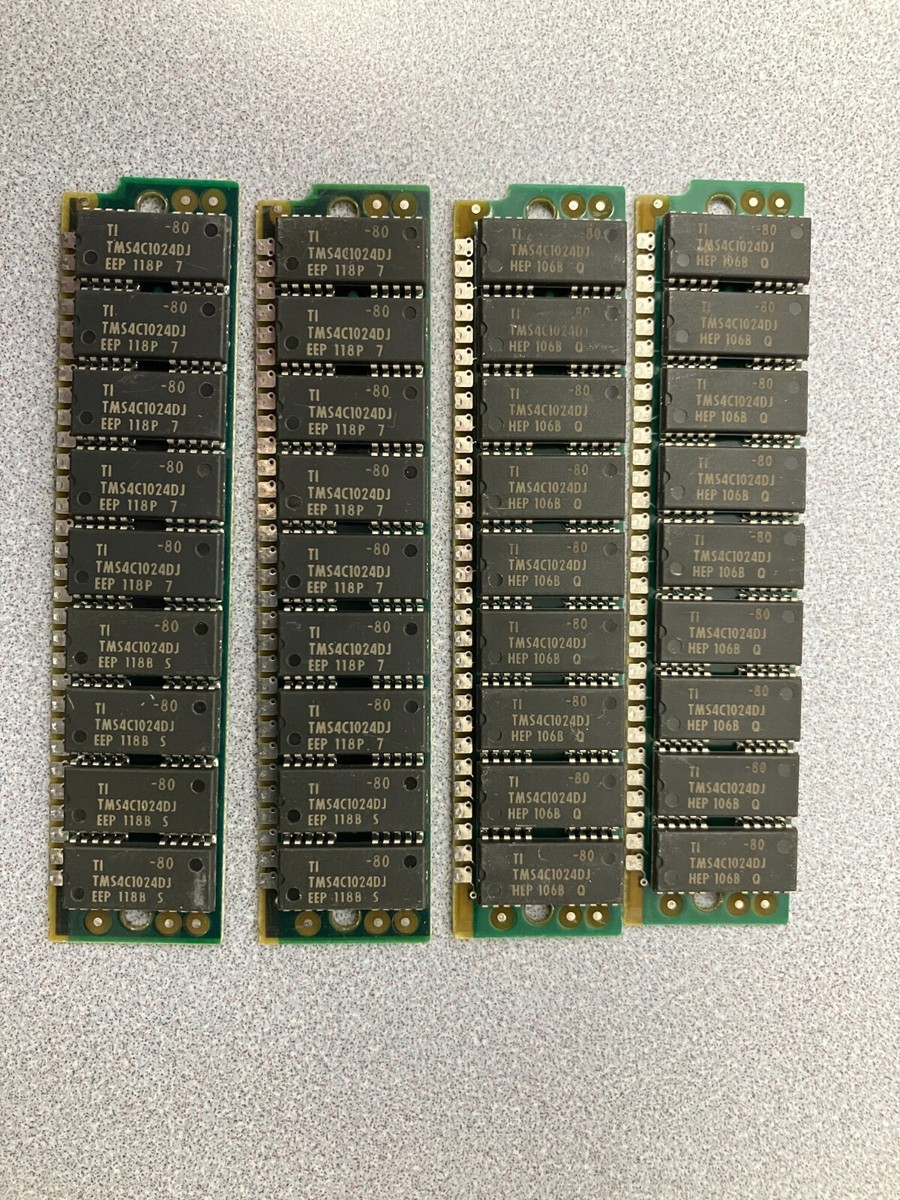
Look for damaged traces, corrosion, or debris under the affected pair of SIMM sockets, and inside the socket.
What a parity error is:
On a row of DRAM chips, the value of the bits gets computed if it is either even, (parity bit value 0), or odd (parity bit value 1).
If the parity bit value does not match the data value, there is a parity error, and it means either the parity bit is wrong (stuck logic state? Bad parity chip on ram module? Etc), OR, the read back value of the DRAM row is wrong. (A bad dram chip, stuck logic level, unconnected logic line, etc)
To prevent the computer doing very wrong things from the data in ram being very obviously wrong, the bios routine halts the computer and tells you about it.
There are a few things to do.
1) does this only happen with a specific simm module? (If yes, it's probably bad)
2) does this happen with known good ram, in a specific slot? (Check the logic lines, and ras/cas lines leading to that slot with an oscilloscope, and check to see if an incorrect logic high or logic low state is being driven on the bus there, and that ras/cas is strobing correctly and cleanly)
3) are you putting nonparity memory in a system that does parity checking? If you are, the 'nonexistent parity chip' will assert parity bit value 0 (even), even if an odd test pattern is written, triggering the error.